
I’ve had Transistor sitting in my backlog for years, and it finally got its turn (pun fully intended) after I wrapped up almost 300 hours of my Nolvus Skyrim playthrough.
After that many hours in one game, I wanted something I could finish in a few evenings. Supergiant’s second game, released back in 2014 between Bastion and Pyre, looked like the perfect palate cleanser.
I finished it in about 6 hours on PC with a controller. My feelings on it ended up a lot more mixed than I expected from a studio I usually love.
Transistor is still $19.99 on Steam, and it’s also on PS4, Switch, iOS and the Epic Games Store. Here’s how it holds up more than a decade later for someone coming to it fresh.
Cloudbank is the real star
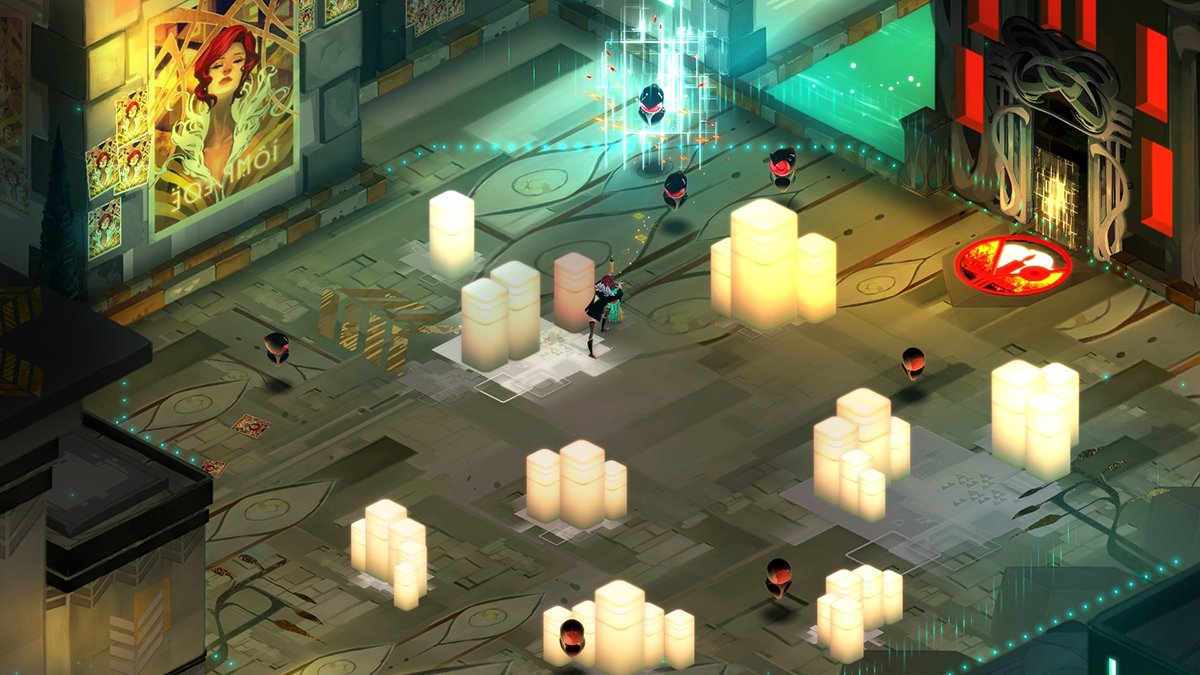
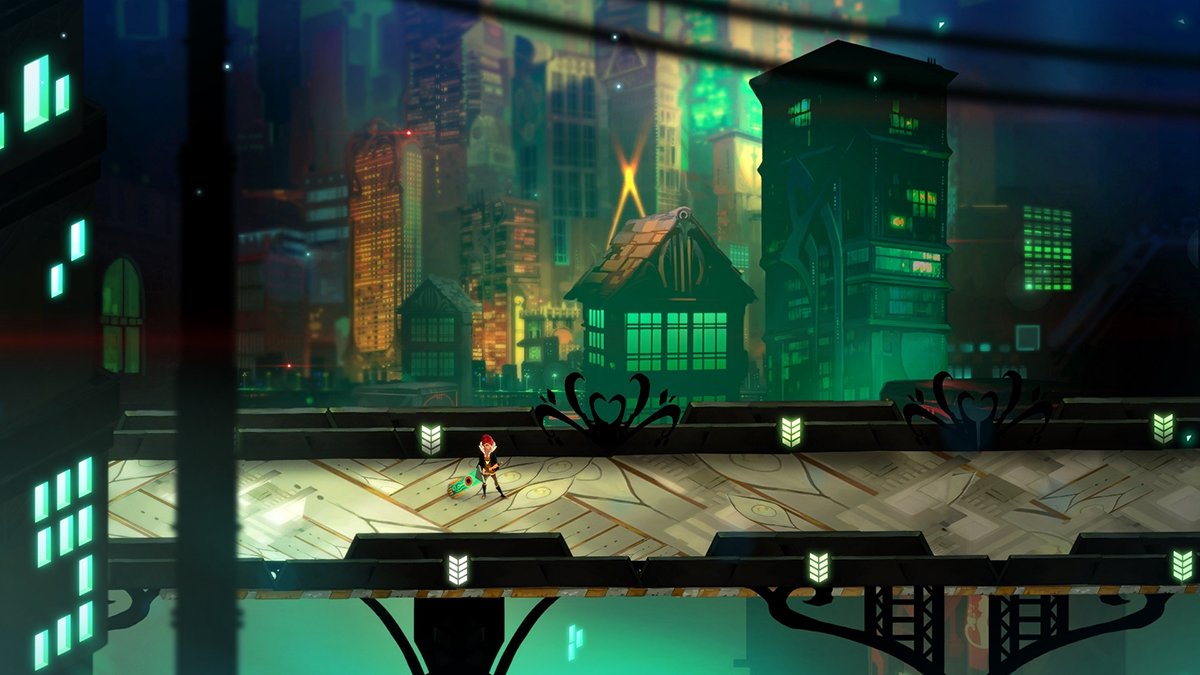
Transistor takes place in Cloudbank, an art deco city of neon signs, curved balconies and glowing walkways. Art director Jen Zee gave it a painted, poster-like look that still looks fantastic in 2026.
Every new district had me stopping to look around. The cafés, overlooks and empty concert halls have a dreamy quality, like a 1930s city filtered through a cyberpunk anime (think a softer Ghost in the Shell with much better fashion).
Honestly, the visuals are the high point of the game. If you only play it for the art, you’ll still get your money’s worth.
The trouble starts when you try to actually explore that city. Cloudbank has branching paths that seal off as soon as you move into the next area, and there’s no going back.
I like to clear every corner before moving on, so I spent a lot of time guessing which path was the “wrong” way so I could check it first. Plenty of times I guessed wrong, moved on, and realized I’d missed something without ever knowing what it was.
For a game this pretty, that’s a frustrating design choice. It turns a gorgeous city into something you hurry through when you’d rather wander.
A voice in the sword
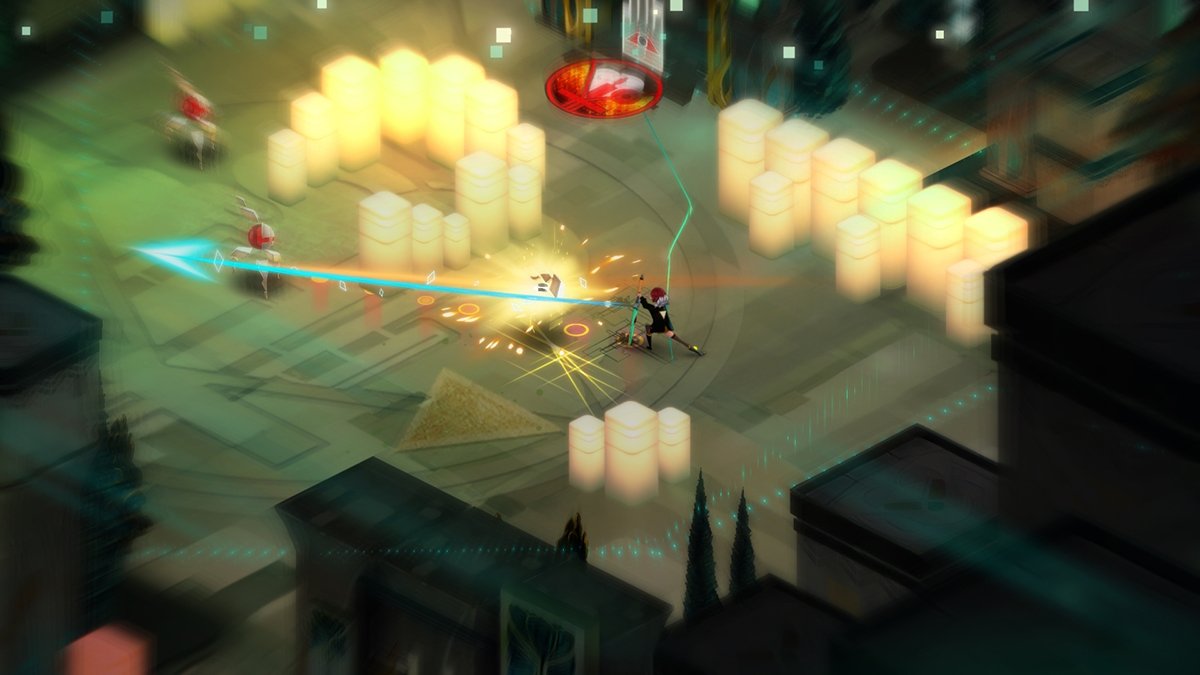
You play as Red, a famous Cloudbank singer who survives an attack that steals her voice and seals it inside the Transistor, a huge talking sword. Since Red can’t speak, the sword does almost all the talking for her.
The Transistor is voiced by Logan Cunningham, the same actor who narrated Bastion. If you loved that gravelly running commentary, this is the same idea with a far more personal edge, since the voice belongs to someone who clearly cares about Red.
There isn’t much voice acting outside of him. What’s here is excellent, though, and Cunningham carries most of the game on his own.
The music is just as good. Darren Korb composed the soundtrack with vocals by Ashley Barrett (who also voices Red), and her hazy vocals over ambient electronic beats fit Cloudbank perfectly.
The sound design is great too, with every attack landing with a crisp, distinct sound. The soundtrack earned Transistor a Best Score/Soundtrack nomination at The Game Awards 2014, and it’s easy to hear why.
A story I never quite pieced together
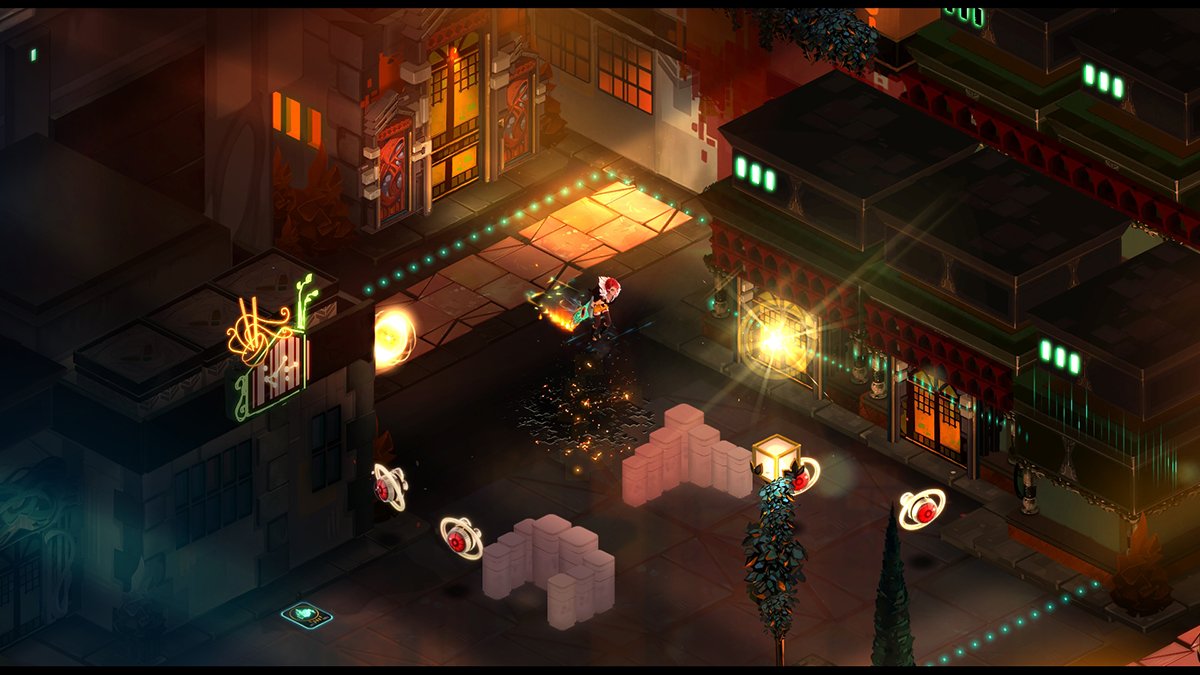
Here’s where Transistor lost me. Supergiant tells most of the story through fragments, like ability descriptions, news terminals and bits of text you find around Cloudbank.
I like environmental storytelling when it adds texture to a clear main plot (Hollow Knight does this well). Here the main plot itself is buried in those fragments, and by the end I still wasn’t sure what had happened.
The setup is good. A group called the Camerata is behind the attack on Red, and the game introduces its four members early as if each one will be a major showdown.
Spoiler note: the next two paragraphs cover how the Camerata storyline plays out, but nothing about the ending.
You only fight two of the four. The other two you just find already dead, and the story moves on almost immediately.
It feels like a big chunk of the game was cut somewhere in development. After all that buildup, it’s a real letdown to see half the villains resolved off-screen.
Turn() is brilliant when the game lets it be
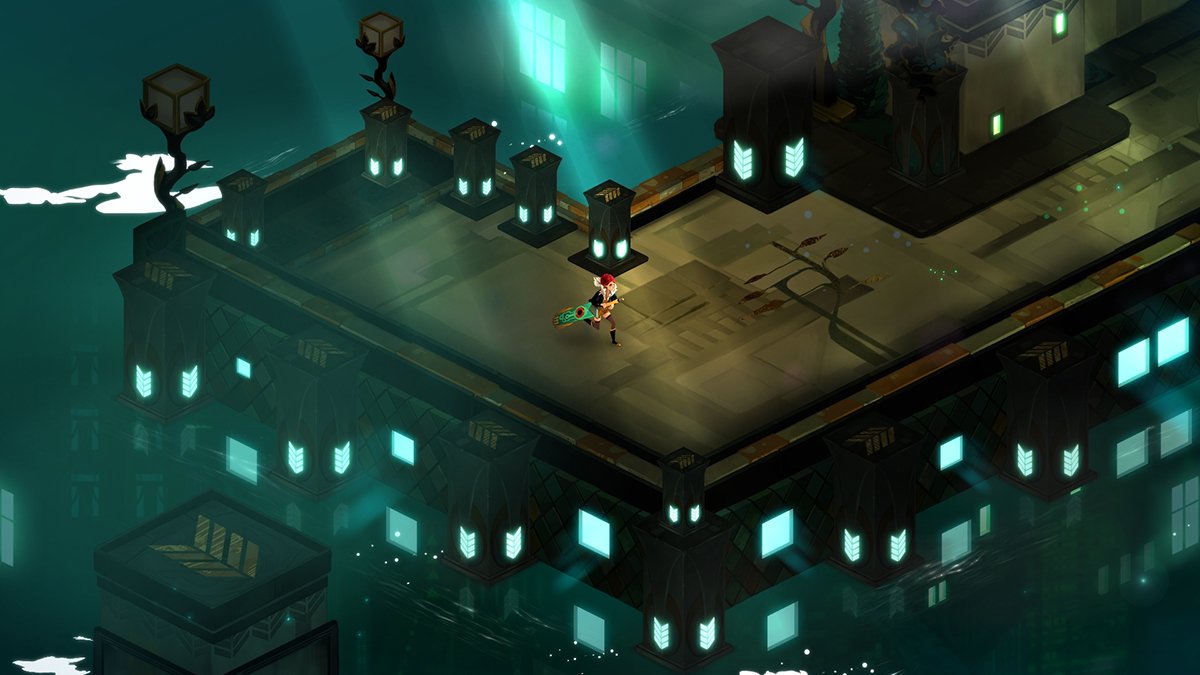
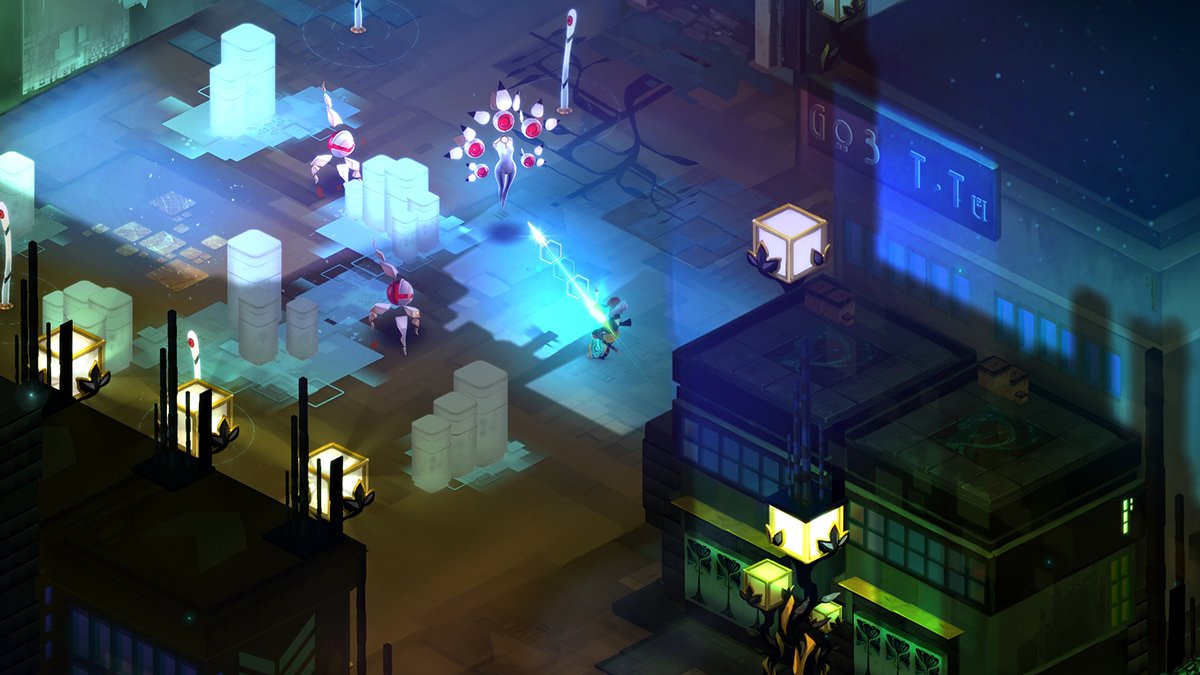
Combat is where my feelings get the most mixed. At its core is Turn(), which freezes time so you can plan a chain of moves, then unfreezes so you can watch them all play out at once.
When it works, it’s fantastic. Lining up a dash behind an enemy, a backstab and a follow-up blast, then watching Red rip through it in a second and a half, feels great.
It reminded me of the feeling I got from Retrace the Light, where you map out a sequence of moves in your head and then watch it play out. Both games reward you for thinking a few steps ahead.
The system is at its best in the optional challenge rooms, where you have to clear an encounter in a single Turn(). They play like little combat puzzles, and they prove how good the core idea is.
I played on PC with a controller, which Transistor fully supports. Planning a Turn() never felt clumsy on a gamepad.
And chaos the rest of the time
The problem is what happens after Turn() ends. The meter has to recharge, and you can’t use your attacks while it does.
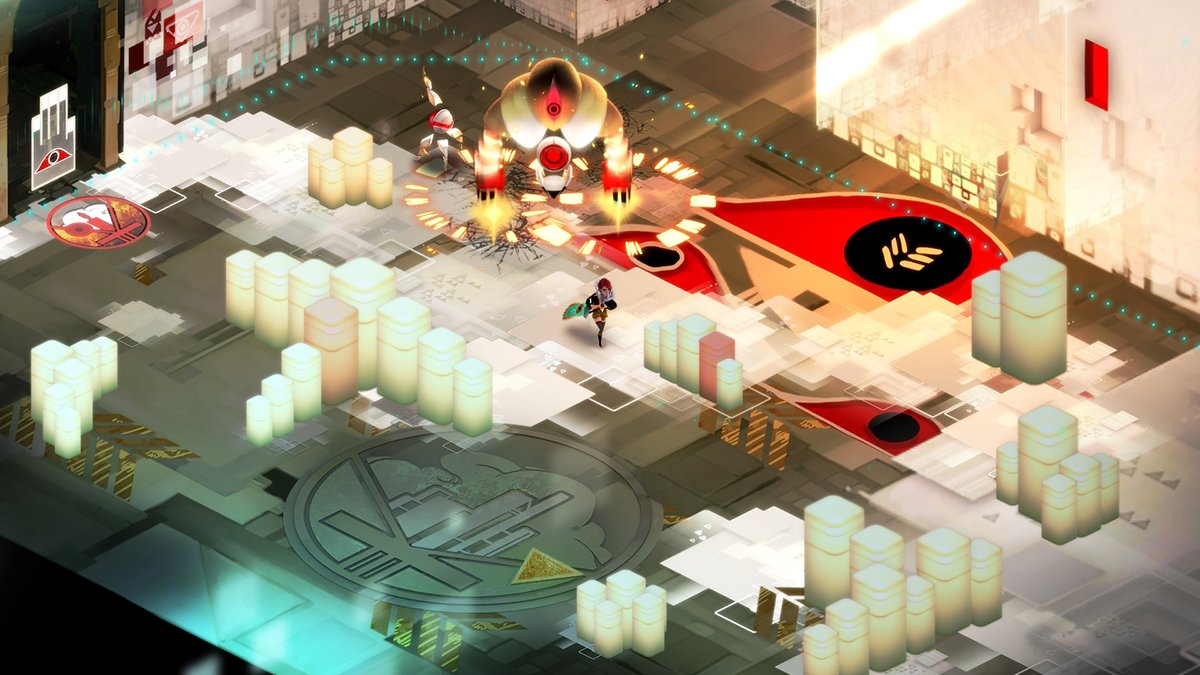
So most fights settle into a loop. You plan a chain of attacks, run around dodging and hiding behind walls while enemies chip away at you, then plan another chain once the meter refills.
Hiding doesn’t help as much as it should, either. Enemies still steamroll you during that recharge window, and a lot of my health drained away while I was doing nothing but waiting.
There is a workaround. Upgrading an attack with Jaunt() lets you use it during the recharge, but I didn’t figure that out until late, and even then it softens the problem more than it fixes it.
I think combat would have benefitted from being slower. The planning side is excellent, but the real-time part in between is chaos, and most fights ended up more frustrating than fun for me.
Functions are where Transistor shines
Your attacks are called Functions, and you assign them to the face buttons. There are 16 in total, and every one of them is different.
The clever part is that each Function works three ways. Slot it as an active and it’s an attack, slot it as an upgrade and it adds its effect to another attack, or slot it as a passive for a constant buff.
Each one costs Memory, so you’re always juggling what fits. That limit keeps the combinations interesting, because you can’t just stack everything at once.
My favorite build was Bounce(), an attack that hits one enemy and then bounces to others nearby. I upgraded it with Purge(), which added a slow and damage over time, and with Jaunt() so I could keep using it while Turn() recharged.
Another combo I liked was Ping(), a quick, cheap, low-damage ranged attack, upgraded with Switch(). That made enemies briefly fight each other for me, which is about as satisfying as combat in this game gets.
Then there’s overloading. Running out of health doesn’t end the fight right away; instead, one of your Functions overloads and stays locked until you pass two more Access Points (the game’s save points).
It sounds harsh, but it’s the smartest idea in the game. Without it I would have stuck with the same couple of favorites the whole way through, and it pushed me into combos I never would have touched otherwise.
Verdict: glad I played it, glad it was short
I’m glad I finally played Transistor. Cloudbank is gorgeous, and the Function system is one of the more creative ability systems I’ve seen in an action RPG.
It also felt like a chore at times. The stretches between Turns wore me down, and the story never came together for me.
The short runtime helps a lot. At around six hours, it ends before the frustrations pile up too high.
If you love tinkering with builds or you’re a fan of Supergiant’s art and music, Transistor is worth a look, especially on sale. If you want a story that explains itself and combat that flows, Hades is the better Supergiant pick.
And if you’re looking for more to play, check out our list of indie games that are better than most AAA releases.
Watch my full playthrough of the game with the playlist below:
–
Images in this article are from the Transistor page on Steam and used under Fair Use.
Want to start your own blog, a personal website or something for your small business or side hustle? Site Ground is the absolute best web hosting company out there
You Might Also Like...
Mouse Polling Rate 1000 vs 2000 vs 8000 Explained (What It Really Changes, and What to Use)

Mouse polling rate is one of those settings that sounds insanely importan (like flipping from 1000 Hz to 8000 Hz should instantly turn you into an esports god) but in real life it’s more nuanced. If…
How to Force Borderless Fullscreen in PC Games (Every Method That Actually Works)
If you've ever tried to alt-tab out of a PC game and watched your screen freak out for a solid five seconds, you already know why borderless fullscreen mode exists. It's the sweet spot between…
How to Fix Xbox Controller Not Detected on Windows 11
So you've sat down for a gaming session, grabbed your Xbox controller, and… nothing. Windows 11 acts like it doesn't exist. No vibration, no light, no input. Don't worry, you're not alone, and this…
Japanese Rural Life Adventure: Beginner Tips You Need to Know

Japanese Rural Life Adventure has finally made the jump from Apple Arcade to Steam, and if you're a fan of cozy farming sims like Stardew Valley or Harvest Moon, this one absolutely deserves a spot…
Under the Island Tips: The Ultimate Beginner’s Guide to Seashell Island
If you're just stepping onto Seashell Island for the first time, you're in for a treat. Under the Island is a 2D top-down action-adventure that wears its classic Zelda inspiration proudly, mixing…
Retrace the Light Tips: A Beginner’s Guide With Puzzle, Combat, and Exploration Tricks

If you’re looking for Retrace the Light tips or a quick beginner’s guide to Retrace the Light, the biggest thing to know is this: the game is built around a mindset shift. It’s not just “solve…
18 Indie Games that are Better than Most AAA Major Releases
Last updated December 31, 2025. There's been a massive explosion of amazing indie games in recent years. Having an alternative to the massive AAA games is always a good thing and many of these indie…
All Unicorn Overlord Characters: Recruitment Guide, Builds, and Missables
This master post rounds up every recruitable character in Unicorn Overlord, with an alphabetical list linked to a detailed guide for each character. You’ll also find practical tips on recruiting,…
The Top 10 Nintendo 64 Games You Need to Play
The Nintendo 64 launched after the Super Nintendo in 1996 and was Nintendo's first console with fully 3D 64-bit graphics. It's one of the most famous and well-recognized systems in videogame history,…
Golden Sun Djinn Guide and Djinn Location Guide
The Djinn system in the Game Boy Advance classic, Golden Sun, introduces a novel and intricate layer to the traditional RPG formula, setting it apart from its contemporaries. This system not only…
The Top 10 Super Nintendo Games You Still Need to Play
The Super Nintendo Entertainment System (SNES) is a legendary video game console that holds a special place in the hearts of gamers around the world. Released by Nintendo in 1990 (in Japan) and 1991…