
Somewhere in the back of my brain there is a fourteen-year-old who printed out instructions for modding a portable GameCube and never finished the project. That kid would have lost his mind over the AYANEO Pocket Micro 2.
This is AYANEO’s second crack at the tiny premium handheld, and it is aimed squarely at people who grew up wanting a Game Boy Micro they could actually do something with. The pitch is simple: a jewel-box of a device that plays retro libraries beautifully and slips into a pocket without a fight.
I went in a little skeptical, because “small and premium” usually means “expensive and compromised.” I came out charmed. Let me walk you through why, and where it stumbles.
A tiny slab that feels like a jewel box
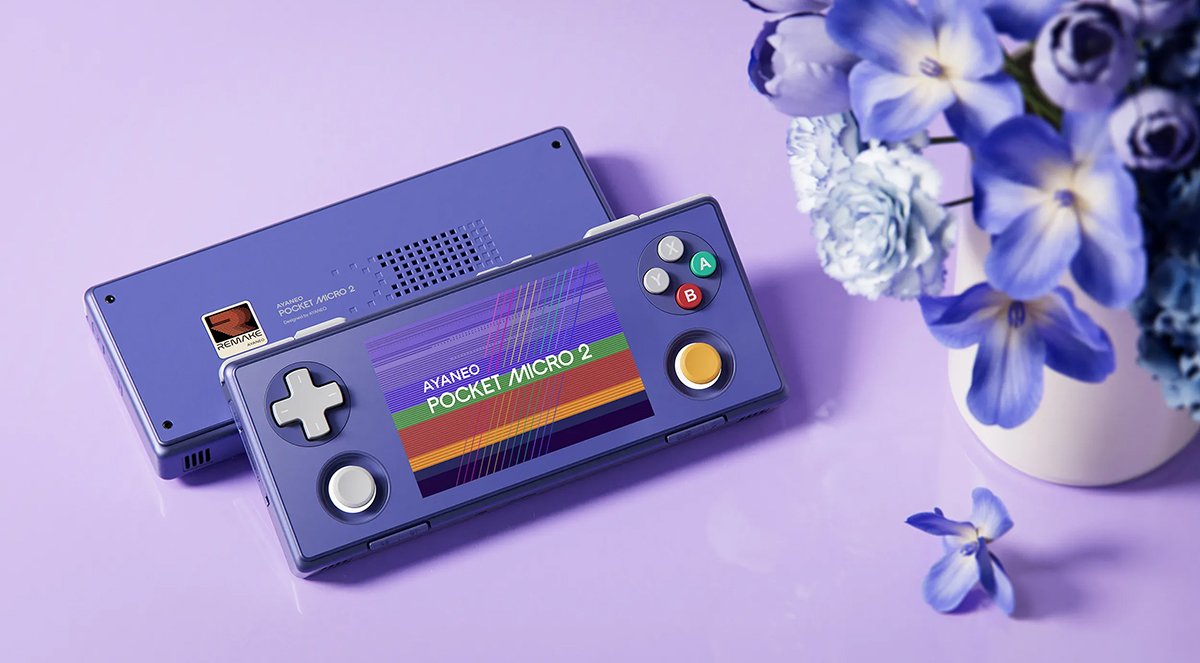
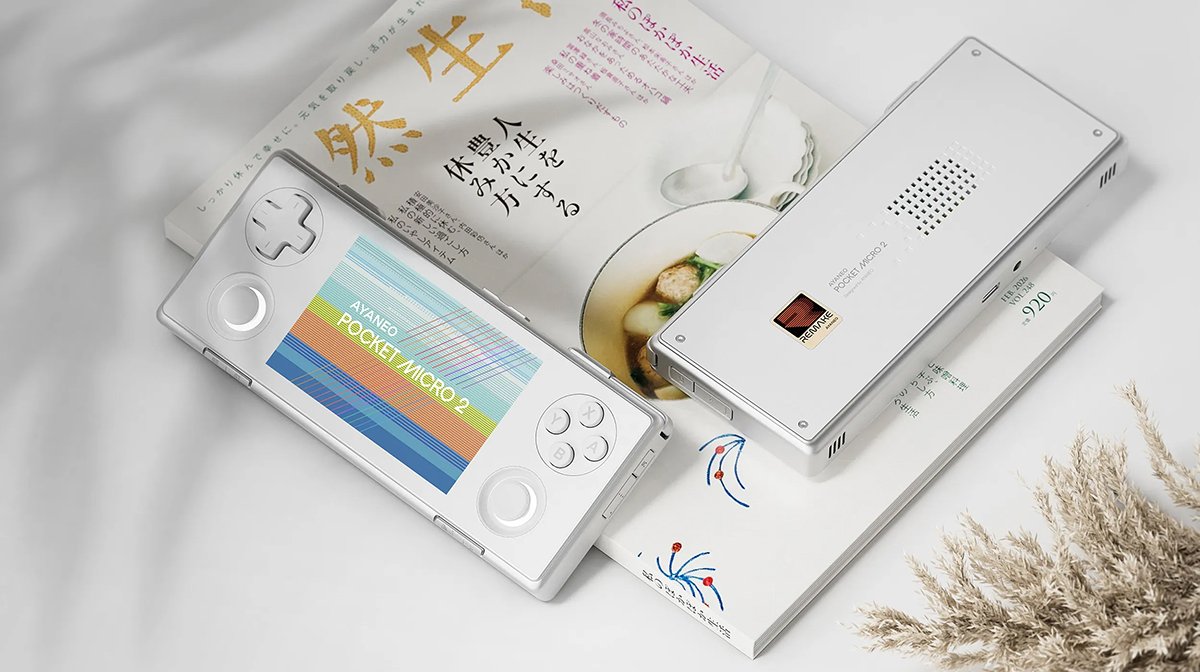
The first thing you notice is that this thing feels expensive in your hand. The midframe is CNC aluminum, the front is a single sheet of glass with no bezel, and the whole package weighs a featherlight 248 grams.
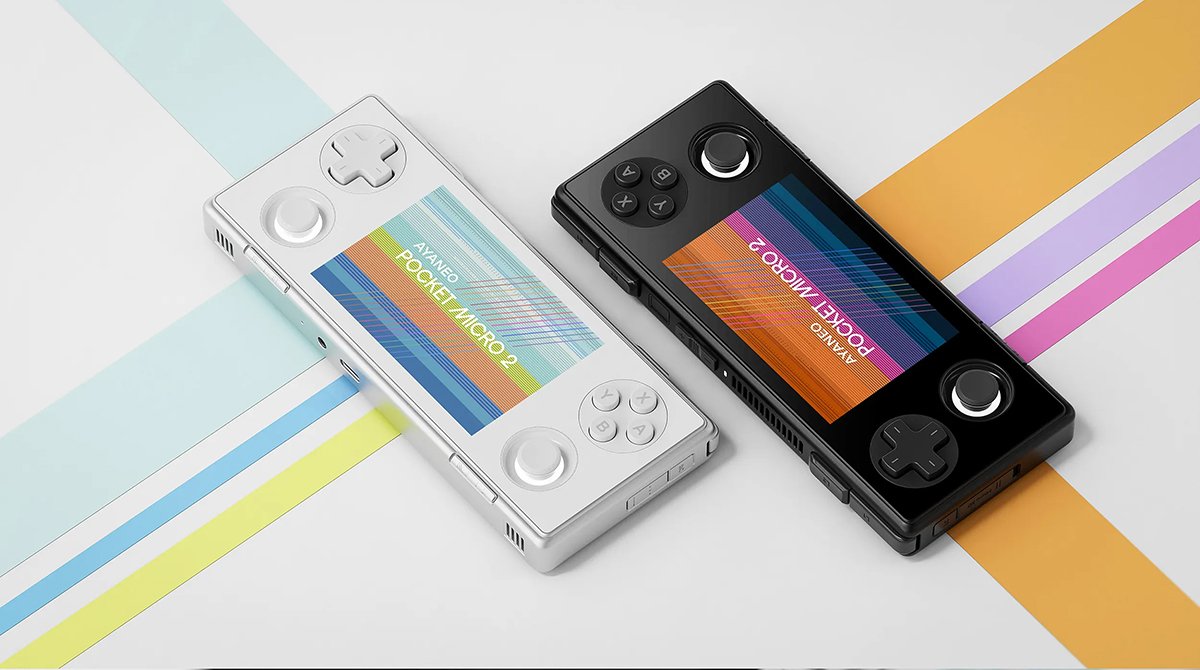
My review notes kept coming back to the Stardust Purple colorway, which is a love letter to the GameCube. The center shell has a faint sparkle and sits a shade lighter than the front and back, and it looks genuinely gorgeous. There are calmer white and black versions if purple isn’t your thing.
AYANEO also snuck in some nice touches, like a fingerprint sensor baked into the power button and RGB lighting around the sticks. It reads as boutique hardware, not a bargain-bin emulator box.
Comfortable in a way it has no right to be
Candy-bar handhelds are hard to make comfortable, because there are no grips to rest your palms against. AYANEO’s fix was to round the corners and make the body about 5mm wider than the original Pocket Micro.
It doesn’t sound like much on paper, but in the hand it’s the difference between “cute” and “I played this for two hours and forgot I was holding it.” The edges are textured just right, and nothing digs into your palms.
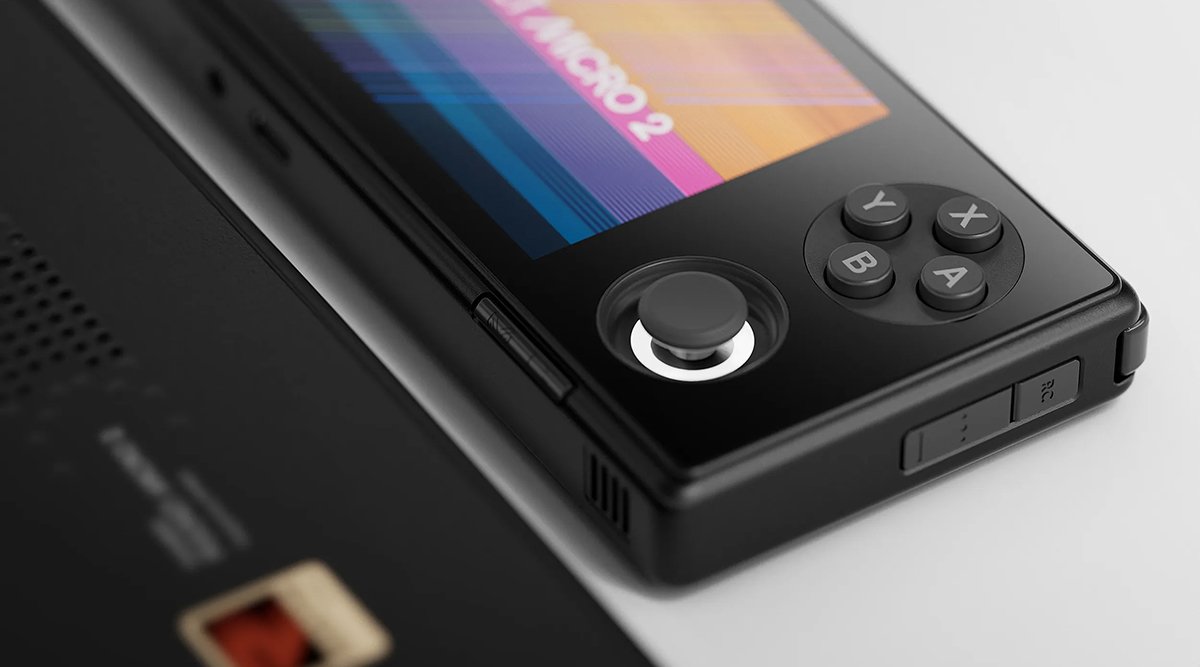
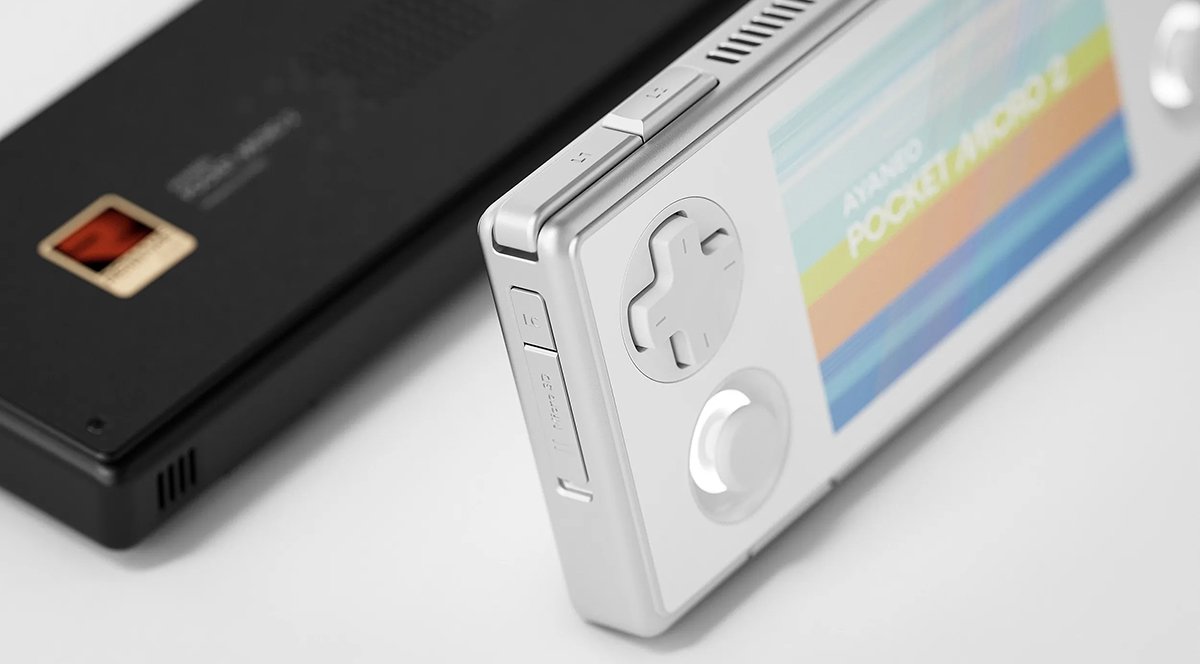
The recessed TMR sticks are the real glow-up here. They’re a magnetic, Hall-effect-style stick that sips battery and won’t drift, and sinking them into the body means the device slides into a pocket cleanly.
I’ll be honest about the ceiling, though. If you have large hands, a flat rectangle this small is never going to feel perfect, and that’s just physics, not a knock on AYANEO.
That 3:2 screen is the whole point
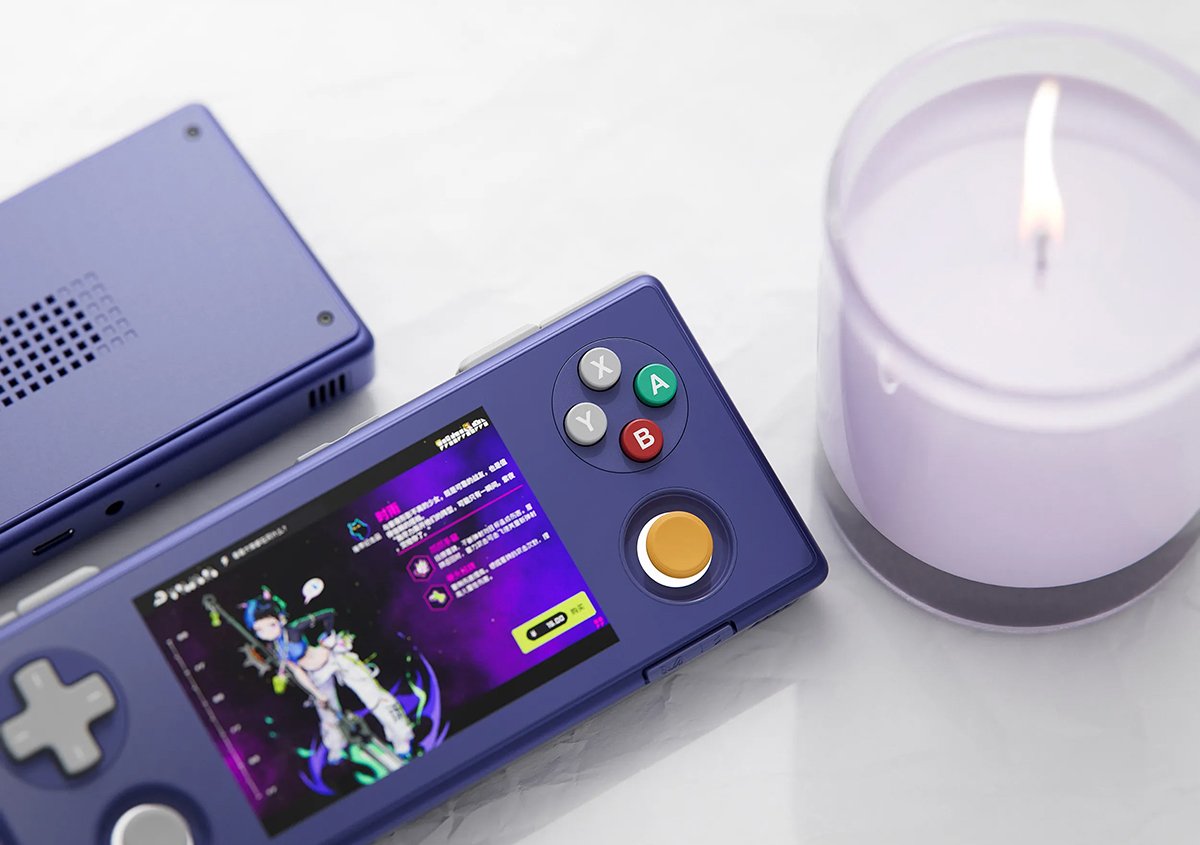
The display is a 3.5-inch IPS LCD running 960×640 at a sharp 330 pixels per inch. The magic number is the 3:2 aspect ratio, which some folks call the golden ratio for retro handhelds.
Here’s why that matters. GBA games and older pixel art fill the panel almost perfectly, and even 16:9 systems like Switch only get slim letterboxing instead of the ugly bars you’d see on a square screen.
Pixel art comes through with the acuity of a razor’s edge, and colors look great for an LCD. This is one of those panels where you turn the device on and just enjoy looking at it.
The honest caveats: it’s not OLED, and brightness tops out somewhere in the modest range, which makes bright-sunlight play a stretch. I’d have loved an OLED option, but for indoor pixel-pushing this panel is superb.
Snapdragon 865 in a body this small
Under the glass sits a custom chip in the Snapdragon 865 class, paired with the Adreno 650 GPU. That’s a jump from the Helio G99 in the original, and it’s the same silicon family powering handhelds like the Retroid Pocket 5.
You can pick it up with 6GB of RAM and 128GB storage or 8GB and 256GB, and every model takes a microSD card. Feeding all this is a 3,950 mAh battery, which is a healthy bump over the first Micro.
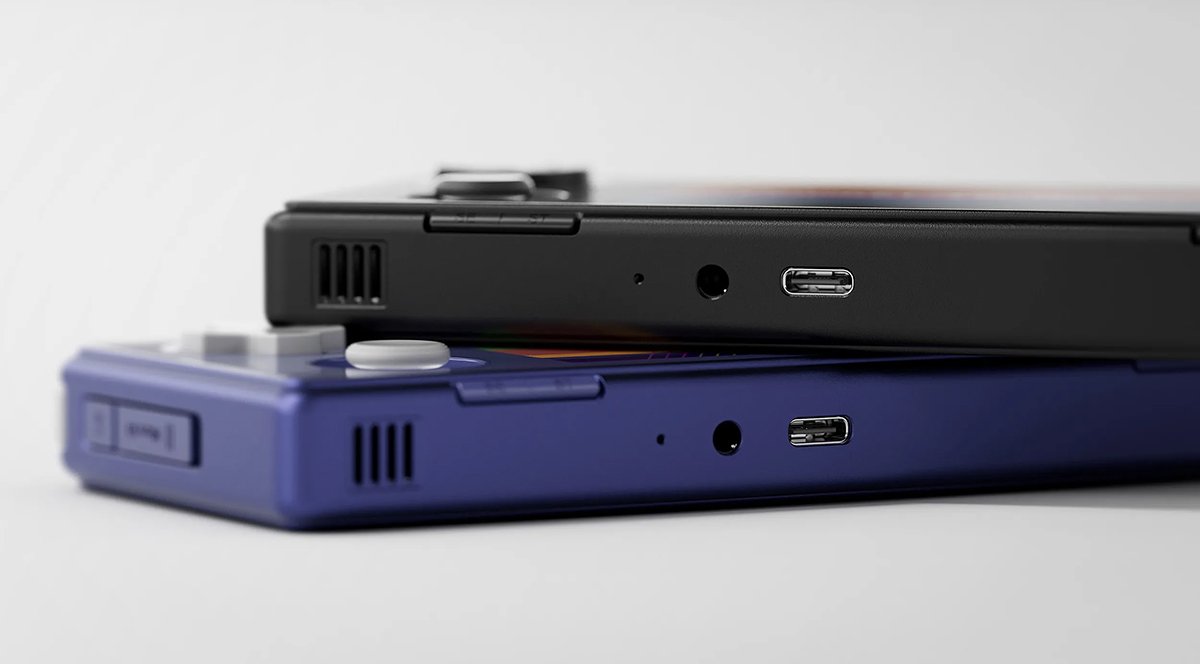
It runs Android 13, so you get Google Play services and every emulator you’d want. Ports are generous for the size: USB-C with video out, and the return of the 3.5mm headphone jack that the first Pocket Micro sadly skipped.
One small gripe worth flagging: the speakers are downward-firing, which isn’t ideal. On a device this small it’s forgivable, and honestly you’ll want headphones anyway.
Retro emulation is where it sings
This is the heart of the device, and it delivers. GBA is the obvious sweet spot, and running it at 4x native resolution on this screen is a genuine treat.
Everything from NES and SNES up through Genesis and PC Engine is overkill-easy, and you can drop into eco mode for hours of battery. PS1 is flawless, so games like Dino Crisis and Ridge Racer fly at upscaled resolution.
N64 is the pleasant surprise, since it’s a system that chokes lesser handhelds, yet Paper Mario and friends run cleanly here. Dreamcast is a non-issue too, whether you prefer Redream or Flycast.
Then there’s the headliner. GameCube runs beautifully, with most of the Dolphin library hitting full speed at 2x resolution, and F-Zero GX holding 60fps even on the nastier tracks.
PS2 lands in the same happy place via NetherSX2, with games like Colin McRae Rally 3 running full speed at 2x. 3DS works well too through Azahar. A few known problem children exist (some Need for Speed games hate ARM), but the hit rate is high.
Push past that and reality sets in
Here’s where I keep it real, because that’s what a review is for. The Snapdragon 865 is a terrific chip, but it’s also several years old, and the top-tier stuff exposes its age.
Switch emulation looks dead on arrival until you install a custom GPU driver, at which point a lot of the library becomes playable. Expect shader-compilation stutter on heavier games until things settle, and don’t dream about Tears of the Kingdom.
Where Switch shines is indies. Celeste, Rogue Legacy 2, and similar 2D games are a perfect match for this screen and those sticks.
PC games via game native are the usual Android roulette. Lightweight indies from your Steam library can run great, but heavier titles either stutter hard or refuse to launch, so treat this as a bonus rather than a feature.
AYANEO Space, button trickery, and the verdict
The software is AYANEO Space, and it’s the kind of thing that makes the device feel boutique. You get a proper performance overlay, swappable power profiles, custom fan curves, and deep tuning for stick dead zones and CPU cores.
My favorite trick is the programmable LC and RC buttons, each with a short-press and long-press action. I’d set one to launch my front-end and another to swap performance modes on the fly, which is a small joy.
The one real annoyance is readability, since a lot of the menu text is tiny and you’ll be squinting if you go deep into the settings. That’s the tax you pay for cramming a full software suite onto a 3.5-inch screen.
So, the money. It starts at $239 for the 6GB model and $279 for the 8GB, with Stardust Purple costing a touch more, and that pricing is fair for what you’re holding.
The catch is availability, because AYANEO launched this in tiny batches and it sold out almost instantly, which is frustrating if you actually want to buy one. If you can only find one heavily marked up, a Retroid Pocket 5 is the sensible-value alternative.
Here’s my take. If raw power per dollar is all you care about, this isn’t your device, and that’s fine. But if you want the most charming, pocketable way to play GBA, PS1, and GameCube, and you value how a handheld feels as much as how it benchmarks, the Pocket Micro 2 is close to magic. My inner fourteen-year-old is still grinning.
–
Images in this review are from the Pocket Micro 2 page on the official AYANEO website and used under Fair Use.
Want to start your own blog, a personal website or something for your small business or side hustle? Site Ground is the absolute best web hosting company out there
You Might Also Like...
Mouse Polling Rate 1000 vs 2000 vs 8000 Explained (What It Really Changes, and What to Use)

Mouse polling rate is one of those settings that sounds insanely importan (like flipping from 1000 Hz to 8000 Hz should instantly turn you into an esports god) but in real life it’s more nuanced. If…
How to Force Borderless Fullscreen in PC Games (Every Method That Actually Works)
If you've ever tried to alt-tab out of a PC game and watched your screen freak out for a solid five seconds, you already know why borderless fullscreen mode exists. It's the sweet spot between…
How to Fix Xbox Controller Not Detected on Windows 11
So you've sat down for a gaming session, grabbed your Xbox controller, and… nothing. Windows 11 acts like it doesn't exist. No vibration, no light, no input. Don't worry, you're not alone, and this…
Japanese Rural Life Adventure: Beginner Tips You Need to Know

Japanese Rural Life Adventure has finally made the jump from Apple Arcade to Steam, and if you're a fan of cozy farming sims like Stardew Valley or Harvest Moon, this one absolutely deserves a spot…
Under the Island Tips: The Ultimate Beginner’s Guide to Seashell Island
If you're just stepping onto Seashell Island for the first time, you're in for a treat. Under the Island is a 2D top-down action-adventure that wears its classic Zelda inspiration proudly, mixing…
Retrace the Light Tips: A Beginner’s Guide With Puzzle, Combat, and Exploration Tricks

If you’re looking for Retrace the Light tips or a quick beginner’s guide to Retrace the Light, the biggest thing to know is this: the game is built around a mindset shift. It’s not just “solve…
18 Indie Games that are Better than Most AAA Major Releases
Last updated December 31, 2025. There's been a massive explosion of amazing indie games in recent years. Having an alternative to the massive AAA games is always a good thing and many of these indie…
All Unicorn Overlord Characters: Recruitment Guide, Builds, and Missables
This master post rounds up every recruitable character in Unicorn Overlord, with an alphabetical list linked to a detailed guide for each character. You’ll also find practical tips on recruiting,…
The Top 10 Nintendo 64 Games You Need to Play
The Nintendo 64 launched after the Super Nintendo in 1996 and was Nintendo's first console with fully 3D 64-bit graphics. It's one of the most famous and well-recognized systems in videogame history,…
Golden Sun Djinn Guide and Djinn Location Guide
The Djinn system in the Game Boy Advance classic, Golden Sun, introduces a novel and intricate layer to the traditional RPG formula, setting it apart from its contemporaries. This system not only…
The Top 10 Super Nintendo Games You Still Need to Play
The Super Nintendo Entertainment System (SNES) is a legendary video game console that holds a special place in the hearts of gamers around the world. Released by Nintendo in 1990 (in Japan) and 1991…