
Pinball has been quietly having a roguelike moment for a few years now, ever since Peglin proved that bouncing a ball off pegs could carry a full run-based structure. Cult of PiN is the version of that idea I have been waiting for, because it skips the peg abstraction and gives you an actual table with actual flippers.
Picture 3D Pinball: Space Cadet dragged into a basement full of candles and eyeballs, then handed the upgrade economy from Balatro.
Solo developer KennyMakesGames shipped it on August 10, 2026 for $14.99 on PC, Mac and Linux, with Steam Deck support and a genuinely huge free demo if you want to test the waters first.
It is also going to drain your ball in about four seconds and leave you unsure what you did wrong. Here is what I wish someone had told me in my first hour.
Damage wins runs, score does not
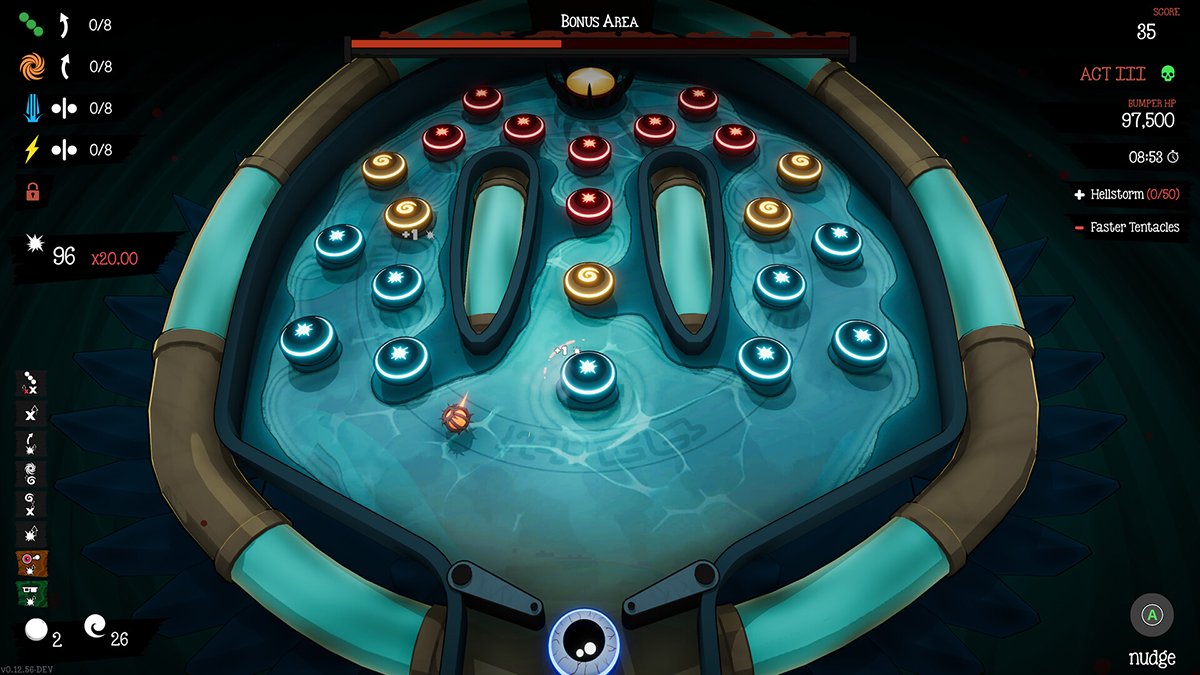
This is the single biggest adjustment for anyone coming from real pinball or from Space Cadet nostalgia. You do not clear an Act by racking up points, you clear it by destroying bumpers.
Every bumper has health, every hit chips it down, and the stage ends when the table is cleared. Score exists for the monthly and all-time leaderboards, which is a completely separate game you can worry about later.
So when you are staring at an upgrade screen, the only question that matters is whether the thing in front of you kills bumpers faster. A glorious point multiplier that does nothing for damage is a trap in Act II.
Learn to cradle the ball before anything else
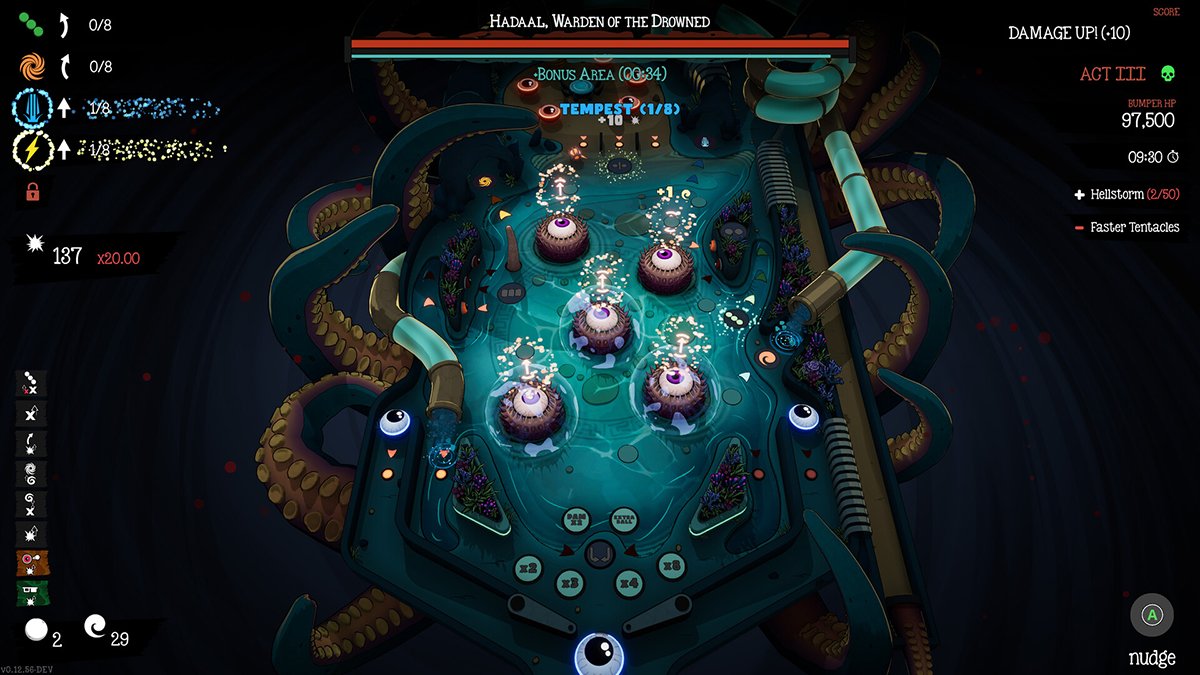
Cradling means catching the ball on a raised flipper and holding it there instead of flipping the instant it arrives. It is the highest-value skill in the entire game and almost nobody does it in their first few runs.
A cradled ball gives you time to look at the table, spot which mission target is lit, and take a deliberate shot at it. Panic flipping sends the ball somewhere random, and random is how you end up in the outlanes.
Practice it on the first table until it feels automatic. Everything else in this guide gets easier once you can stop the ball on demand.
Nudging is a skill, not a panic button
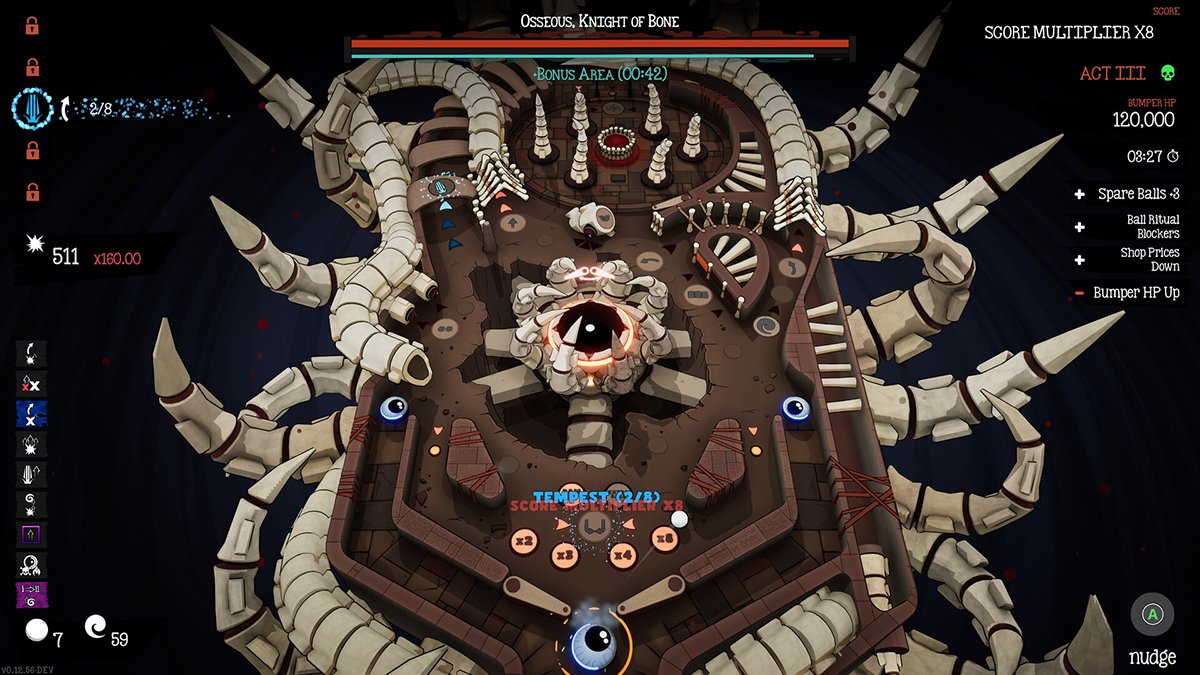
Nudge is mapped to spacebar, middle mouse click, or the south button on a gamepad. Directional nudging with the arrow keys or the analog stick also applies some upward force, which makes it a real save tool rather than a cosmetic wiggle.
Use it when the ball is heading for an outlane and you have nothing else left. A small nudge at the right moment turns a drain into another twenty seconds of table time.
What you should not do is nudge constantly out of nervousness, because you will knock the ball off shots you were about to make. Treat it like a defensive cooldown you save for emergencies.
Light the Ritual Altar early in every run
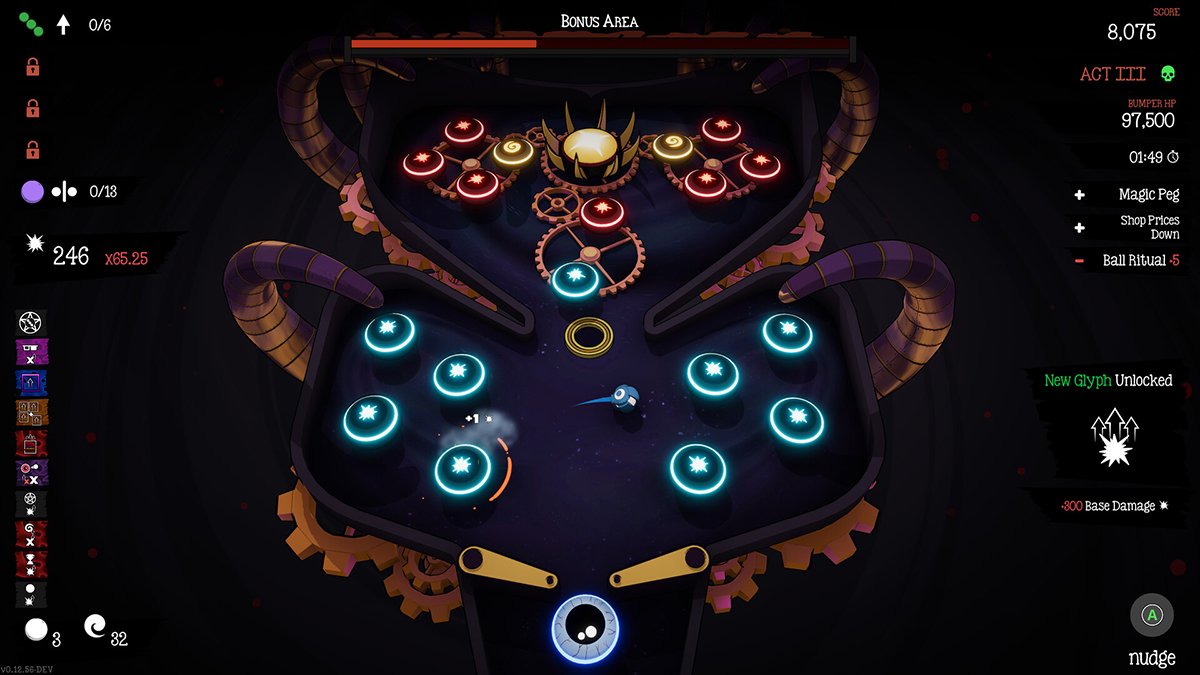
The Ritual Altar sits in the middle of the table and needs 20 hits to activate. New players skip it because it feels slow and unrewarding compared to smashing bumpers.
That is backwards.
Activating the Altar opens up additional colored rituals, each with its own mission attached, which means more ways to trigger the big effects that actually clear stages.
Think of it as the compounding investment of your run. Twenty hits in Act I pays for itself several times over by Act IV.
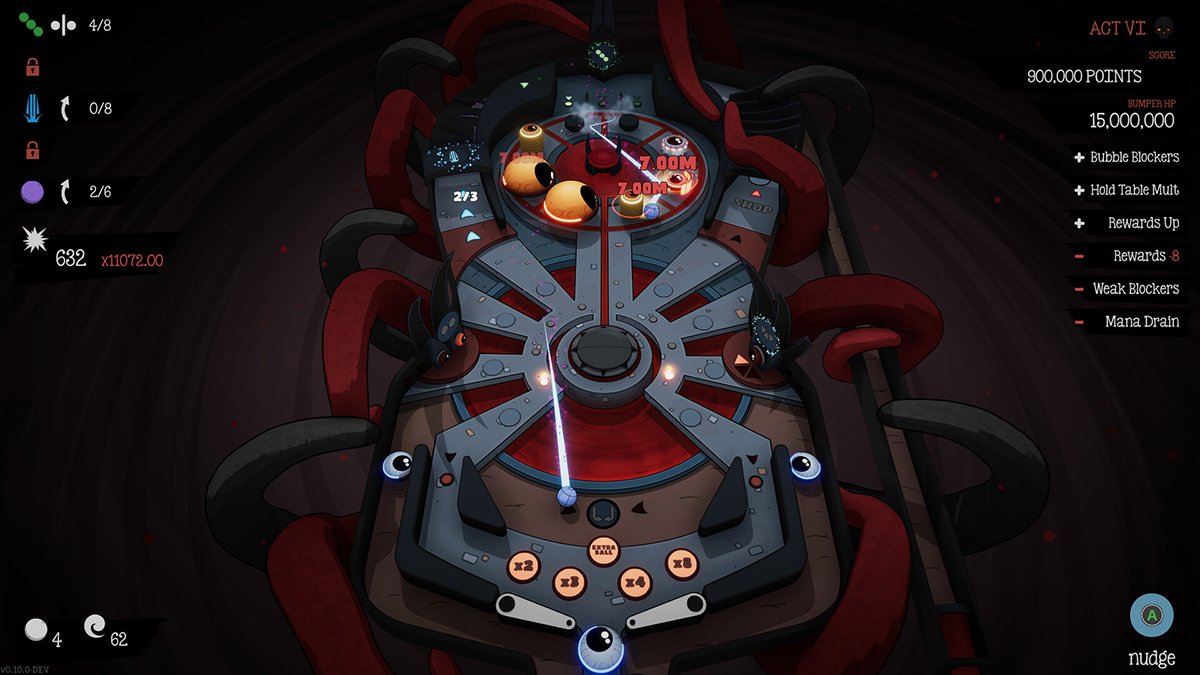
Missions are your real damage engine
Those glowing green targets are missions, and completing one fires off a table-wide damage effect. This is how you clear a stage you could never grind down one bumper at a time.
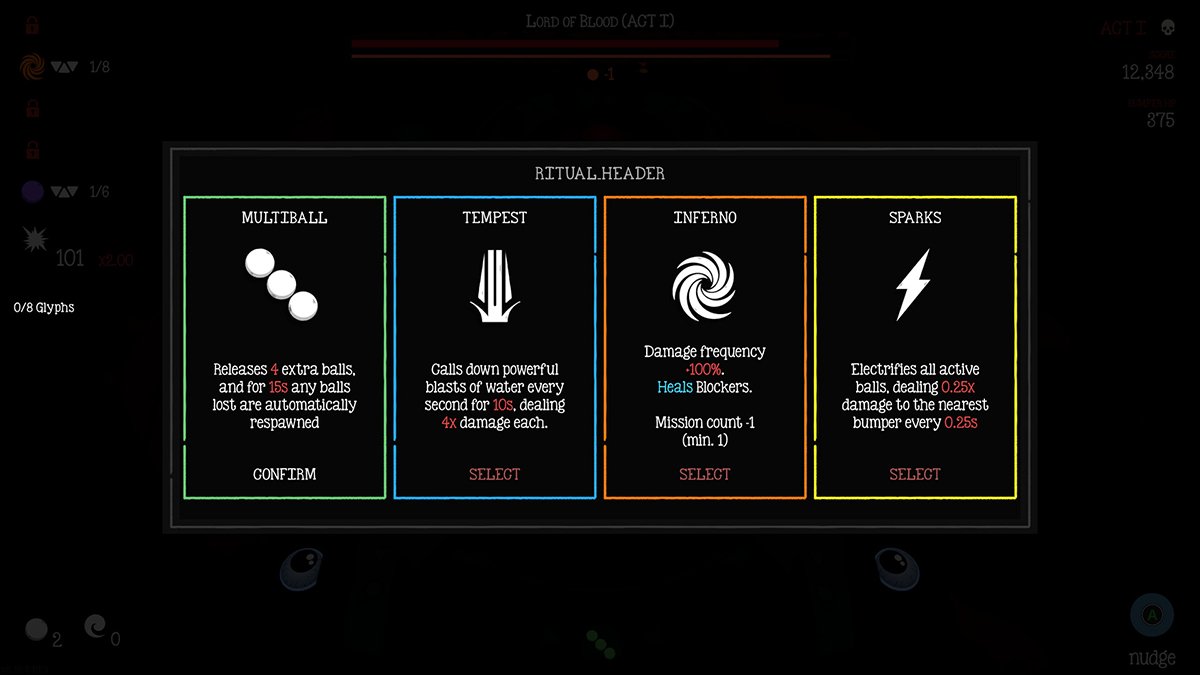
Early on you will see missions like Tempest, Sparks, Inferno and the ever-reliable Multiball. Multiball in particular is your panic clear, since three balls hitting things at once does absurd work on a crowded table.
If you are ever unsure what to aim at, aim at whatever is lit green. That habit alone will get you deeper into the run than any specific build.
Mana is the run, so shop with a plan
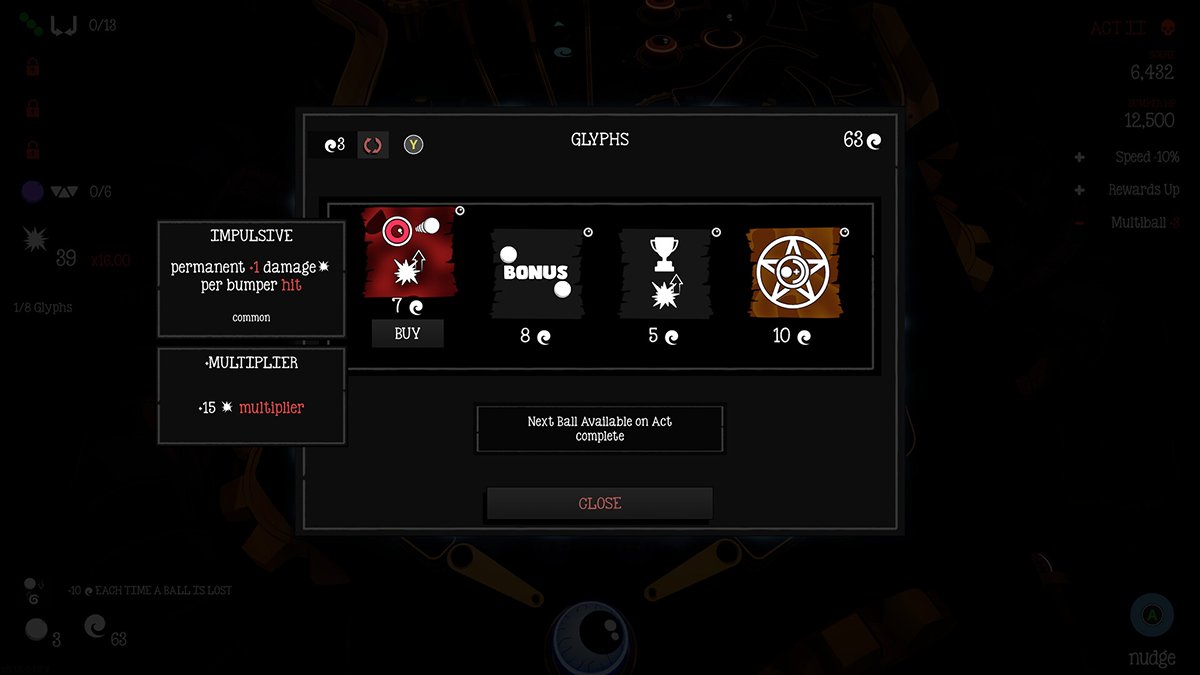
Mana comes from completing missions and finishing rounds, and it is what you spend on Glyphs at the shop. Running out of mana is not just a missed upgrade, it is a run that stops scaling while the table keeps getting harder.
Beginners tend to buy the first glyph with a big number on it. A modest effect that stacks or triggers repeatedly usually beats a one-time flat bonus, especially anything that generates more mana or fires more often.
There are 100 glyphs in the pool, so you will never see the same shop twice. Getting comfortable saving mana for a better option in the next shop is a legitimate strategy.
Build for the table you actually got
There is no single correct build in Cult of PiN, which took me a while to accept. The right glyph depends entirely on which shots your current table offers and which missions it puts in front of you.
Broadly you are choosing between a raw damage build that muscles bumpers down, and a mission and mana engine that snowballs through repeated table-wide effects. Tables with tight, awkward geometry favor the damage route, since you will not be completing missions cleanly.
Look at what the table rewards in the first Act and commit. Half of a good build is worse than all of a mediocre one.
Read the curse before you take the blessing
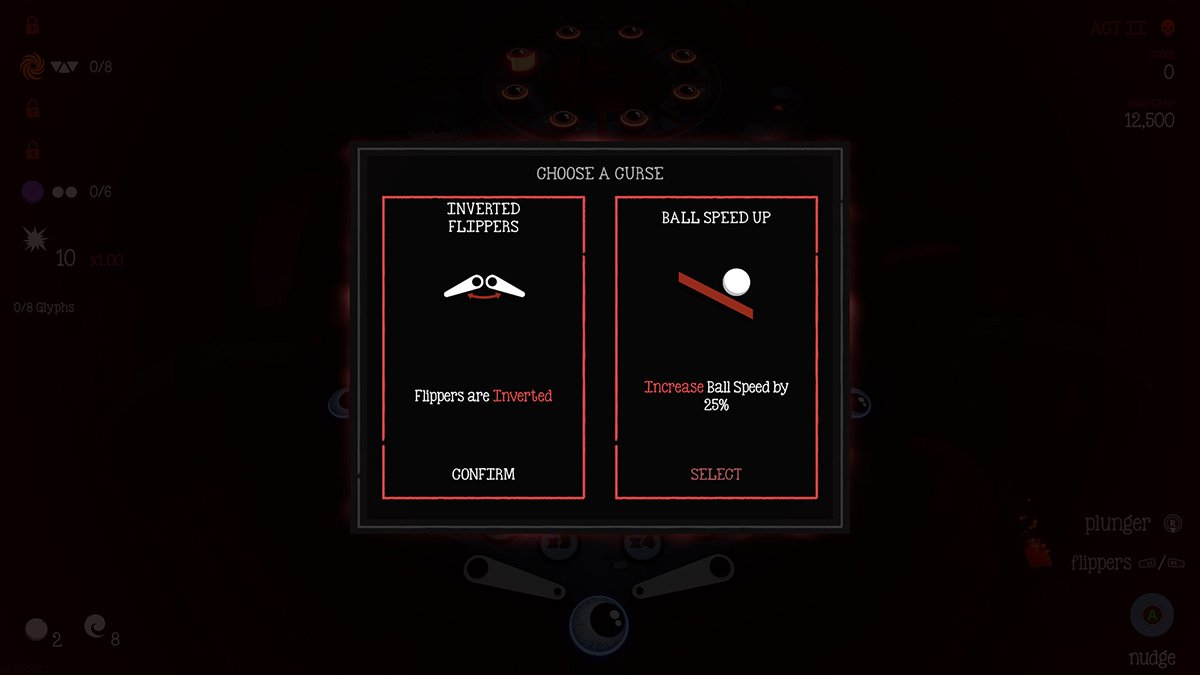
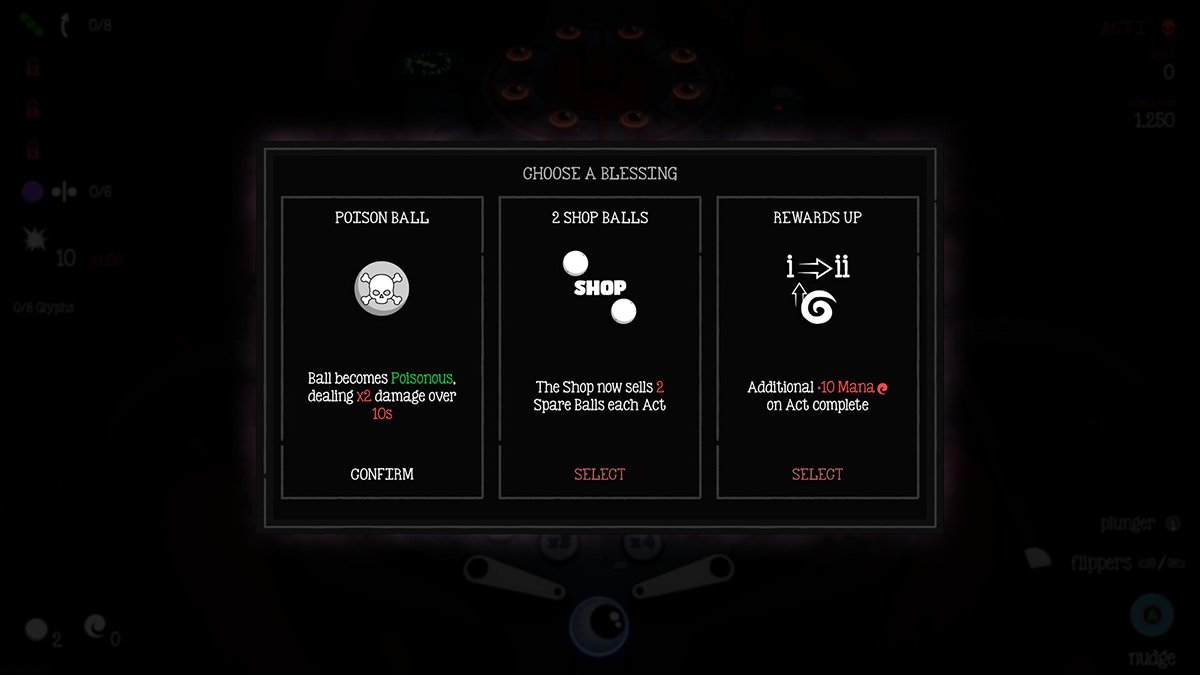
At the end of each Act you choose one high-impact upgrade from a pool of 32 Blessings and 20 Curses. The curses are the interesting ones, because they rewrite a rule for the rest of the run in exchange for something strong.
Some of them are fine. Some of them will quietly gut a build you spent three Acts assembling, and you will not notice until Act V.
Read the whole card. The game is happy to let you make a bad decision with a very attractive icon on it.
Learn what is weird about your table in Act I
There are 16 bumper types and they do not politely stay still. Some change gravity when hit, some reposition themselves, some blink out of sight entirely and reappear somewhere less convenient.
On top of that, higher stages roll random table traits that change the conditions of the run. The mistake is discovering these in Act V when the pressure is on.
Spend your first Act watching the table as much as playing it. Knowing that one specific bumper vanishes on a timer will save you a run later.
Bosses telegraph, so watch for the icon
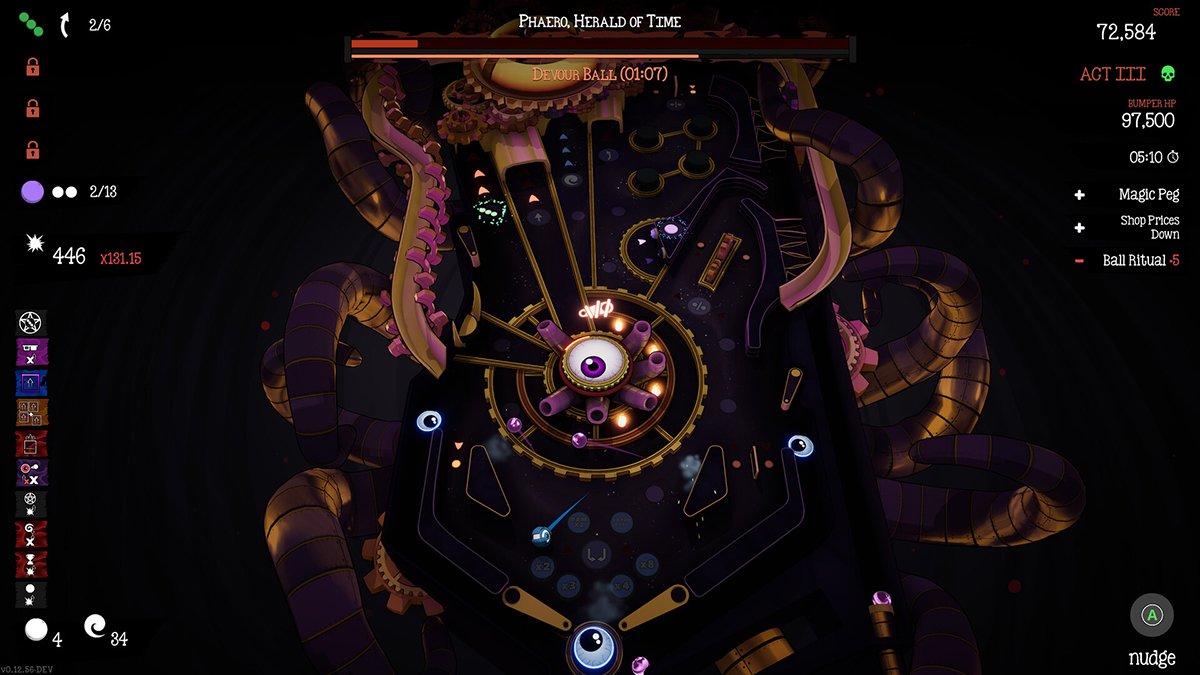
Boss encounters throw boss spells at you, including gravity flips, tentacles that block lanes, and a screen blackout that is exactly as unpleasant as it sounds. It looks unfair until you notice the tell.
Every boss spell shows its icon three seconds before it casts. Three seconds is plenty of time to cradle the ball and simply wait for the effect to pass.
Holding the ball on a flipper through a blackout instead of flailing in the dark is the difference between a clean boss and a wasted attempt.
Pick your ball on purpose
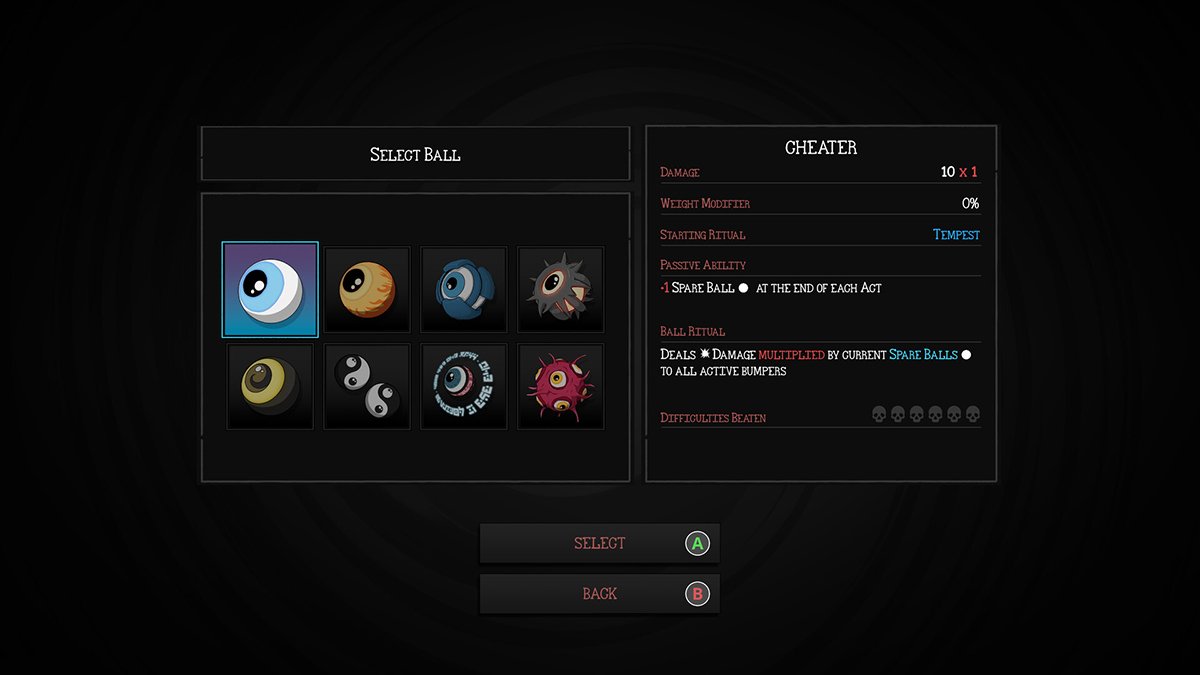
You unlock 8 playable balls, each with its own speed, passive trait and ball ritual. They are not sidegrades and some of them change how you have to play quite a lot.
My advice is to resist the urge to swap the moment something new unlocks. Stay on your starter until reaching Act IV feels routine, then experiment once you understand what a fast ball or an unusual passive is costing you.
Drop the difficulty and finish a run
There are six difficulty settings and four tables, each with six Acts. Starting on a lower difficulty is not a moral failing, it is how you learn the shape of an Act before the game starts punishing you for not knowing it.
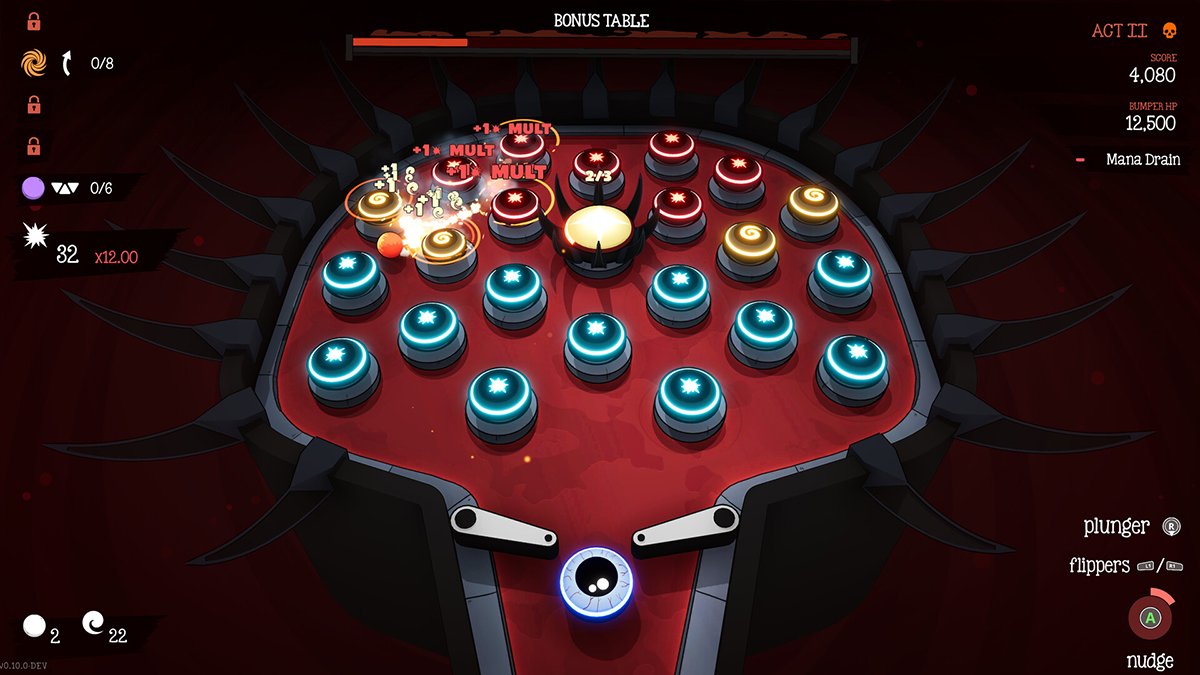
Clearing Act VI once teaches you more than twenty failed runs on a harder setting. It also unlocks endless mode and points you toward the hidden bonus tables.
Where to put your attention first
If you only take one thing from this guide, make it cradling. Almost every other tip here depends on being able to hold the ball still long enough to think.
Cult of PiN is unfair in the way that good pinball has always been unfair, which is to say the table is not out to get you, you are just not very good yet. That will not appeal to everyone, and if you want a roguelike that respects the plan you walked in with, this is going to frustrate you.
For everyone else, it is one of the best fifteen dollars in the genre right now. Nudge responsibly.
–
Images in this article are from the Cult of PiN page on Steam and used under Fair Use.
Want to start your own blog, a personal website or something for your small business or side hustle? Site Ground is the absolute best web hosting company out there
You Might Also Like...
Mouse Polling Rate 1000 vs 2000 vs 8000 Explained (What It Really Changes, and What to Use)

Mouse polling rate is one of those settings that sounds insanely importan (like flipping from 1000 Hz to 8000 Hz should instantly turn you into an esports god) but in real life it’s more nuanced. If…
How to Force Borderless Fullscreen in PC Games (Every Method That Actually Works)
If you've ever tried to alt-tab out of a PC game and watched your screen freak out for a solid five seconds, you already know why borderless fullscreen mode exists. It's the sweet spot between…
How to Fix Xbox Controller Not Detected on Windows 11
So you've sat down for a gaming session, grabbed your Xbox controller, and… nothing. Windows 11 acts like it doesn't exist. No vibration, no light, no input. Don't worry, you're not alone, and this…
Japanese Rural Life Adventure: Beginner Tips You Need to Know

Japanese Rural Life Adventure has finally made the jump from Apple Arcade to Steam, and if you're a fan of cozy farming sims like Stardew Valley or Harvest Moon, this one absolutely deserves a spot…
Under the Island Tips: The Ultimate Beginner’s Guide to Seashell Island
If you're just stepping onto Seashell Island for the first time, you're in for a treat. Under the Island is a 2D top-down action-adventure that wears its classic Zelda inspiration proudly, mixing…
Retrace the Light Tips: A Beginner’s Guide With Puzzle, Combat, and Exploration Tricks

If you’re looking for Retrace the Light tips or a quick beginner’s guide to Retrace the Light, the biggest thing to know is this: the game is built around a mindset shift. It’s not just “solve…
18 Indie Games that are Better than Most AAA Major Releases
Last updated December 31, 2025. There's been a massive explosion of amazing indie games in recent years. Having an alternative to the massive AAA games is always a good thing and many of these indie…
All Unicorn Overlord Characters: Recruitment Guide, Builds, and Missables
This master post rounds up every recruitable character in Unicorn Overlord, with an alphabetical list linked to a detailed guide for each character. You’ll also find practical tips on recruiting,…
The Top 10 Nintendo 64 Games You Need to Play
The Nintendo 64 launched after the Super Nintendo in 1996 and was Nintendo's first console with fully 3D 64-bit graphics. It's one of the most famous and well-recognized systems in videogame history,…
Golden Sun Djinn Guide and Djinn Location Guide
The Djinn system in the Game Boy Advance classic, Golden Sun, introduces a novel and intricate layer to the traditional RPG formula, setting it apart from its contemporaries. This system not only…
The Top 10 Super Nintendo Games You Still Need to Play
The Super Nintendo Entertainment System (SNES) is a legendary video game console that holds a special place in the hearts of gamers around the world. Released by Nintendo in 1990 (in Japan) and 1991…