
Every tactics fan has a moment where they realize the map itself is the most dangerous unit on the field. For me it was Into the Breach, shoving a giant bug into a river and feeling like a genius for about four seconds.
Dunebound Tactics builds its whole identity around that feeling, then straps it to a sandship crawling across a bleak sci-fi desert. Add a fuel system that runs through your own crew, and you get something closer to Darkest Dungeon by way of Dune than your average grid battler.
Developed by Terahard and published by indie.io, it launched on Steam on September 14, 2026 for $14.99. It’s a roguelite turn-based tactics RPG, which means you will lose runs, and probably a few crew members you liked.
These tips should help your first expeditions last longer and hurt a little less.

Treat Elios as a lifeline, not a wallet
Elios is the energy that powers your sandship’s engine, and everything in the game orbits around it. You earn it from quests and defeated enemies, since it crystallizes where things die.
The trap is spending it the moment it lands in your hold. Your engine drains Elios as you travel, and running dry in the middle of the desert is how runs die.
Pick a reserve that covers at least your next stretch of travel and treat it as untouchable. Anything above that line is your budget for gear and caravan upgrades.
When you’re debating between upgrading a crew member and upgrading the caravan, lean toward whatever keeps the ship moving. A strong squad stuck in the sand is still stuck in the sand.

The infirmary or the engine: choose carefully
Here’s the part that gives the game its teeth. A wounded survivor can go to the infirmary to recover, or you can extract their Elios to fuel the engine, which leaves them a lifeless husk.
At launch, the sickbay holds two crew members at a time and heals them quickly while you travel. That’s a small ward, so you’ll often have more wounded than beds.
My rule of thumb: don’t extract anyone early in a run unless you’re truly out of options. A healthy, leveled fighter is worth far more over ten battles than a single tank of fuel.
Save extraction for the recruit whose class overlaps with someone better, or for the moment the engine would otherwise stall. It’s grim math (the game wants you to feel a little gross about it), but it’s still math.
Plan around your frontline and backline
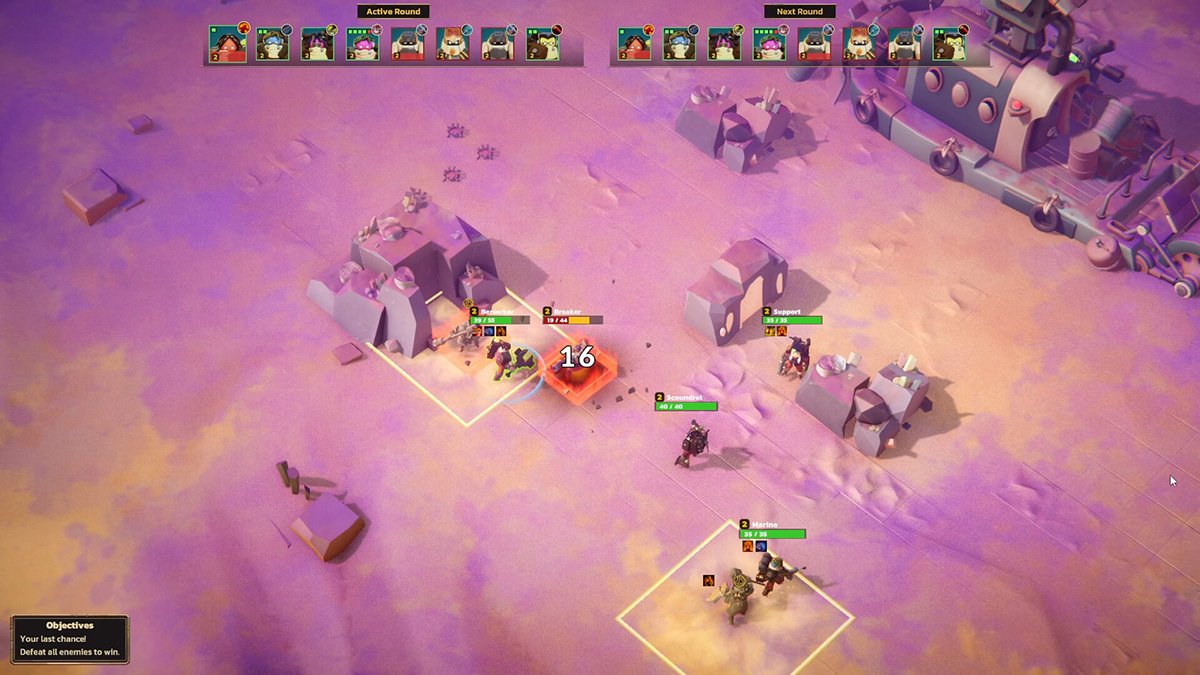
Combat splits your party into three frontline fighters who move and act on the grid, plus three backline support characters. The backline doesn’t walk around, but their powers become available after a set number of turns.
That timing matters a lot. If your support heal or buff shows up on turn three, your frontline has to survive turns one and two on its own, so play the opening defensively.
Each unit works off action points for moving, attacking, and using abilities. Spend them carefully in the first rounds and let the heavy hitters cut loose once backup arrives.
Lean on ranged and magic classes early
With 15 classes in the pool, it’s tempting to build a balanced squad right away. In practice, ranged and magic users carry the early game, and melee classes tend to feel weaker.
Magic classes matter for another reason too: they’re the ones who build elemental pillars on the battlefield. Since terrain is the heart of the combat, a mage who can raise walls is worth more than a brawler who can only hit things.
Melee isn’t useless, especially for shoving enemies into hazards. Just don’t make a sword-swinger your only frontline anchor on your first few runs.
Terrain is your real weapon
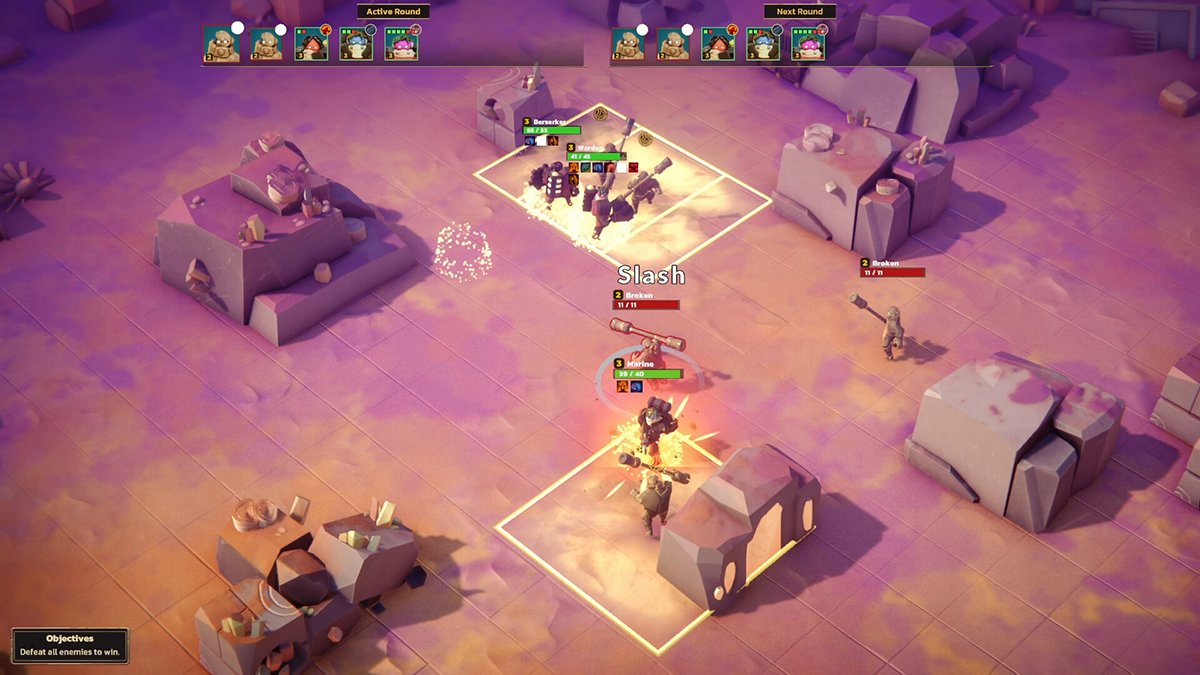
This is where Dunebound Tactics shines, and where new players leave the most power on the table. Nearly everything on the map can be destroyed, moved, or created.
You can smash enemy cover or drag it out of position to open a firing lane. Ice pillars can seal a flank or block an enemy’s escape route, which is huge when a target is trying to run.
Explosive pillars work as delayed traps that detonate a few turns after you place them. Think of them like a Final Fantasy Tactics charge-time spell, where you’re predicting where the enemy will be rather than where they are.
You can also lay localized mines, set up pitfalls, and shove enemies straight into hazards. A pitfall you dig on turn one might solve a problem on turn four, so think ahead.
There’s no flanking bonus here, and hit rates run high with rare critical hits. That means your edge comes from geometry and positioning, not from lucky rolls.

Your hazards don’t care whose side you’re on
The flip side of all that destruction is that environmental effects hit your own units too. An explosion that catches three Imperials can easily catch your healer standing one tile too close.
Before you trigger anything, check the blast area and pull your squad back first. Spending one action point on a step backward is cheaper than a trip to the infirmary.
Enemies are also aggressive and punish overextended units quickly. End your turns with fragile characters outside enemy reach, even if it means passing up a tempting shot.
One launch-era quirk to watch: overlapping pillars can sometimes cause odd behavior, including a unit getting stuck in place. Avoid stacking pillars on top of each other until patches smooth that out.

Read the mission objective before your first move
Not every fight asks you to wipe the map. Missions can require you to eliminate all enemies, assassinate a leader, or protect a neutral character.
Battles are short, even against bosses, so a wasted turn costs a lot. On an assassination, ice pillars and pushes that isolate the leader matter far more than chipping away at grunts.
You’ll be facing 38 enemy types split between two factions, the Imperials and the Arcanists. Learn which ones rush you and which hang back, then shape the terrain to match.
Use caravan skills before the fight starts
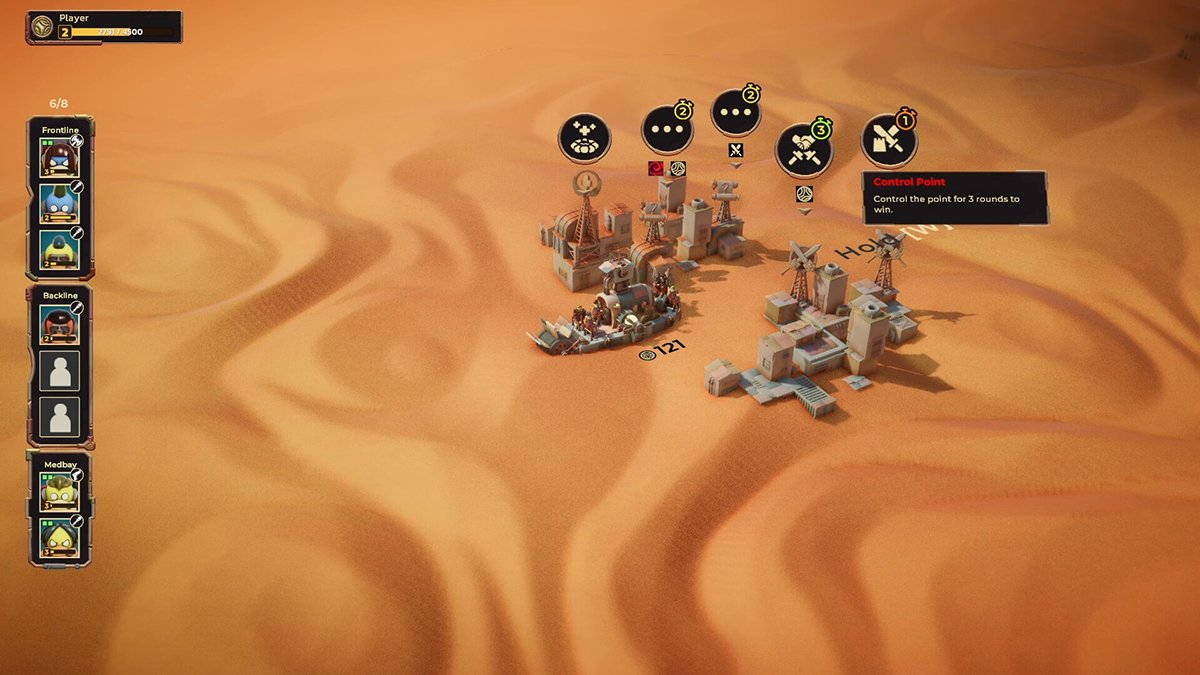
Your sandship does more than haul you around. Caravan skills give you off-field buffs and ways to affect the battlefield, and some crew abilities can reinforce your party before a battle begins.
Certain skills can also open new travel routes. With Elios always draining, a shortcut that skips a lean stretch of desert can be worth as much as any combat upgrade.
Travel between fights is the slowest part of the game, and it’s easy to zone out. Stay alert, because route choices shape how much fuel you’ll have when the next fight comes.
Recruit for combos, because seats are limited
Your caravan only has so many seats, so every recruit is a decision. Survivors come with a random class and traits drawn from a pool of 16, and some roll two specializations (a barbarian who’s also a doctor, for example).
Those dual-role recruits are gold, since they fill two jobs in one seat. Prioritize them over single-role units with slightly better stats.
Each character also equips three modules from a pool of 50+. Modules are mostly small stat bumps like extra accuracy, damage, armor, or movement, so use them to shore up a weakness instead of expecting one module to transform a unit.
Make your failed runs count
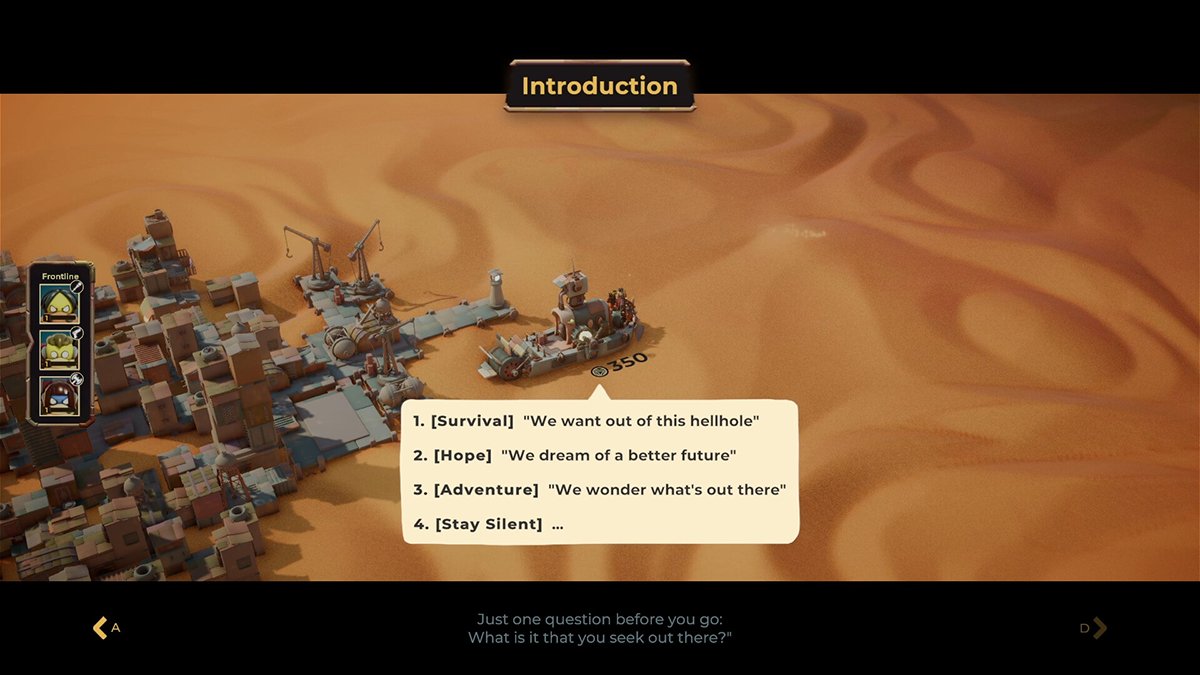
You’re going to lose sandships, and that’s fine. When a run ends, the wreck of your destroyed ship stays in the world, holding modules and sometimes survivors you can recover on a later expedition.
Each new run starts from a safe city and heads back out toward Haven, with the world regenerating routes and encounters. If an old wreck is reachable without wrecking your fuel reserve, it’s usually worth the detour.
If you enjoy roguelites where death feeds the next attempt, check out our Severed Gods beginner tips. And if a moving base that eats resources sounds familiar, our Wanderburg tips cover a similar kind of pressure from a very different angle.

Final thoughts before you hit the sand
Dunebound Tactics asks you to think two moves ahead on the grid and two decisions ahead on the ship. Once terrain clicks as your main weapon, fights start to feel like puzzles you solved instead of dice you rolled.
It isn’t for everyone. The desert crossings drag, the environments repeat, and the story takes a back seat to survival.
But if you like the sacrifice math of Darkest Dungeon and the board-shaping cleverness of Into the Breach, this one is worth your time. Guard your Elios, respect your own explosions, and don’t be too quick to turn your crew into fuel.
–
Images in this article are from the Dunebound Tactics page on Steam and used under Fair Use.
Want to start your own blog, a personal website or something for your small business or side hustle? Site Ground is the absolute best web hosting company out there
You Might Also Like...
Mouse Polling Rate 1000 vs 2000 vs 8000 Explained (What It Really Changes, and What to Use)

Mouse polling rate is one of those settings that sounds insanely importan (like flipping from 1000 Hz to 8000 Hz should instantly turn you into an esports god) but in real life it’s more nuanced. If…
How to Force Borderless Fullscreen in PC Games (Every Method That Actually Works)
If you've ever tried to alt-tab out of a PC game and watched your screen freak out for a solid five seconds, you already know why borderless fullscreen mode exists. It's the sweet spot between…
How to Fix Xbox Controller Not Detected on Windows 11
So you've sat down for a gaming session, grabbed your Xbox controller, and… nothing. Windows 11 acts like it doesn't exist. No vibration, no light, no input. Don't worry, you're not alone, and this…
Japanese Rural Life Adventure: Beginner Tips You Need to Know

Japanese Rural Life Adventure has finally made the jump from Apple Arcade to Steam, and if you're a fan of cozy farming sims like Stardew Valley or Harvest Moon, this one absolutely deserves a spot…
Under the Island Tips: The Ultimate Beginner’s Guide to Seashell Island
If you're just stepping onto Seashell Island for the first time, you're in for a treat. Under the Island is a 2D top-down action-adventure that wears its classic Zelda inspiration proudly, mixing…
Retrace the Light Tips: A Beginner’s Guide With Puzzle, Combat, and Exploration Tricks

If you’re looking for Retrace the Light tips or a quick beginner’s guide to Retrace the Light, the biggest thing to know is this: the game is built around a mindset shift. It’s not just “solve…
18 Indie Games that are Better than Most AAA Major Releases
Last updated December 31, 2025. There's been a massive explosion of amazing indie games in recent years. Having an alternative to the massive AAA games is always a good thing and many of these indie…
All Unicorn Overlord Characters: Recruitment Guide, Builds, and Missables
This master post rounds up every recruitable character in Unicorn Overlord, with an alphabetical list linked to a detailed guide for each character. You’ll also find practical tips on recruiting,…
The Top 10 Nintendo 64 Games You Need to Play
The Nintendo 64 launched after the Super Nintendo in 1996 and was Nintendo's first console with fully 3D 64-bit graphics. It's one of the most famous and well-recognized systems in videogame history,…
Golden Sun Djinn Guide and Djinn Location Guide
The Djinn system in the Game Boy Advance classic, Golden Sun, introduces a novel and intricate layer to the traditional RPG formula, setting it apart from its contemporaries. This system not only…
The Top 10 Super Nintendo Games You Still Need to Play
The Super Nintendo Entertainment System (SNES) is a legendary video game console that holds a special place in the hearts of gamers around the world. Released by Nintendo in 1990 (in Japan) and 1991…