
Map Map – A Game About Maps is a cozy game where you actually make the maps yourself.
You play a cartographer traveling with a small crew of adventurers, hopping from island to island in search of a legendary lost treasure.
Here’s the twist, each island hands you a map showing only the coastline, and your own position is never marked on it.
That blank space is the whole game. Your job is to explore, find the locations your crew asks about, and pin them onto the map as accurately as you can.
It can feel a little overwhelming in the first hour. These Map Map tips will smooth out that early confusion so you can settle into the game’s relaxed, figure-it-out-yourself rhythm.
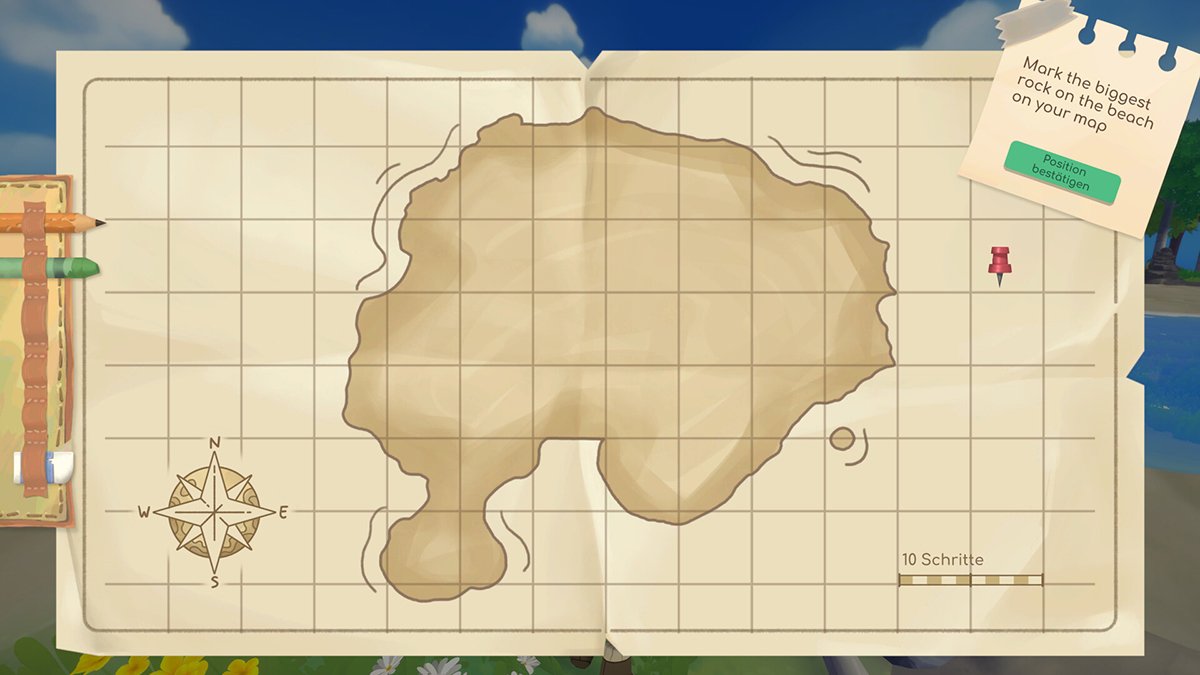
You won’t see a “you are here” dot, and that’s the point
Most games hold your hand with a glowing marker showing exactly where you stand. Map Map does the opposite.
There’s no position indicator and no quest marker nudging you toward the next objective.
You orient yourself the old-fashioned way, by looking at the world around you and matching it to the coastline on your map.
This is the single biggest mental adjustment for beginners. Once it clicks, the rest of the game opens up.
Start by finding obvious coastal features. A jutting peninsula or a distinctive bay gives you a solid anchor point to work outward from.
Master step-counting early, but know when it lies
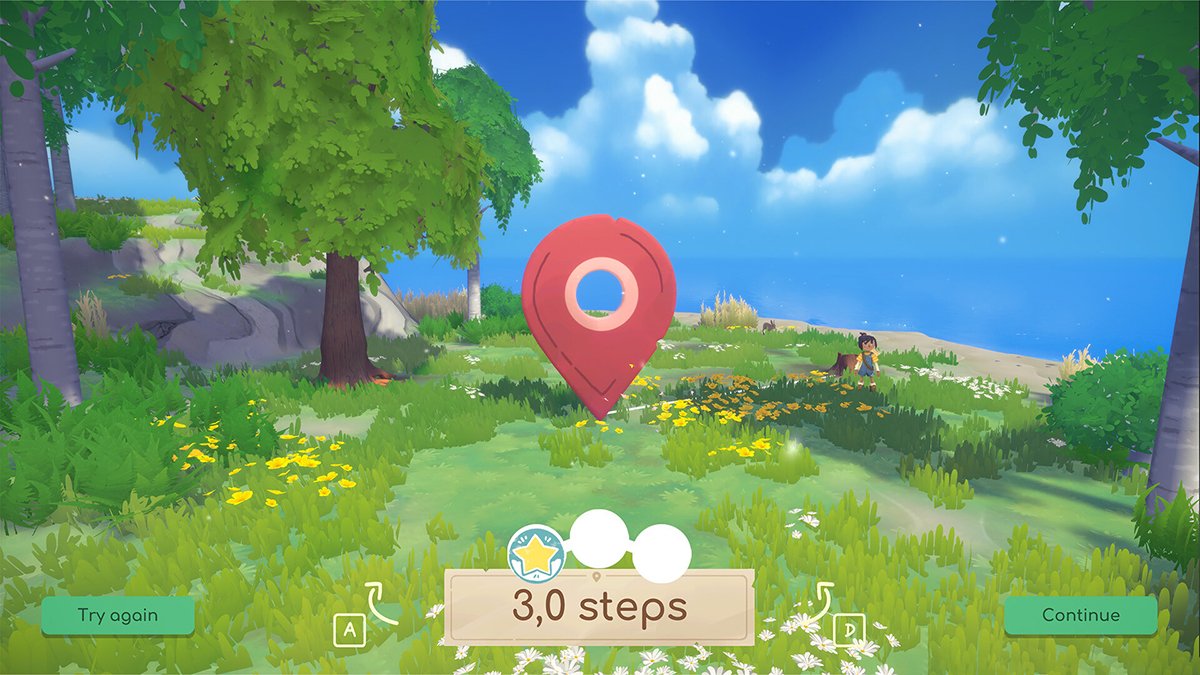
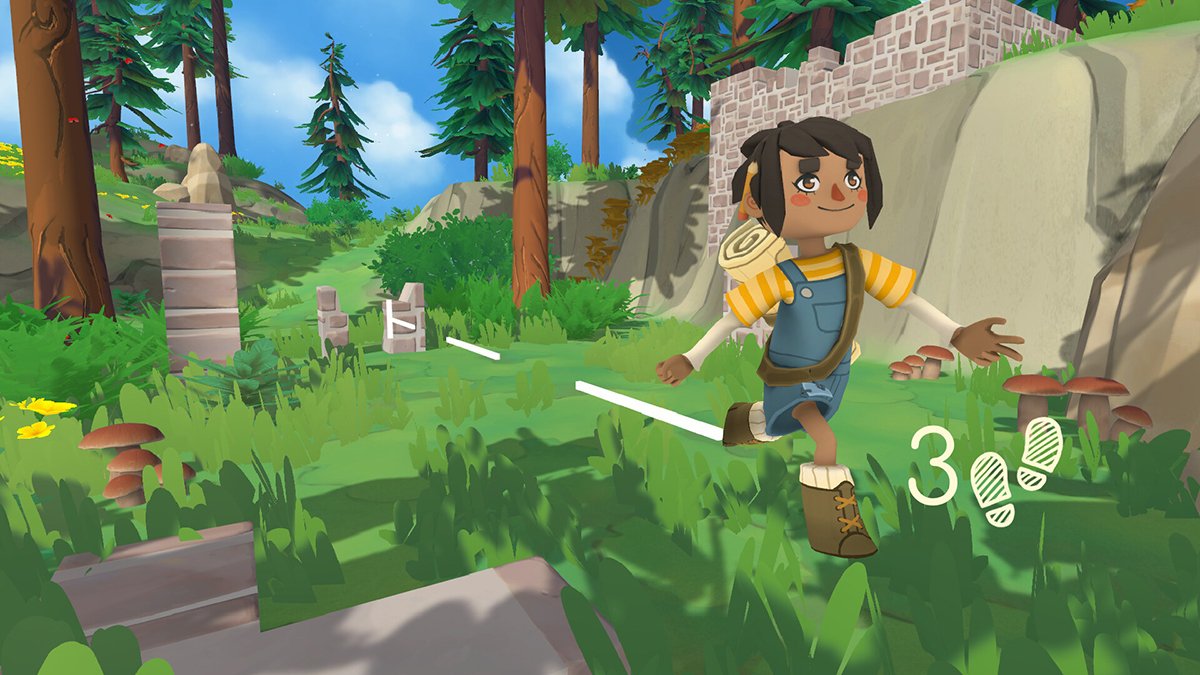
The first real tool the game leans on is your own two feet. You can measure distances by counting your steps from a known point to wherever you’re trying to map.
This pacing method is reliable on flat ground, and it’s how the game teaches most of its early puzzles.
There’s a catch worth knowing about. The game factors height into how long each step is, so walking up an incline, climbing stairs, or taking a small drop throws your count off.
If you measure a distance across a hill, the number you get reads longer than the actual flat distance between the two points.
The fix is simple. When you need an accurate measurement, pace it out on level ground whenever you can, and stay suspicious of any count you took on a slope.
It also helps to pick clean starting points.
Begin your count right at the base of a landmark rather than somewhere vague nearby, so your number actually means something when you transfer it to the map.
The pencil draws arcs, not just dots
This is the tip that saves the most frustration. Plenty of players never realize the pencil can draw arcs, not only single points.
Using the dividers (the compass-style drawing tool), you can sweep a curved line across your map at a set distance from any point.
That arc represents every spot that sits exactly that far from your reference. Suddenly step-counting becomes far more powerful.
Say you know a landmark is 40 steps from a ruin. You draw a 40-step arc around the ruin, and your target lives somewhere along that curve.
Draw a second arc from another known point, and where the two arcs cross is your answer. This is the heart of accurate mapping in Map Map.
Triangulation is your best friend
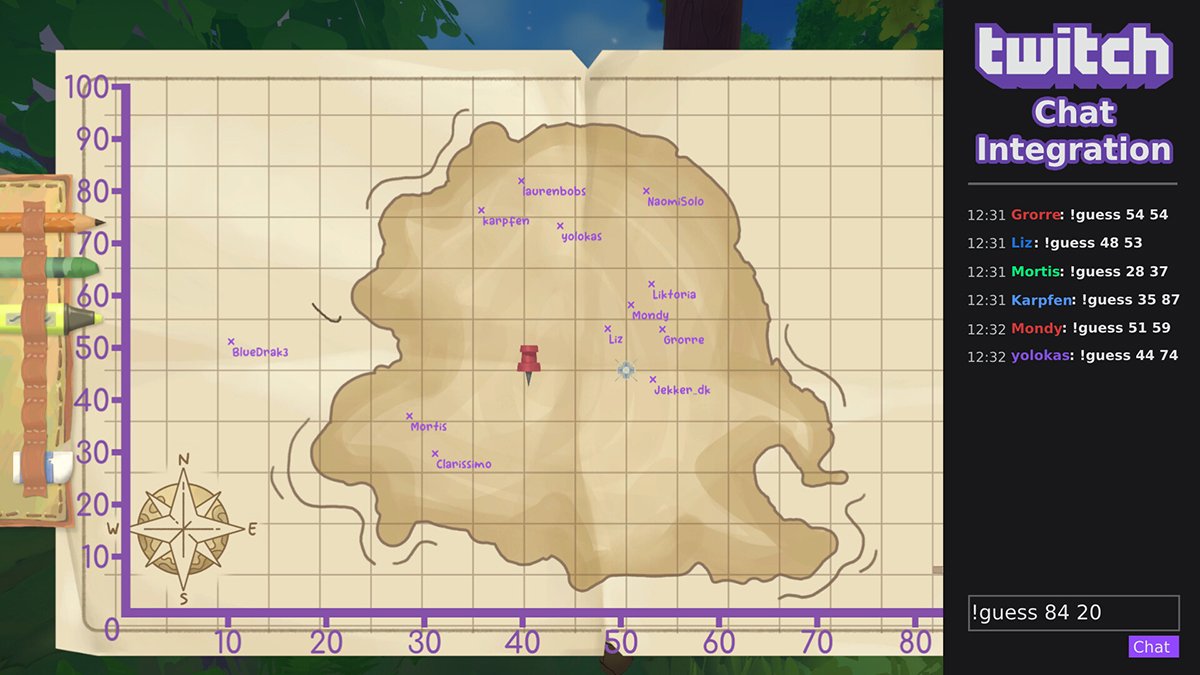
Triangulation sounds technical, but here it’s really just common sense with a fancy name.
The idea is to pin down an unknown spot using its relationship to two or three things you’ve already placed on the map.
Take a distance or a direction from one landmark, then another, then a third if you can. Each reference narrows down where the target has to be.
Two crossing lines or arcs give you a single intersection point, and that’s exactly where you drop your marker.
The more spread out your reference landmarks are, the more accurate the result. Try not to lean on two points that sit right next to each other, since their lines cross at a shallow, fuzzy angle.
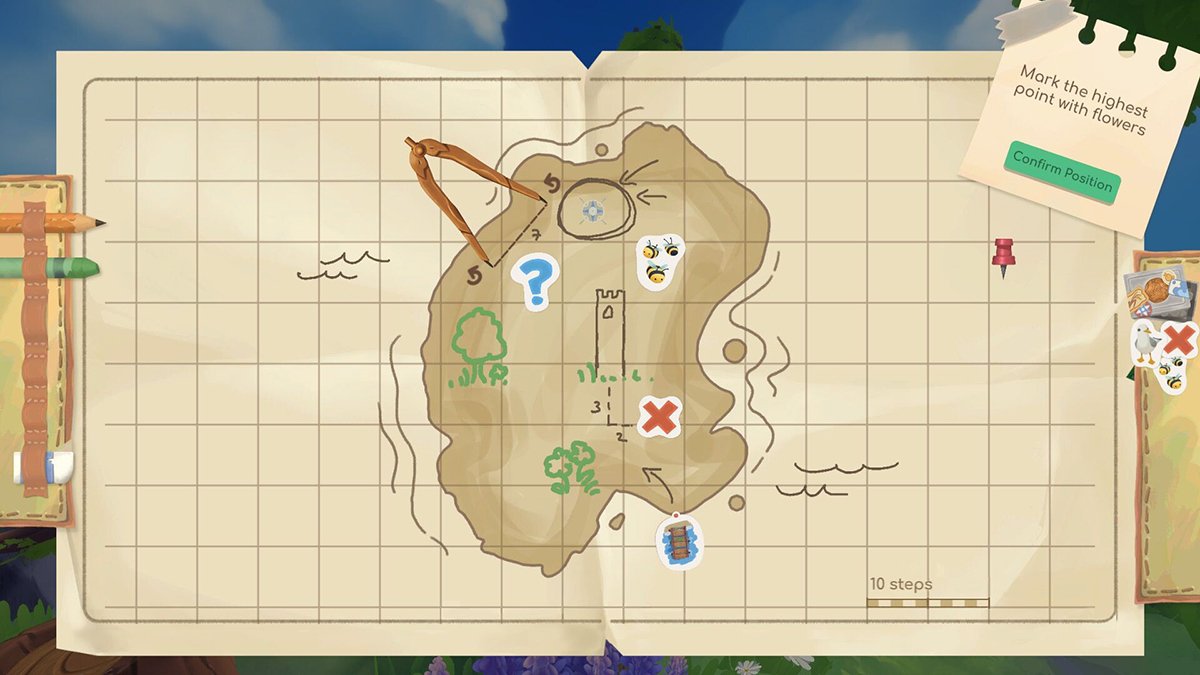
Use landmarks as alignment lines
Here’s a quick trick that needs no measuring at all. Sometimes two objects in the world line up perfectly from where you’re standing.
When that happens, you can draw a straight alignment line through both of them on your map. Your target sits somewhere along that line.
Combine an alignment line with a single distance measurement and you’ve often got enough to place something precisely.
This works great for spots that are hard to reach on foot. You don’t always have to walk somewhere to map it accurately.
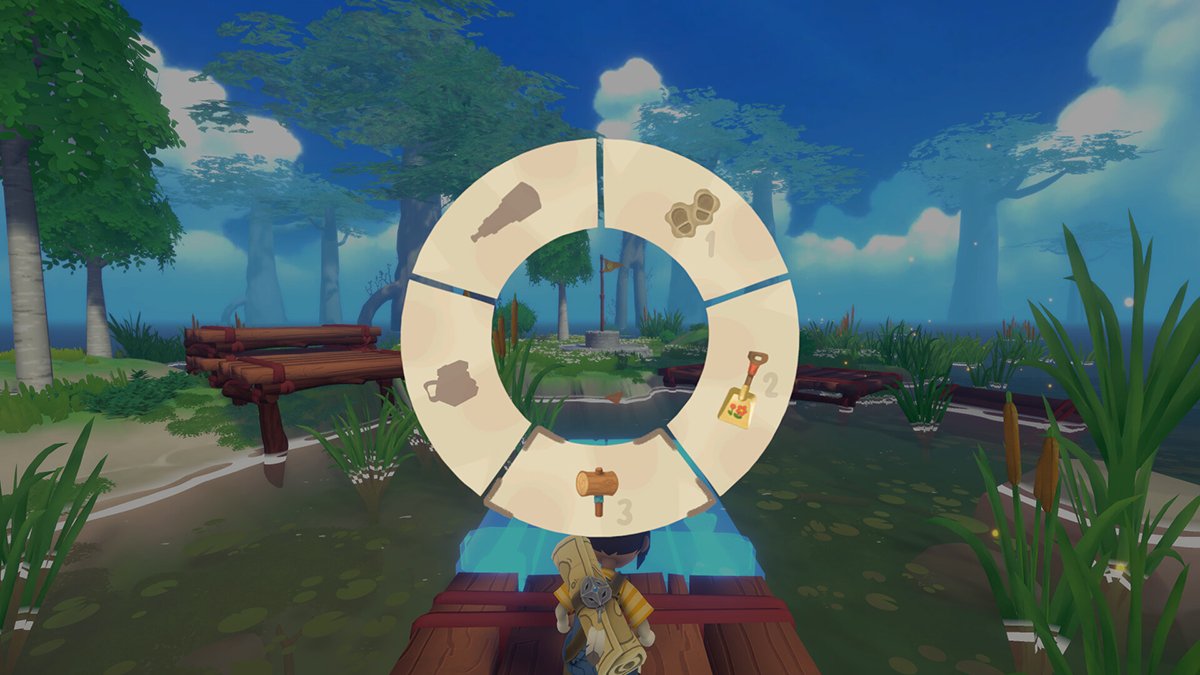
Every new tool unlocks a new way to map
Map Map drips out its tools slowly, and each one solves a different kind of problem. Experimenting with them is half the fun.
The compass helps you lock in direction so your bearings stay consistent as you move around the island.
The telescope lets you study distant features you can’t walk up to, which pairs perfectly with alignment lines.
The sextant brings angles into the mix, giving you another way to triangulate without relying on step counts at all.
Don’t fall into the trap of solving everything by pacing. When a puzzle feels impossible with steps alone, a different tool is usually the intended answer.
Climb high and slow down
There’s no clock ticking in Map Map. Nothing punishes you for taking your time, so lean into that freedom.
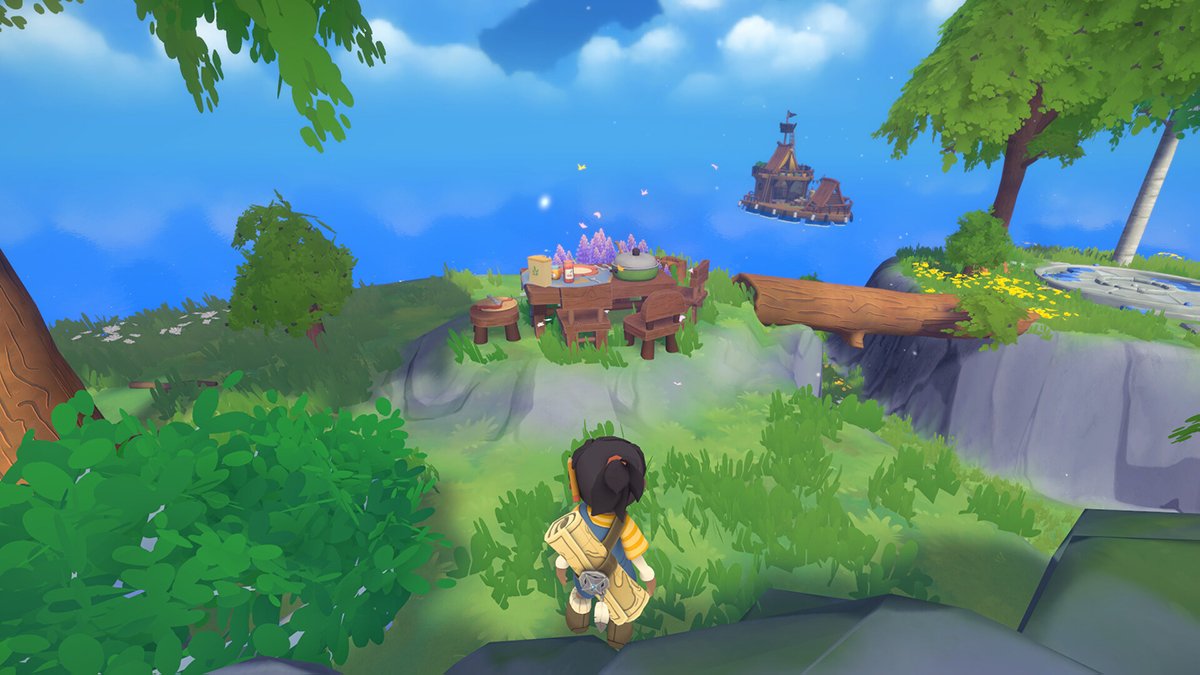
Climbing to high ground gives you a vantage point over the whole island. From up there you can spot landmarks, plan routes, and line up distant features.
Elevation is one of your best mapping tools, even though it isn’t an item in your kit. A good overlook can save you ten minutes of wandering around at sea level trying to figure out where a ruin actually is.
Slow down and actually look around. The game rewards careful observation far more than rushing from one objective to the next.
If that unhurried pace is your thing, Map Map fits right in with the other picks on our roundup of relaxing games with zero combat.
Talk to your crew and chase the cozy extras
Your crew of adventurers is the source of most of your tasks. Check in with them often to pick up new locations to find and small quests to complete.
Following their requests is how the treasure hunt actually moves forward, so don’t wander off and forget about them entirely.
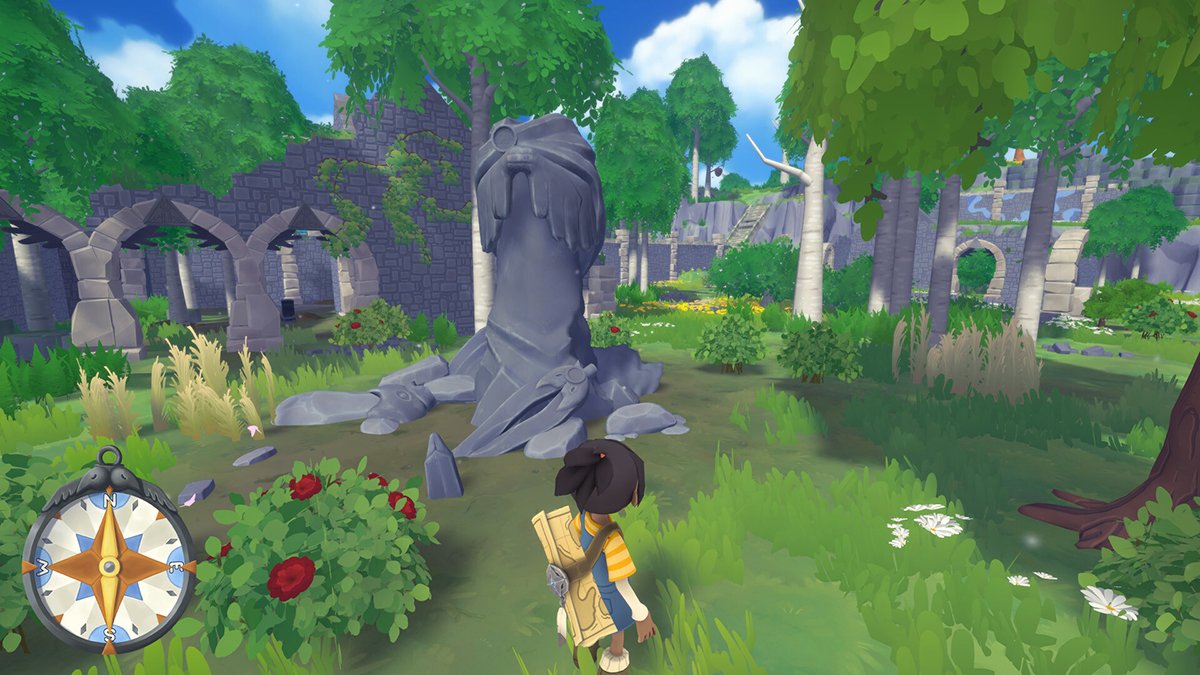
Beyond the main objectives, every island is packed with extras for the curious. Ancient ruins, wildlife, hidden paths, and little tucked-away details all reward poking around off the obvious route.
There are also collectible stickers scattered about and a full set of achievements to chase if you’re a completionist.
If island-hopping and cataloguing is your kind of cozy, you’ll feel right at home with our Collector’s Cove tips and our Mika and The Witch’s Mountain guide too.
Closing thoughts
Map Map asks you to think instead of follow, and that’s what makes it special. The first hour can feel slow and a little confusing.
Push through it. Once you understand how to measure, draw arcs, and triangulate, every island turns into a satisfying little puzzle you get to solve your own way.
Grab your pencil, set up camp, and start charting. That blank coastline won’t fill itself in.
–
Images are from the Map Map – A Game About Maps page on Steam and used under Fair Use.
Want to start your own blog, a personal website or something for your small business or side hustle? Site Ground is the absolute best web hosting company out there
You Might Also Like...
Mouse Polling Rate 1000 vs 2000 vs 8000 Explained (What It Really Changes, and What to Use)

Mouse polling rate is one of those settings that sounds insanely importan (like flipping from 1000 Hz to 8000 Hz should instantly turn you into an esports god) but in real life it’s more nuanced. If…
How to Force Borderless Fullscreen in PC Games (Every Method That Actually Works)
If you've ever tried to alt-tab out of a PC game and watched your screen freak out for a solid five seconds, you already know why borderless fullscreen mode exists. It's the sweet spot between…
How to Fix Xbox Controller Not Detected on Windows 11
So you've sat down for a gaming session, grabbed your Xbox controller, and… nothing. Windows 11 acts like it doesn't exist. No vibration, no light, no input. Don't worry, you're not alone, and this…
Japanese Rural Life Adventure: Beginner Tips You Need to Know

Japanese Rural Life Adventure has finally made the jump from Apple Arcade to Steam, and if you're a fan of cozy farming sims like Stardew Valley or Harvest Moon, this one absolutely deserves a spot…
Under the Island Tips: The Ultimate Beginner’s Guide to Seashell Island
If you're just stepping onto Seashell Island for the first time, you're in for a treat. Under the Island is a 2D top-down action-adventure that wears its classic Zelda inspiration proudly, mixing…
Retrace the Light Tips: A Beginner’s Guide With Puzzle, Combat, and Exploration Tricks

If you’re looking for Retrace the Light tips or a quick beginner’s guide to Retrace the Light, the biggest thing to know is this: the game is built around a mindset shift. It’s not just “solve…
18 Indie Games that are Better than Most AAA Major Releases
Last updated December 31, 2025. There's been a massive explosion of amazing indie games in recent years. Having an alternative to the massive AAA games is always a good thing and many of these indie…
All Unicorn Overlord Characters: Recruitment Guide, Builds, and Missables
This master post rounds up every recruitable character in Unicorn Overlord, with an alphabetical list linked to a detailed guide for each character. You’ll also find practical tips on recruiting,…
The Top 10 Nintendo 64 Games You Need to Play
The Nintendo 64 launched after the Super Nintendo in 1996 and was Nintendo's first console with fully 3D 64-bit graphics. It's one of the most famous and well-recognized systems in videogame history,…
Golden Sun Djinn Guide and Djinn Location Guide
The Djinn system in the Game Boy Advance classic, Golden Sun, introduces a novel and intricate layer to the traditional RPG formula, setting it apart from its contemporaries. This system not only…
The Top 10 Super Nintendo Games You Still Need to Play
The Super Nintendo Entertainment System (SNES) is a legendary video game console that holds a special place in the hearts of gamers around the world. Released by Nintendo in 1990 (in Japan) and 1991…