
Romestead drops you into a fallen Rome that has been overrun by the undead, and your job is to rebuild it from a pile of rubble. It is a co-op survival town-builder for up to eight players, and it launched in Steam Early Access in May 2026.
The catch is that the game explains almost none of its systems. You get a pickaxe, a vague sense of dread, and a sunset that brings monsters.
These tips cover the stuff that trips up new players, so you can skip the painful trial and error. Here is how to survive your first nights and actually start growing a town.
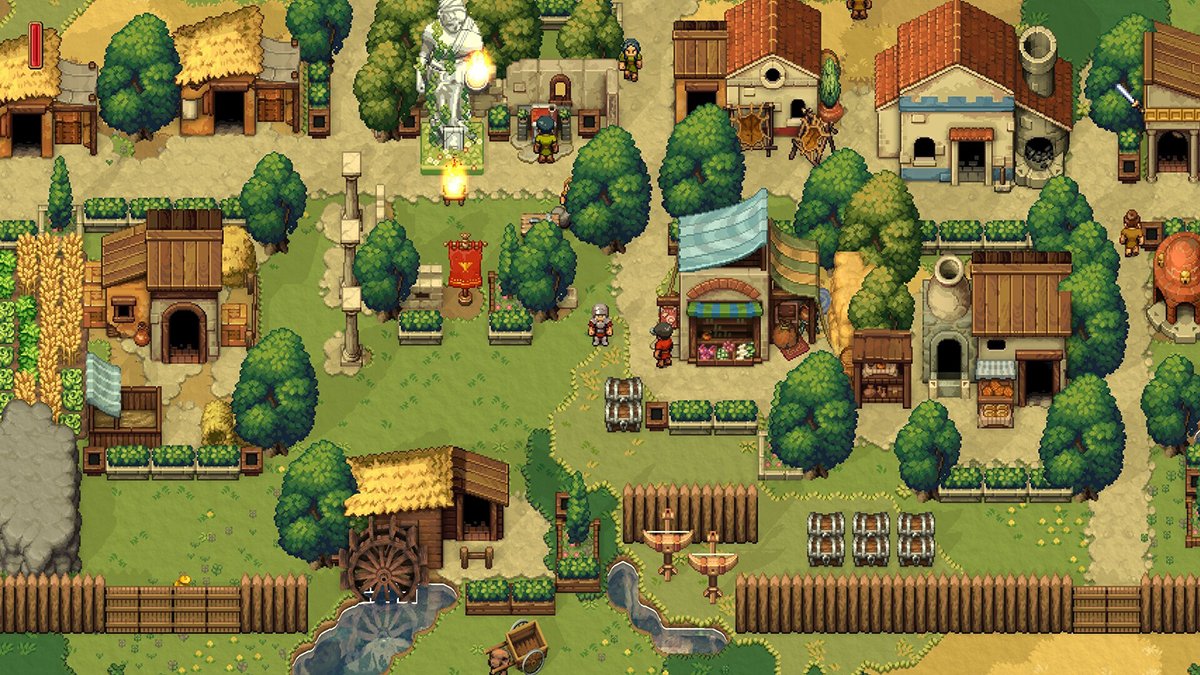
Start as the Scholar (or Legionary)
When you make your character, you pick one of eight professions. Each one gives a +5 head start in a single skill plus a starting item, and that is all it does.
Your profession does not lock you into anything. Every skill levels up through use, so you can play a Scholar like a brawler later if you feel like it.
For a first run, the Scholar is the easiest pick.
It starts with the Scroll of the Novice, a ranged magic offhand that lets you damage the undead from a safe distance while you learn the combat.
If you would rather fight up close, go Legionary. Its Flint Hasta is a spear, and the extra reach buys you time to react before enemies are in your face.
Build the Altar first, every single time
This is the tip that saves the most headaches. The Altar is the most skipped building by new players, and skipping it quietly stalls your whole game.
Romestead does not have a normal tech tree. You unlock new buildings and recipes by completing god quests at the Altar, so without it your progress just stops.
Build it on day one, interact with it, and start your first quest.
If you ever feel lost about what to do next, the Altar is almost always the answer.

Lay down a compact starter settlement
Only five buildings are available on your first day: the Altar, Workbench, House, Lumber Yard, and Insula.
The Workbench is your crafting hub, and the Insula adds extra room for citizens.
Keep your buildings close together. A spread-out town costs far more wood and stone to wall off later, and it is much harder to defend during a raid.
One thing that confuses everyone early: logs, stone, and ore are carried items that will not go into normal chests.
You need a Material Storage building to hold them, so place one early.

Make it through your first night
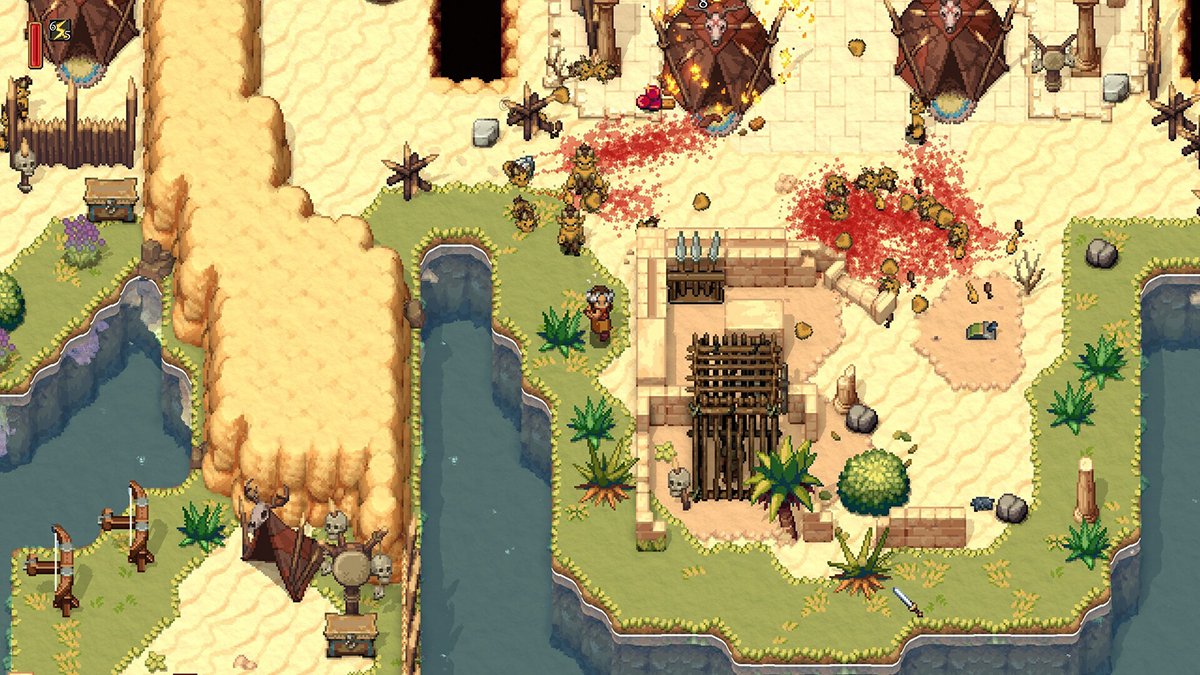
When the sun goes down, the undead Fallen come out. They are slow on their own but genuinely dangerous in a crowd.
Light is your friend. Staying near torches lowers the pressure from the Fallen, so keep your base lit and avoid fighting big groups out in the open.
If you are not ready for a fight, there is no shame in skipping it.
Drop a bedroll inside your house and press E to sleep straight through to morning.
Weapons and tools never break in Romestead, so playing it safe costs you nothing. Wait until you are stronger before you go picking fights.

Learn the dodge-and-punish combat rhythm
Combat is built around reading enemy animations. Every attacker has a windup before they swing, and your job is to dash-dodge through that windup and hit them during the recovery.
If the timing feels rough, lean on reach. A spear lets you poke from outside the swing arc, and magic scrolls have a quick tap attack plus a heavier charged one.
You can also throw the environment at enemies. Pick up a rock or a bush, fling it, and it deals real damage when you are out of options.
When you die, you respawn at your bedroll and your body stays where you fell with all your loot.
Travel light when you go back for it, because the area might still be crawling with the Fallen.
If this style of fight is your thing, our Kingdom of Night beginner tips cover another action game built around dodging and reading attacks.

Don’t rush the Giant Owl
Soon after building the Altar, you will see a quest for the Giant Owl, also called the Guardian of Minerva. It shows up early, but do not fight it on day one or it will flatten you.
Gear up first, then take it on. Beating it and offering the Guardian’s Eye at the Altar is the real gate to a proper town.
That single fight unlocks the Carpenter’s Workshop, the Blacksmith, Altar Level 2, and a stack of new gear and recipes.
Without the Carpenter you cannot even upgrade your other buildings, so this is the early-game milestone worth preparing for.

Get wheat growing for Ceres early
One of your first big quests comes from Ceres, the goddess of crops. Her Honoring the Soil quest asks for a chunk of wheat, commonly around 40, and unlocks the Farmstead, which is the start of real food production.
Crops take time to grow, so plant wheat as soon as you can.
Wheat only grows in the Plains biome where you start, and it is smart to bank a stack for the offering instead of turning it all into food.
Check the exact amount at the Altar before you spend it, since Early Access tuning shifts these numbers between updates.
There is also a food trap worth knowing. Items list two separate values: how much health they heal when you eat them, and how much they feed a citizen.
Some snacks heal you but give your citizens nothing.
Olives restore your own health but add zero to a citizen’s food, so stock proper citizen food if your settlers are starving with a full pantry.
If you enjoy the farming side of things, our Japanese Rural Life Adventure tips dig into a cozier crop sim worth a look.

Recruit citizens and keep them loyal
Your town runs on citizens, and you find them out in the world at camps, ruins, and small outposts. Some are locked in cages, so free them and bring them home.
Each citizen has job preferences and personality traits, and you assign them to workshops to keep production going.
Each workshop only holds 10 queued jobs at a time, so check in on them.
Loyalty matters more than it looks. Give citizens their preferred gifts to raise loyalty, which boosts their XP gain and makes them less likely to pack up and leave.
One handy setting: turn on the Carpenter’s Constructing job and they will fetch materials and build your queued projects for you instead of you hauling everything by hand.
If you like games that mix combat with building up a home base, our Never Grave beginner tips cover a roguelite with its own village system.

Play the gods to your advantage
There are seven gods to court: Minerva, Ceres, Diana, Mars, Mercury, Venus, and Vulcan. You make offerings at the Altar to raise your worship level, which earns points you spend on blessings.
Only one blessing can be active at a time, so do not spread yourself thin across all seven early on. Pick the god that solves your current problem.
Ceres is the easiest starting pick because she accepts things you already produce, and her bonuses boost your whole settlement.
Lean toward Mars if raids are wrecking you, and work toward Mercury for the Altar Level 2 teleport network that gives you fast travel between bases.

Quick tips to remember
A few smaller things that make life easier. Drop a camping tent near a boss fight and you get a respawn point close by instead of a long walk back.
Smash the hidden chests tucked into grass and bushes around the map, since they hold armor pieces and materials. You can even pick up a whole chest and re-place it where you need quick storage.
Your character carries over between worlds.
All your skills, talents, and gear stay with you when you start a fresh map, so experimenting with new seeds costs you nothing.
Each building upgrade raises its max job level by three and unlocks new recipes, so most “I can’t craft this yet” moments are upgrade problems and not bugs.
And expect frequent patches, because the developers push updates almost daily during Early Access.
Now grab a pickaxe and go rebuild Rome.
The first few nights are the hardest, and it gets a lot more fun once your town starts running itself.
–
Images in this article are from the Romestead page on Steam and used under Fair Use.
Want to start your own blog, a personal website or something for your small business or side hustle? Site Ground is the absolute best web hosting company out there
You Might Also Like...
Mouse Polling Rate 1000 vs 2000 vs 8000 Explained (What It Really Changes, and What to Use)

Mouse polling rate is one of those settings that sounds insanely importan (like flipping from 1000 Hz to 8000 Hz should instantly turn you into an esports god) but in real life it’s more nuanced. If…
How to Force Borderless Fullscreen in PC Games (Every Method That Actually Works)
If you've ever tried to alt-tab out of a PC game and watched your screen freak out for a solid five seconds, you already know why borderless fullscreen mode exists. It's the sweet spot between…
How to Fix Xbox Controller Not Detected on Windows 11
So you've sat down for a gaming session, grabbed your Xbox controller, and… nothing. Windows 11 acts like it doesn't exist. No vibration, no light, no input. Don't worry, you're not alone, and this…
Japanese Rural Life Adventure: Beginner Tips You Need to Know

Japanese Rural Life Adventure has finally made the jump from Apple Arcade to Steam, and if you're a fan of cozy farming sims like Stardew Valley or Harvest Moon, this one absolutely deserves a spot…
Under the Island Tips: The Ultimate Beginner’s Guide to Seashell Island
If you're just stepping onto Seashell Island for the first time, you're in for a treat. Under the Island is a 2D top-down action-adventure that wears its classic Zelda inspiration proudly, mixing…
Retrace the Light Tips: A Beginner’s Guide With Puzzle, Combat, and Exploration Tricks

If you’re looking for Retrace the Light tips or a quick beginner’s guide to Retrace the Light, the biggest thing to know is this: the game is built around a mindset shift. It’s not just “solve…
18 Indie Games that are Better than Most AAA Major Releases
Last updated December 31, 2025. There's been a massive explosion of amazing indie games in recent years. Having an alternative to the massive AAA games is always a good thing and many of these indie…
All Unicorn Overlord Characters: Recruitment Guide, Builds, and Missables
This master post rounds up every recruitable character in Unicorn Overlord, with an alphabetical list linked to a detailed guide for each character. You’ll also find practical tips on recruiting,…
The Top 10 Nintendo 64 Games You Need to Play
The Nintendo 64 launched after the Super Nintendo in 1996 and was Nintendo's first console with fully 3D 64-bit graphics. It's one of the most famous and well-recognized systems in videogame history,…
Golden Sun Djinn Guide and Djinn Location Guide
The Djinn system in the Game Boy Advance classic, Golden Sun, introduces a novel and intricate layer to the traditional RPG formula, setting it apart from its contemporaries. This system not only…
The Top 10 Super Nintendo Games You Still Need to Play
The Super Nintendo Entertainment System (SNES) is a legendary video game console that holds a special place in the hearts of gamers around the world. Released by Nintendo in 1990 (in Japan) and 1991…