
Life Below drops you into a dying ocean and hands you one job: bring the reef back to life.
You play as Thalassa, a water sprite promoted to Guardian by Gaia, with coral, pearls, lures, and a small army of helpers as your tools.
It is a city builder, but the citizens are fish and the buildings are living coral.
If you are just getting started and the systems feel like a lot, this guide breaks down what actually matters in the first few hours.
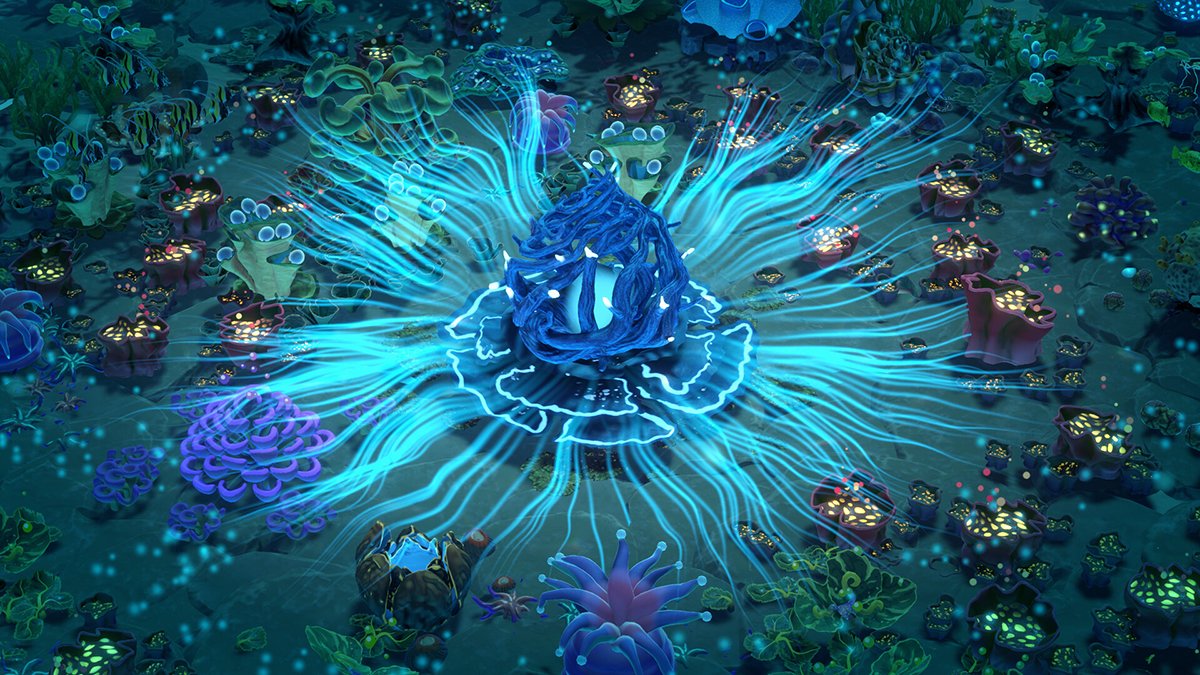
Keep the Reef Heart alive above all else
The Reef Heart is the structure everything revolves around. It has a health and comfort bar, and if that bar hits zero, your run is over.
Treat it like the one thing you cannot afford to lose. When a hazard hits or a zone goes unstable, your first question should always be whether the Reef Heart is taking damage.
Keep an eye on the temperature and acidity of the zone it sits in.
A healthy Heart is what lets you upgrade later and reach new parts of the map.

Water Sprites are your entire workforce
Nothing gets built, harvested, or crafted without Water Sprites. They are the little workers swimming around carrying materials and turning your plans into action.
The more sprites you have, the faster everything happens.
Early on, a shortage of sprites is the most common thing slowing players down.
Build Sprite Wells and craft eggs to hatch more of them as soon as you can spare the resources.
A bigger workforce pays for itself almost immediately, because every other system depends on it.
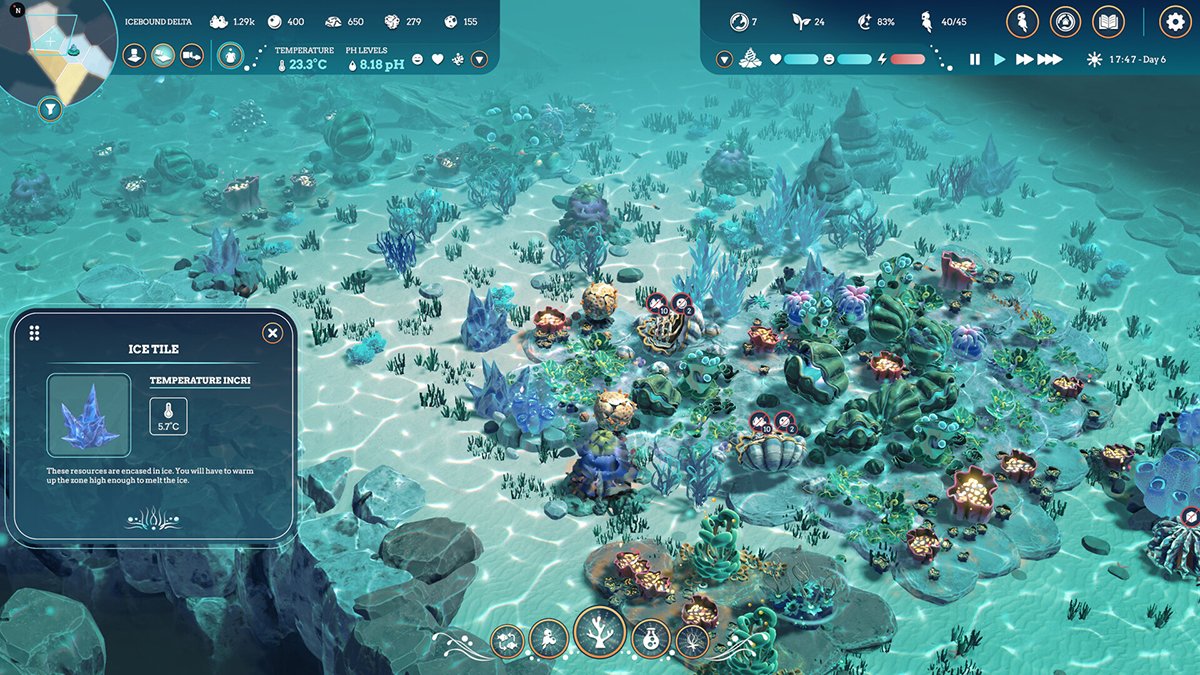
Learn the resource loop fast
Two materials carry the early game: coral matter and pearls. You get coral matter from Sprout Coral, which can only be placed on sprout nodes, and you get pearls from clams.
These are the building blocks for almost everything you construct. Keep a steady supply of both so you are never stuck waiting in the middle of a build.
The third piece is Growth Essence, which your sprites harvest and you spend on research.
Research unlocks new corals, better buildings, and the tools you need to handle tougher zones, so do not neglect it.
Later on, the game introduces refined materials made by processing your raw resources, and that step takes time.
Build the refining structures a little ahead of when you need them, so you are not stuck waiting on a slow queue at a critical moment.

Build a real energy network
Most of your important buildings need power, and power comes from Moon Coral. Think of Moon Coral as your generators and the energy grid as the wiring.
Production buildings have to be connected back to the Reef Heart through this network. If a building is not producing, a broken or missing energy connection is often the reason.
Plan your connection points instead of scattering buildings at random.
A little layout planning early saves you from ripping things up and rebuilding later.
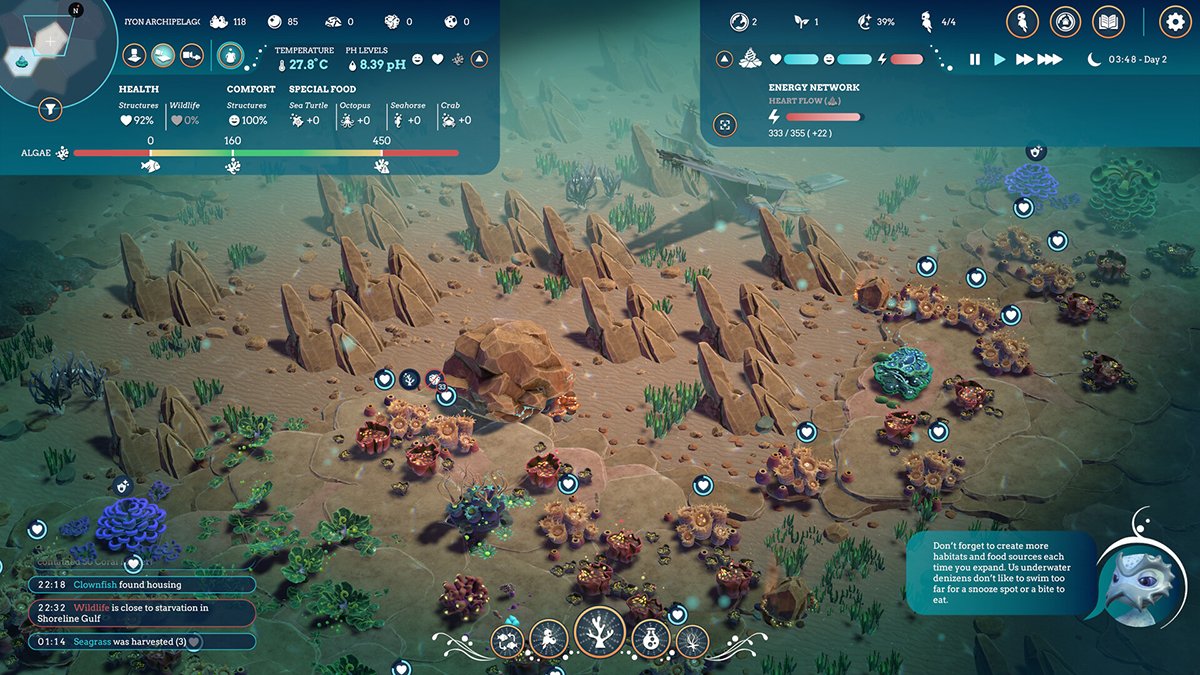
Master temperature and pH balance
Every zone has its own temperature and pH level, and your corals and wildlife only thrive when those values sit in a healthy range.
Push a zone too hot, too cold, too acidic, or too alkaline and things start to die.
You balance this with four corrective coral types: one to warm a zone, one to cool it, one to raise acidity, and one to lower it. When a value drifts, you place the matching coral to pull it back.
Here is a tip that changes how you build: energy generators raise the heat of the zone they sit in.
That makes cold zones perfect power hubs, because the low starting temperature lets you pack in far more generators before you need to cool things down.

Biodiversity is your most valuable resource
Biodiversity is the currency that drives your whole playthrough. You spend it on research and on buying access to new zones, so you always want more of it.
You earn biodiversity by attracting wildlife and keeping it around. Every species that settles in adds to the total.
The catch is that losing fish costs you biodiversity. If a hazard wipes out a population or a zone collapses, that number drops, so protecting your wildlife matters just as much as attracting it.

Use lures to bring in the right wildlife
Wildlife does not show up on its own. You craft lures to attract specific species, and there are over 40 creatures to bring in, from coral crabs to hammerhead sharks.
A lure only works if the zone can actually support the species. Each animal needs the right food and a suitable habitat, or it will not stick around.
Build the food sources and homes first, then drop the lure.
If you enjoy collecting and caring for creatures, this loop scratches the same itch as a game like Creature Keeper.
Some species do more than pad your biodiversity, too. Certain creatures bring their own perks, and keeping your zones comfortable can even draw passing visitors like whales overhead, so aim for a reef that is genuinely pleasant to live in rather than just crowded.

Know which hazards to fight and which to ride out
Life Below throws a steady stream of threats at your reef, and part of getting good is knowing your options. Some hazards you counter directly, and some you simply survive and clean up afterward.
Temperature swings like heatwaves and coldwaves are handled with your corrective corals, as are acid and alkaline spikes.
Algae blooms and invasive predators like lionfish and moray eels need their own specific solutions, which you unlock through research.
Jellyfish are a great example of using nature against nature: they eat smaller creatures, but turtles will deal with them for you.
Oil spills and garbage patches are the nasty ones, since they damage buildings and can spiral fast, so research the tools to handle pollution before it ever shows up.

Expand carefully and free the Lost Spirits
Progress means moving into new zones, but many of them start as ruin or corrupted zones. These actively damage your structures until you stabilize them, so do not rush in unprepared.
Each troubled zone has a Lost Spirit waiting for help. Freeing them ties into your story progress and into upgrading the Reef Heart.
Stabilize a zone, help its spirit, and you open the door to the next, tougher area. Expand at a pace your resources and energy network can actually keep up with.
Small tips that save big headaches
A few habits make the whole game smoother. Save before you head into a new zone or when a serious hazard is brewing, so one bad turn does not cost you an hour.
Your structures automatically drop into standby when they are not needed, which means you rarely have to demolish anything.
Damaged corals can be repaired for a small material cost, so fix rather than replace whenever possible.
Use the game speed controls during slow stretches like resource refining, and switch to wildlife view when you just want to slow down and enjoy the reef you built. If that cozy, low-pressure vibe is what you are after, you will also like relaxing picks such as Mika and The Witch’s Mountain.

Bringing the reef back to life
Life Below rewards patience and steady management more than fast expansion.
Get the Reef Heart, your sprites, and your energy grid sorted, keep your zones balanced, and the rest of the ocean opens up at its own gentle pace.
Now go bring that reef back to life.
–
Images in this article are from the Life Below page on Steam and used under Fair Use.
Want to start your own blog, a personal website or something for your small business or side hustle? Site Ground is the absolute best web hosting company out there
You Might Also Like...
Mouse Polling Rate 1000 vs 2000 vs 8000 Explained (What It Really Changes, and What to Use)

Mouse polling rate is one of those settings that sounds insanely importan (like flipping from 1000 Hz to 8000 Hz should instantly turn you into an esports god) but in real life it’s more nuanced. If…
How to Force Borderless Fullscreen in PC Games (Every Method That Actually Works)
If you've ever tried to alt-tab out of a PC game and watched your screen freak out for a solid five seconds, you already know why borderless fullscreen mode exists. It's the sweet spot between…
How to Fix Xbox Controller Not Detected on Windows 11
So you've sat down for a gaming session, grabbed your Xbox controller, and… nothing. Windows 11 acts like it doesn't exist. No vibration, no light, no input. Don't worry, you're not alone, and this…
Japanese Rural Life Adventure: Beginner Tips You Need to Know

Japanese Rural Life Adventure has finally made the jump from Apple Arcade to Steam, and if you're a fan of cozy farming sims like Stardew Valley or Harvest Moon, this one absolutely deserves a spot…
Under the Island Tips: The Ultimate Beginner’s Guide to Seashell Island
If you're just stepping onto Seashell Island for the first time, you're in for a treat. Under the Island is a 2D top-down action-adventure that wears its classic Zelda inspiration proudly, mixing…
Retrace the Light Tips: A Beginner’s Guide With Puzzle, Combat, and Exploration Tricks

If you’re looking for Retrace the Light tips or a quick beginner’s guide to Retrace the Light, the biggest thing to know is this: the game is built around a mindset shift. It’s not just “solve…
18 Indie Games that are Better than Most AAA Major Releases
Last updated December 31, 2025. There's been a massive explosion of amazing indie games in recent years. Having an alternative to the massive AAA games is always a good thing and many of these indie…
All Unicorn Overlord Characters: Recruitment Guide, Builds, and Missables
This master post rounds up every recruitable character in Unicorn Overlord, with an alphabetical list linked to a detailed guide for each character. You’ll also find practical tips on recruiting,…
The Top 10 Nintendo 64 Games You Need to Play
The Nintendo 64 launched after the Super Nintendo in 1996 and was Nintendo's first console with fully 3D 64-bit graphics. It's one of the most famous and well-recognized systems in videogame history,…
Golden Sun Djinn Guide and Djinn Location Guide
The Djinn system in the Game Boy Advance classic, Golden Sun, introduces a novel and intricate layer to the traditional RPG formula, setting it apart from its contemporaries. This system not only…
The Top 10 Super Nintendo Games You Still Need to Play
The Super Nintendo Entertainment System (SNES) is a legendary video game console that holds a special place in the hearts of gamers around the world. Released by Nintendo in 1990 (in Japan) and 1991…