
The first Brigandine showed up on the PlayStation in the late 90s, then the series vanished for roughly twenty years before Brigandine: The Legend of Runersia revived it in 2020. Brigandine Abyss is the follow-up, out August 26 on PC and August 27 on Switch 2, PS5, and Xbox Series X|S.
In screenshots it looks like Fire Emblem, but the actual shape of the game is much closer to Nobunaga’s Ambition with a tactics RPG bolted into it.
You spend most of your time on a world map deciding what to build and where to push, and the hex battles are the payoff for planning you already did. So here is everything I wish somebody had explained to me before my first season.
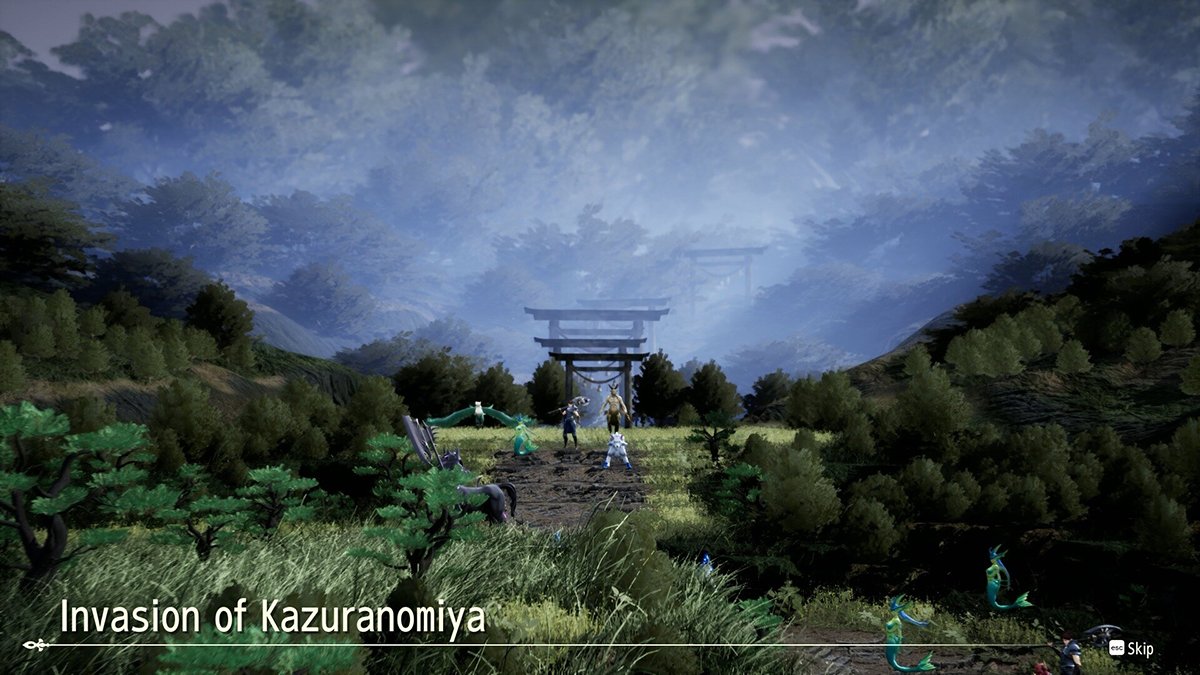
Learn the season loop before you attack anything
Every turn is a season, and each season runs through an Organization phase, an Attack phase, and then the invasions themselves. Organization is where you recruit, equip, upgrade bases, and send squads on quests.
The catch is that a squad you commit to something during Organization is not available for the Attack phase. That single rule is behind most early campaign disasters, because people spend their whole army questing and then find they have nobody to defend with.
Treat Organization as budgeting rather than busywork. Decide what your army is doing that season before you touch a single menu.

Your command score matters more than any other stat
Each squad is one leader plus up to five monsters, and every monster costs command points that come out of that leader’s command score. Leveling a leader raises the score, which is how you eventually field a full retinue.
Now the wrinkle. When a monster upgrades its class, its command point cost goes up too, so a promotion can price your favorite unit out of the squad it has been fighting in all game.
Check your remaining command points before you promote anything. I lost a griffin out of my best squad this way and had to rebuild the whole formation around it.
Killing the leader ends the fight
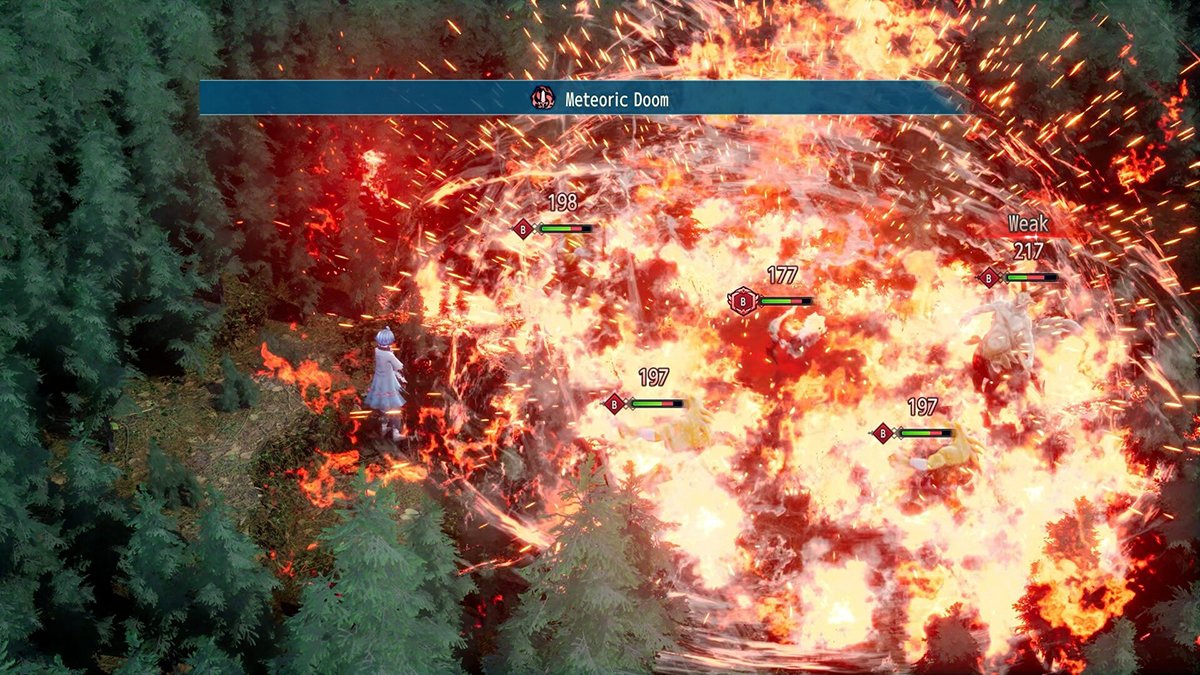
Defeat an enemy squad’s leader and the monsters under them retreat, no matter how healthy they are. This is the fastest route through almost every battle in the game.
It also works in reverse, which people forget. Your leaders are usually your squishiest and most valuable units, so keep a wall of monsters between them and anything with reach.
There is a reason to do it the slow way sometimes. Killing individual monsters gives you more experience and thins out what the enemy can bring back for the next fight.
Rally is the new mechanic you will forget exists
The big addition over Runersia is Rally. A monster can stop acting on its own and attach itself to its leader instead, handing over a passive trait for the rest of the battle.
Those traits vary by monster and include things like knockback on attacks, an elemental property added to damage, defensive boosts, and extra actions. It is a real tradeoff, since you are giving up a body on the field to make one unit better.
Where it shines is on a fragile leader who keeps getting picked off. Rallying something defensive into them is often worth more than the fifth attacker you were never going to protect anyway.

Check affinities before you commit to a fight
Every unit has an offensive affinity and a separate defensive affinity. A unit with wind attack deals wind damage, and a unit with wind defense takes reduced damage from it, and those two do not have to match on the same character.
This is the single easiest way to make a fight go sideways. A squad that looks strong on paper can whiff against a defending force that happens to resist everything it throws.
Look at the enemy composition before you launch the invasion, not after the map loads. You can back out of a bad matchup for free.
Play the terrain, not just the numbers
Abyss adds elevation to the hex grid, and it changes real things. Height affects the range of ranged and flying attacks, and moving uphill costs you extra movement.
Two older rules still apply and still catch people. Zone of control means you cannot slip past a hex adjacent to an enemy, and surrounding a target gives you an encirclement bonus to damage and accuracy.
One more piece of housekeeping. Magic is guaranteed to hit, but most casters cannot move and cast in the same turn, so they need bodyguards or they need to already be standing where you want them.
All your units act before the enemy does
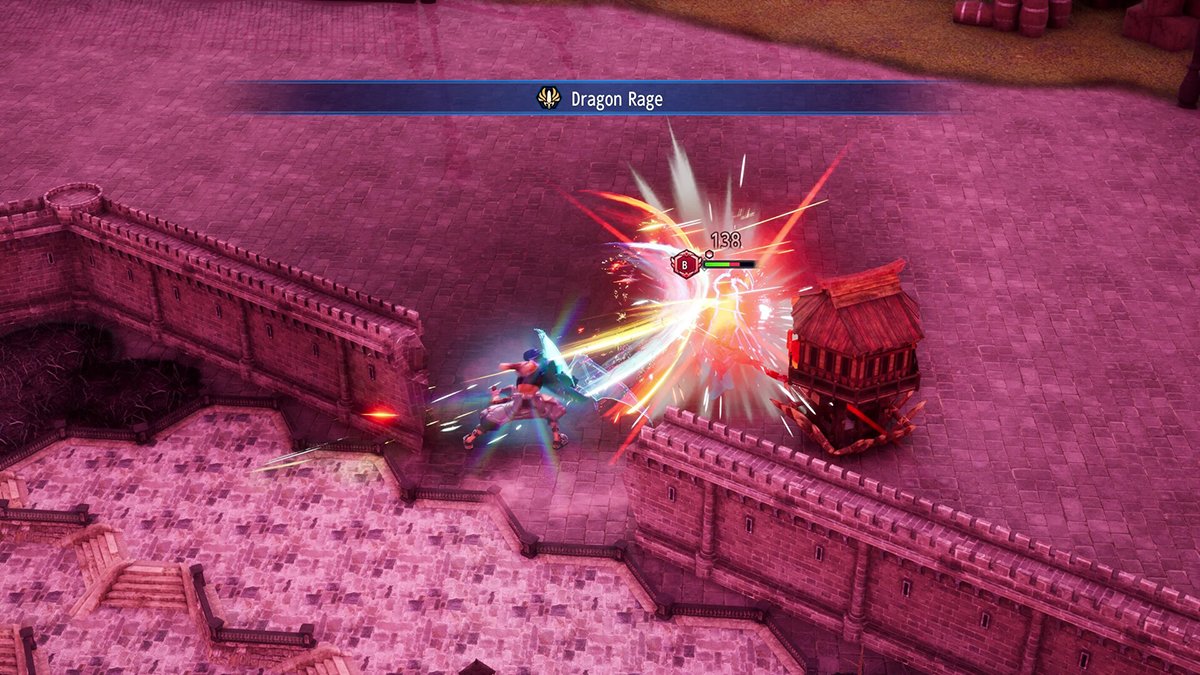
Turn order in Abyss is not interleaved. Every unit you control acts, then every enemy unit acts, which makes the flow of a battle very different from most tactics games.
Use it deliberately. You can push a unit in, take a swing, and pull the rest of your line back out of reach in the same turn, or bunch up for encirclement knowing exactly what the retaliation will look like.
Mercenaries are expendable, story knights are not
Recruited mercenary knights die permanently when they fall in battle. Story-relevant knights do not, which sorts your roster into two very different categories.
Mercenaries with regional specialties are the ones you send on quests for materials and equipment. Keep your named knights home, invested, and leveling.
Monsters are a softer loss, since defeated ones can be revived for a fee after a battle. That safety net is a big part of why Abyss is friendlier than the older games in the series.

Hoard your class change items
Knights and monsters both hit a class upgrade at level 10, and most get a second one at level 20 if you are holding the right class change item. Those items are not lying around in bulk.
Do not just dump one into whatever unit crossed the threshold first. Between the command point increase and the fact that a promoted unit locks into a path, this is a decision worth making with your final squad layout in mind.
Build your bases before you widen the map
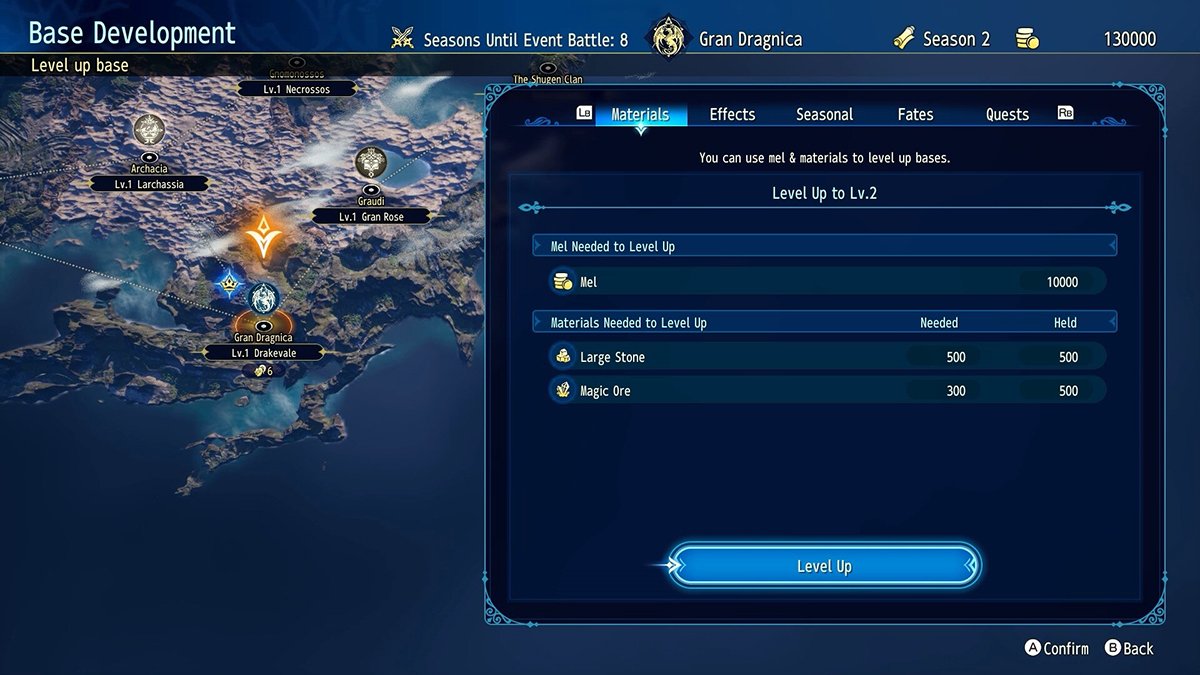
Captured strongholds generate income and give you access to recruitable knights, and they upgrade across three tiers using building materials. Higher tiers unlock better equipment and more options at the Niffrom Market.
The bonuses are faction-flavored, which is what makes this interesting rather than a chore. Gran Dragnica, for example, gets strength bonuses tied to dragons, so investing in bases is also investing in your nation’s whole identity.
Depth beats width in the first stretch. A tier two stronghold is worth more than two undefended border bases you cannot hold.
Understand how you actually get new units
There are a few ways to grow your army, and they are not equally reliable. You can summon generic units at a base, recruit leaders you defeated in battle, or spend extra money to summon a unique leader.
Summoning has some randomness to the stats you get, which gives it a mild gacha feel. Budget for a few disappointing pulls rather than assuming your first summon is the unit you planned around.
What to do in your first ten seasons
Run quests every Organization phase with mercenaries you can afford to lose, and bank the materials. Get one stronghold to tier two before you get greedy about territory.
Push two squads to level 10 for their first class change and leave the rest to catch up. Then pick your weakest neighbor and take exactly one base, keeping enough at home that nobody walks into your capital while you are out.
Also worth knowing before you start: a lot of maps let you win by holding out for 12 turns instead of wiping the defenders. Defending is often the cheaper win.
Story mode lets you set the difficulty, and Normal is already a real fight. Mission mode is the other half of the package, with 24 factions and campaigns that run up to 99 seasons, each with its own win condition rather than a story to follow.
My honest read after a few dozen hours is that Abyss is the most approachable Brigandine yet, and whether that is good news depends on who you are. The enemy AI makes questionable calls, and cheap revivals take the sting out of losing a monster, so veterans who loved how punishing Runersia could be will find this softer.
If you bounced off the series before because the early hours felt like homework with no explanation attached, this is the entry to try. Learn the season loop, respect command points, and the rest of it opens up quickly.
–
Images in this article are from the Brigandine Abyss page on Steam and used under Fair Use.