
Path of Idle: Old Gods Rising came out on August 12, 2026, it costs $8.99 on Steam, and I spent my first two hours playing it completely wrong.
It’s a Lovecraftian idle RPG from a small studio called Small Mill. Auto-battle, loot, chests, a town you upgrade, gear crafting, Runewords, the whole Diablo-shaped pile of systems.
Here’s the thing that finally made it click for me.
You are not the player. You are the coach.
You never swing the sword. You scout the roster, run the training camp, set the lineup, and then you go make a sandwich while the team plays without you. Once I stopped trying to play it like an ARPG and started running it like a team, everything got faster.
So here’s what I’d tell anyone starting today.
Pick a class, then stop thinking about it
There are six classes: Warrior, Mage, Hunter, Cleric, Priest and Mercenary. Each one has its own skill system, its own base stats, and its own weapon restrictions.
Warrior and Cleric are the two easiest picks if you want a smooth first few hours. Warrior can summon extra support units mid-fight, which is basically getting free bodies on the field, and Cleric buffs your whole line while healing it on a steady drip.
Mage is the simplest to run but has the smallest health pool. Hunter works fine, the builds are just a bit one note. Priest is flexible and also the most fiddly of the bunch.
But none of this is a life sentence.
Class choice is a starting lineup, not a contract. The idle system keeps ticking, so switching later doesn’t leave you behind. Pick the one that looks fun and move on.
Your Worshipper is the account, not a character
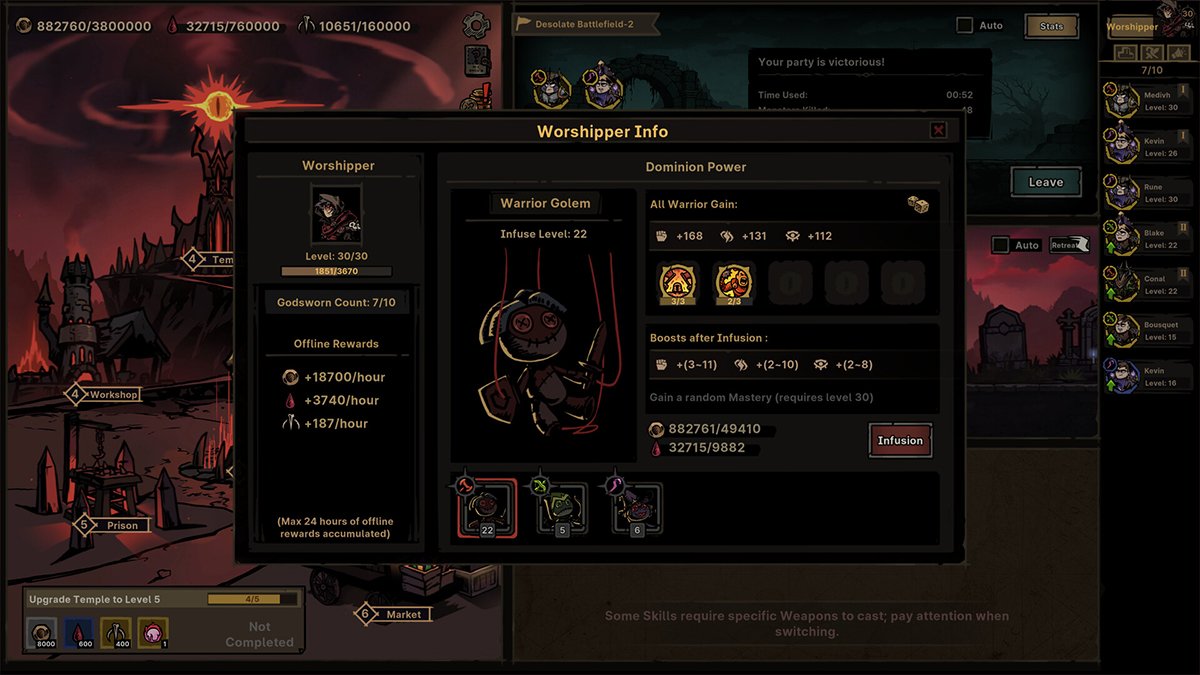
This confused me for a while. Your Worshipper is you, the one awakening the Old Gods, and it never fights.
What it does is Infusion, which spends gold, blood and bone on permanent stat boosts that apply to everything you own.
Think of it as the coaching staff. Nobody in the front office scores a point, but every player on the roster gets better because of them.
Infusion is the only progress that never gets replaced. Heroes get swapped out, gear gets outleveled, Infusion just sits there paying you forever. Feed it whenever you have spare currency.
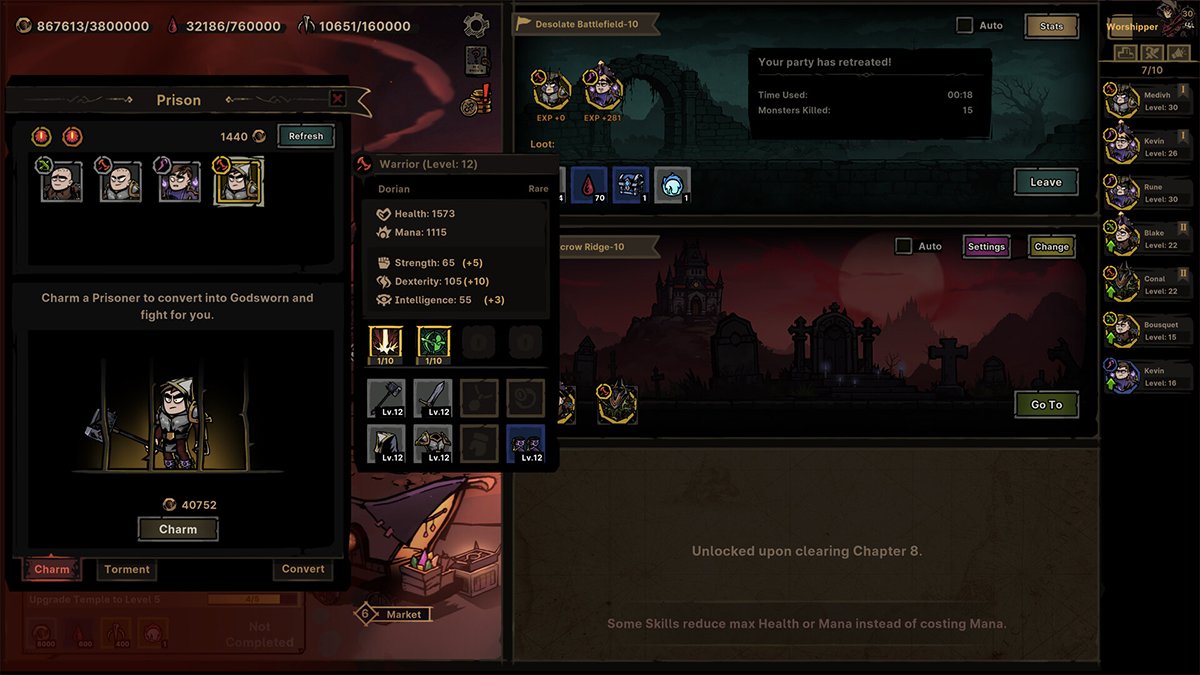
Upgrade the Prison before you upgrade anything else
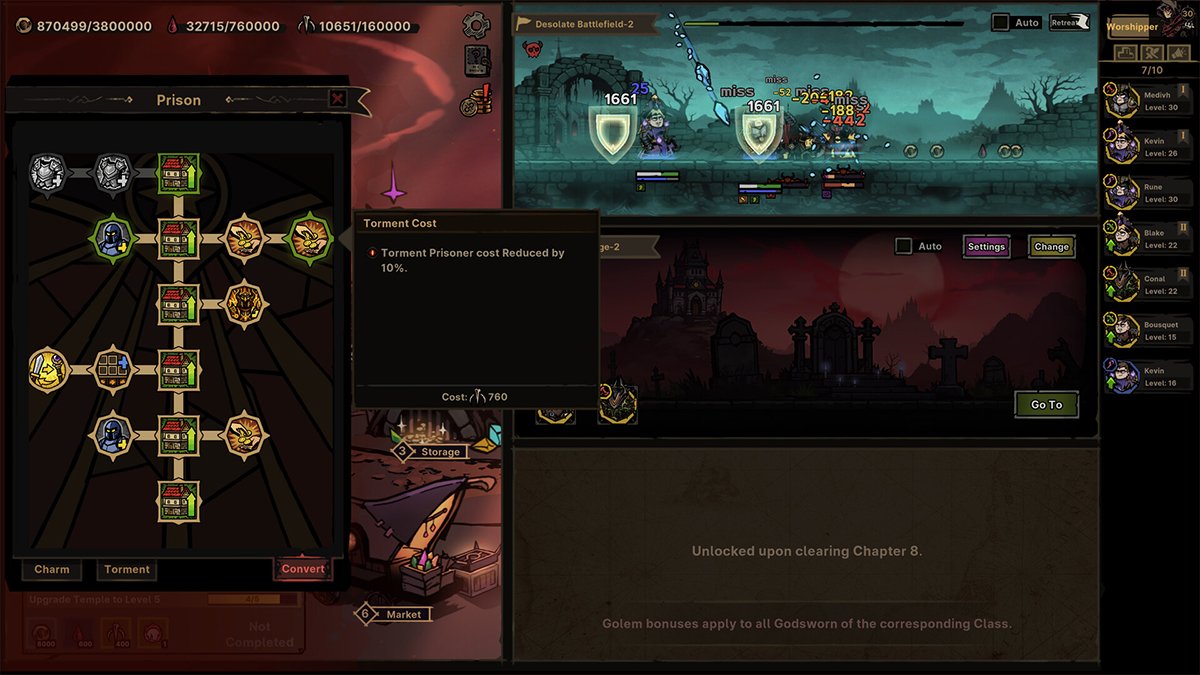
The Prison is where you turn defeated enemies into playable heroes by spending gold. It is the single most important building in the game early on.
Here’s why the timing matters so much. Prison upgrades raise the starting stats of heroes you recruit after the upgrade, not the ones already sitting in your roster.
So every hour you spend charming heroes at a low Prison level is an hour spent signing worse players.
When you do recruit, grab anything with a summon ability first. Extra bodies on the field is one of the strongest effects in the game and it costs you nothing to run.
Upgrade the Prison first, recruit second. Do it in the other order and you’ll be re-recruiting the same heroes in three hours.
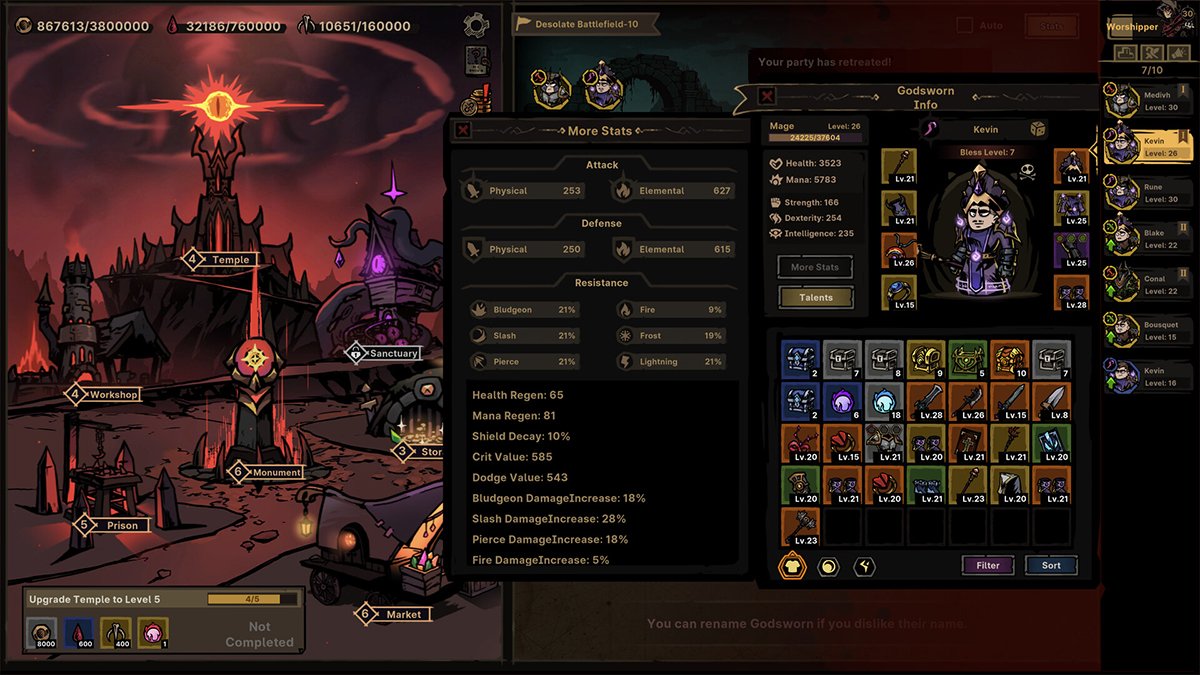
The Temple is your training camp
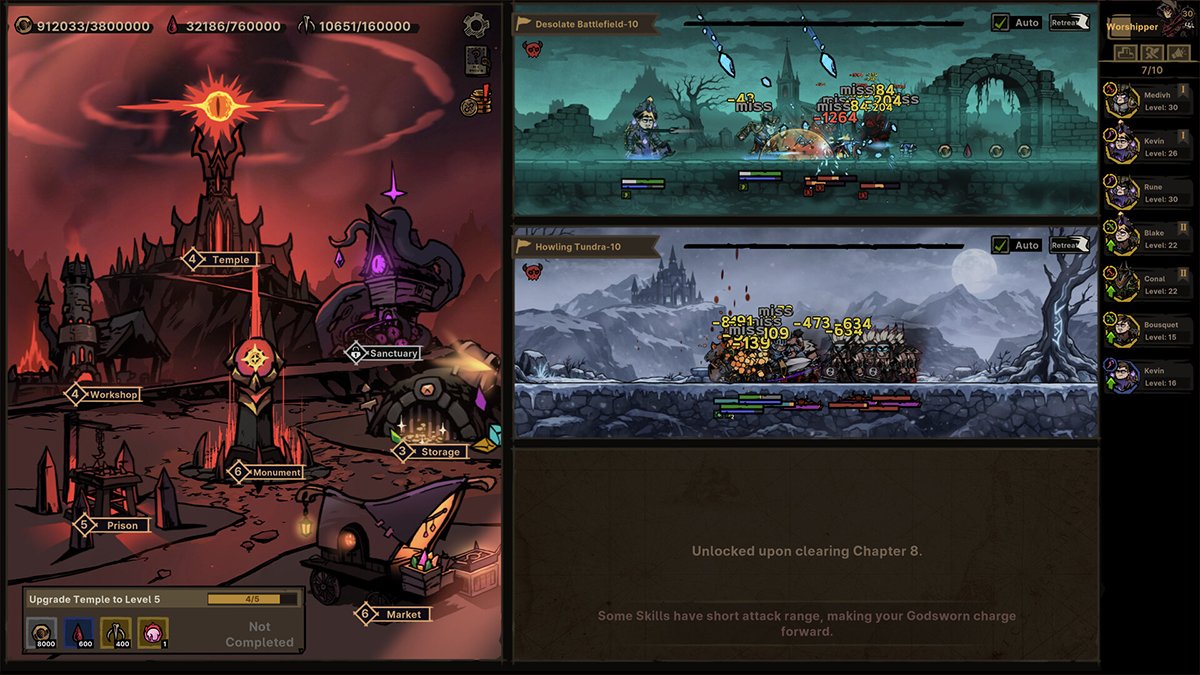
The Temple takes Ancient Blood and turns it into Baptisms, which push your heroes up in level.
There’s a cap on how far that goes, and upgrading the Temple is what raises the cap.
New players tend to dump every drop of Ancient Blood into Baptisms the second they get it. Slow down.
Raising the ceiling is worth more than pressing against the current one. A Temple upgrade improves every hero you’ll ever run, a Baptism improves one hero right now.
Build two full lines, not one stacked one
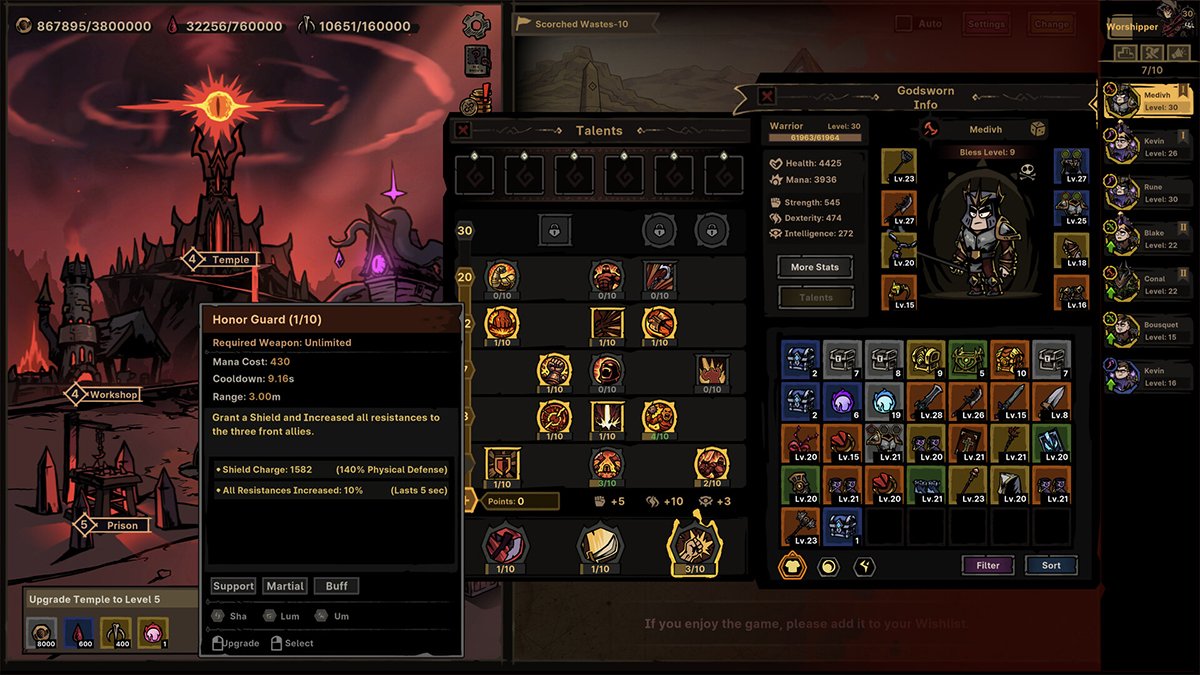
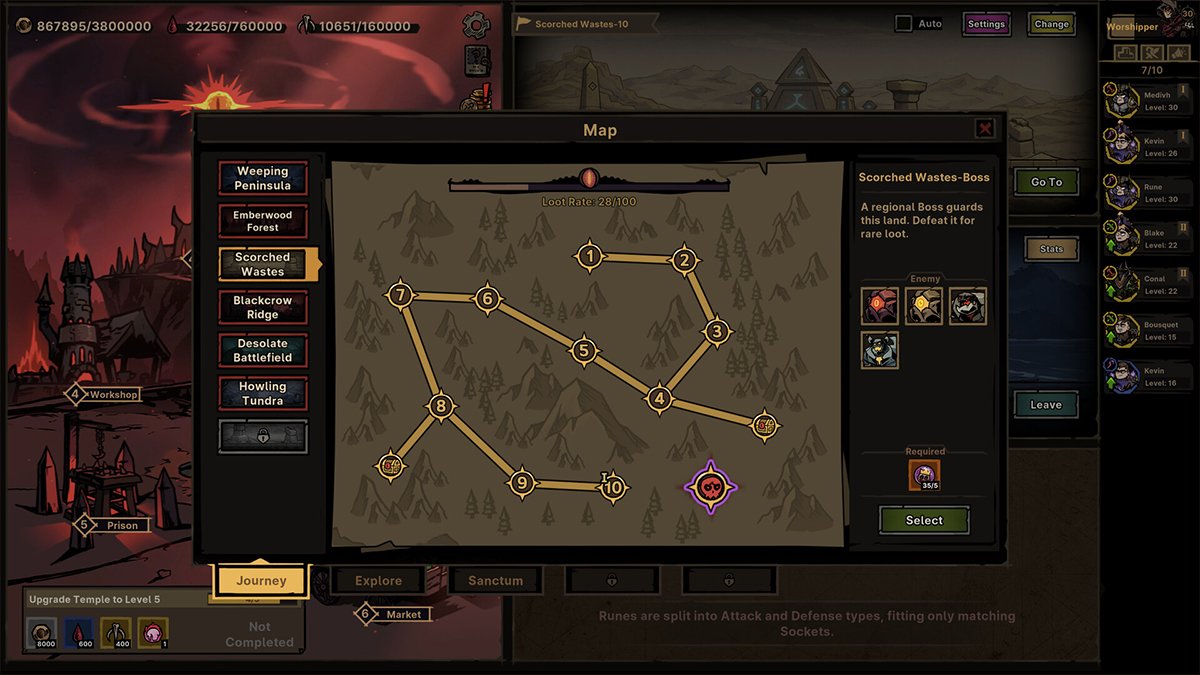
The game runs two battle lines at once, and a third opens up after Chapter 8.
That means you need six developed heroes, not three great ones and a bench full of nobodies.
This is the mistake I made. I poured everything into my three favorites, hit a wall, and then had to spend an hour dragging line two up from nothing.
No coach wins a season with three starters and no depth.
Spread your gold and your Baptisms across six heroes from the start. It feels slower for the first hour and it is much faster after that.
Orange gear beats green sets, right up until it doesn’t
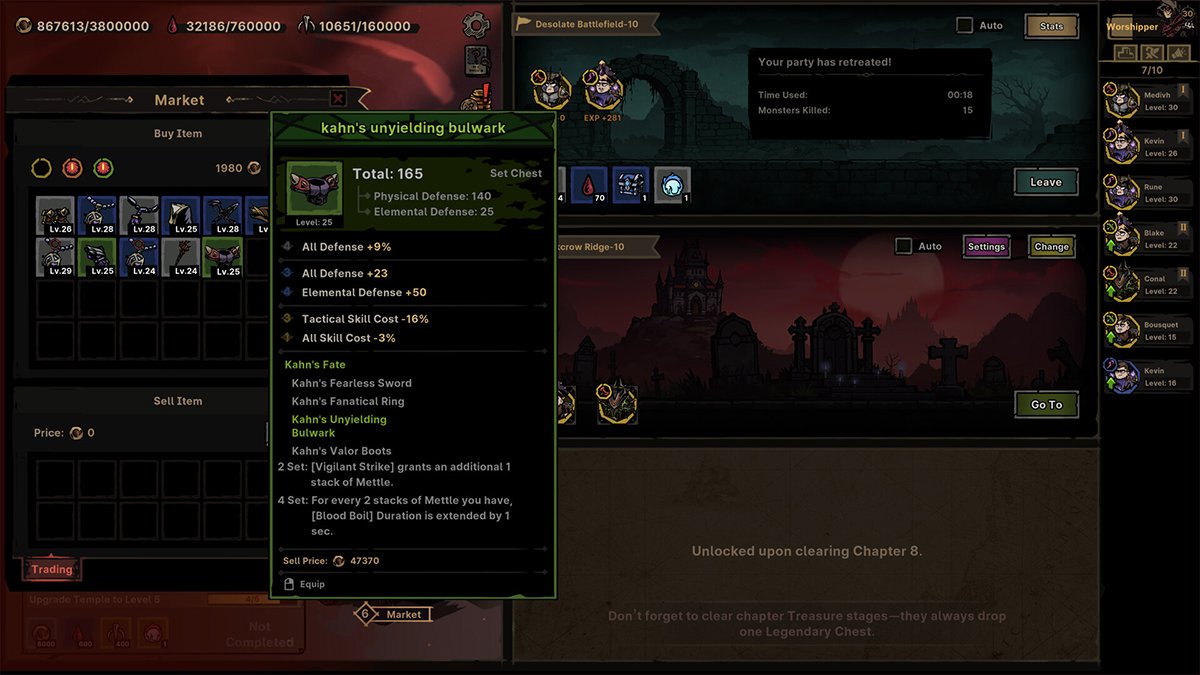
Gear comes in gray, blue, yellow and orange, plus green set pieces that live on their own track.
Orange has the best raw stats and the best affix potential. Green set pieces are individually weaker than the orange equivalent but pay out a big bonus once you complete the set.
The trap is obvious once you say it out loud. Chasing a set means running around half dressed in weak gear for however long it takes to finish the collection.
Don’t do that early. Wear the orange, keep set pieces in Storage, and finish sets when the drops come to you instead of hunting them.
The Workshop gates your gear even when you’re not crafting
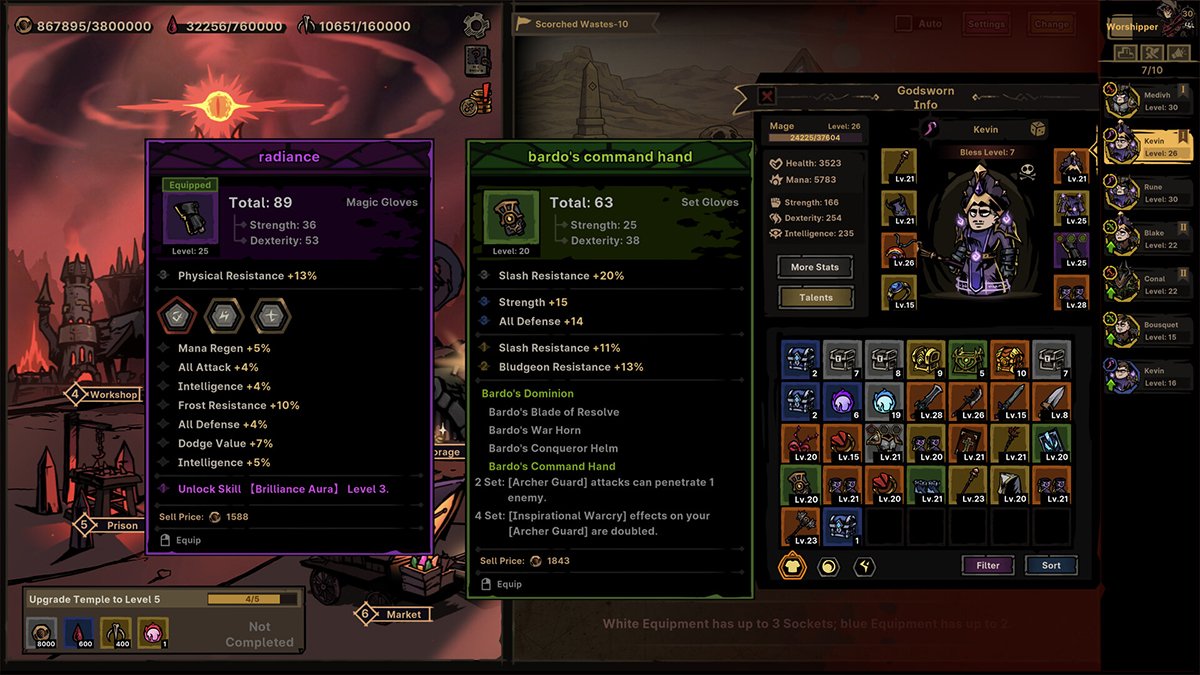
The Workshop is where you forge and upgrade equipment, and its level decides which gear tiers and which affixes are even available to you.
That’s the part people miss. Workshop level matters whether or not you’re actively crafting, because it’s a gate on what can exist.
Runewords are the other layer here, and I’ll be honest with you, the in-game explanation is thin. The English translation is rough in a few spots and the developers have acknowledged it was machine translated.
You will learn more by socketing things and watching what happens than by reading the tooltips.
Storage fills up fast, so sell without guilt
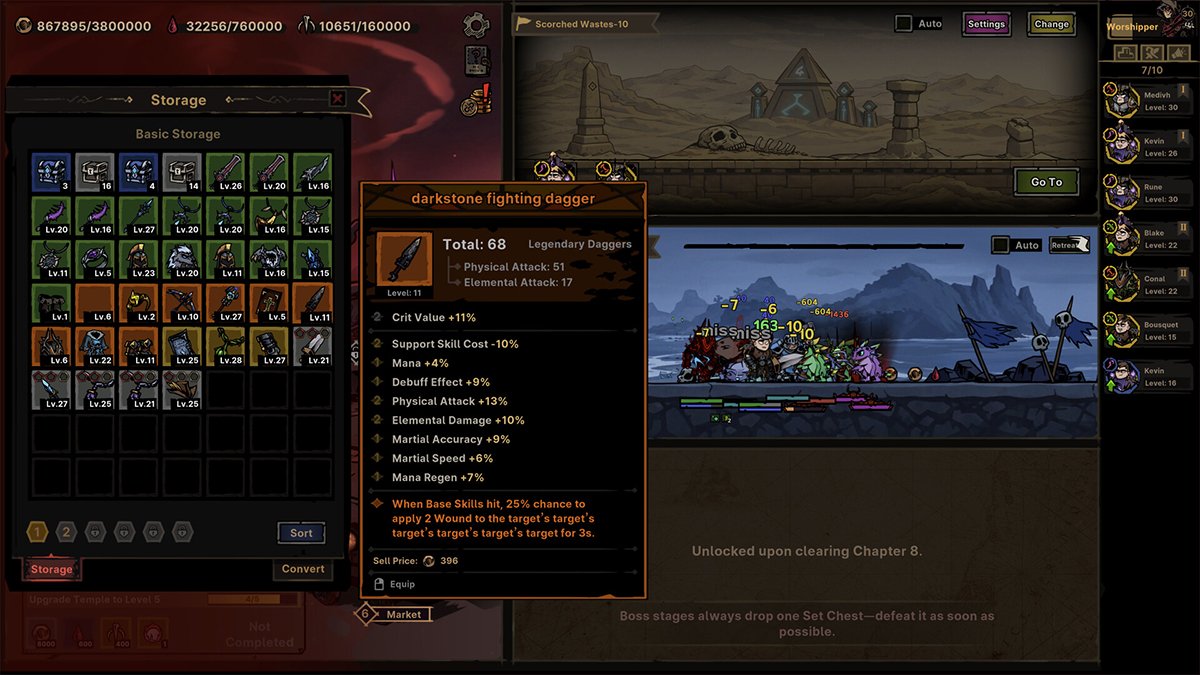
Storage space is tight, and right now there’s no way to batch open or batch sell a stack of low level boxes. You do it one at a time.
It’s a real annoyance and plenty of people have said so on the Steam forums.
The habit that saves you is clearing junk on a schedule rather than letting it pile into a chore. Every time you check in, dump the low tier stuff.
Upgrading the Market improves your buy and sell prices, so that cleanup gets more profitable over time.
Actually go idle
Sounds obvious. Almost nobody does it.
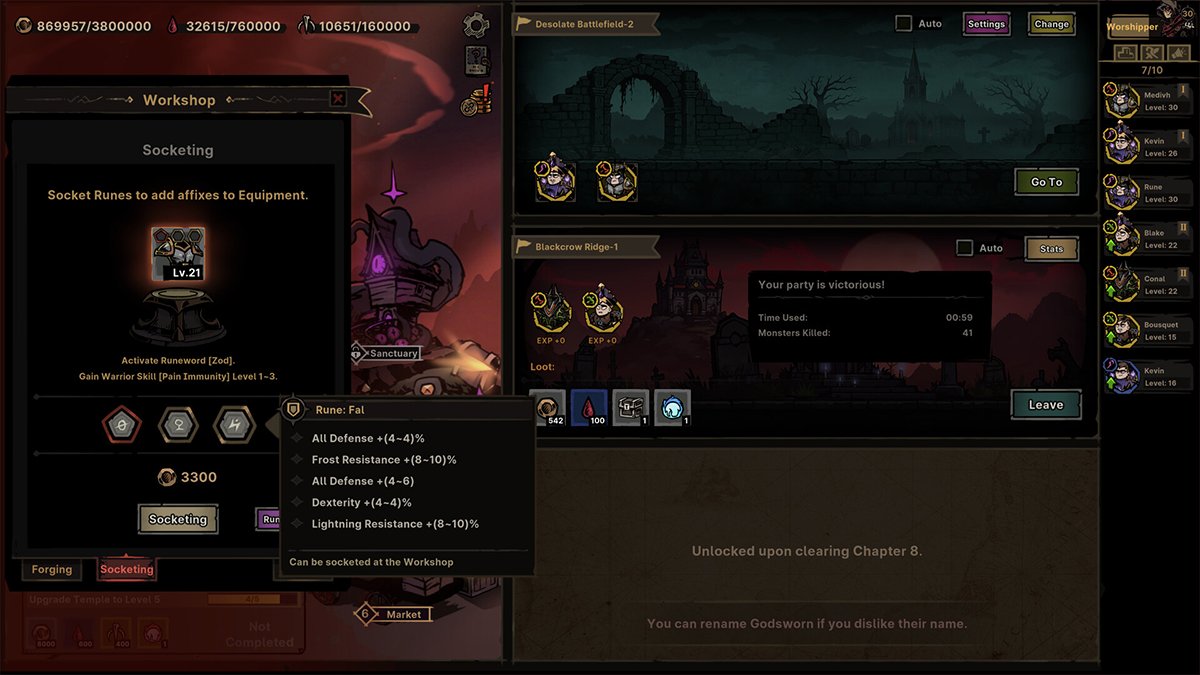
The whole design is full auto real-time combat so you can walk away. There are five progression modes stacked on top of each other, Expedition, Exploration, Divine Tower, Alternate Dimension and Finality, and all of them run without you watching.
Set your lines, close the game, go do something else, come back to a pile of loot.
Why would you sit there watching numbers go up in a game built specifically so you don’t have to?
Stuff that will waste your time
A few things worth knowing before they bite you.
Demo saves don’t carry over to the release build. If you played the demo, you’re starting fresh, and no amount of file shuffling has fixed it for people so far.
There are a couple of live gear bugs floating around. The Cleric set uses a sword, and swords can’t cast Masteries, so that combination doesn’t do what you’d expect. There’s also a reported conflict between Ice Barrier and Wildguard boots.
The game is locked to 60 FPS and some players are seeing animation hitching because of it. It’s a visual problem, not a progression one.
And there’s no DPS meter. You’re comparing percentages and guessing, which is genuinely harder than it should be when you’re trying to work out if a hero is pulling weight.
What to do with your first two hours
If you want a plan instead of a list, here it is in order.
Pick Warrior or Cleric. Push far enough to unlock the Prison and upgrade it before you charm anybody worth keeping.
Then dump spare gold, blood and bone into Worshipper Infusion, because that boost applies to every hero you will ever field.
Then raise the Temple level cap before you spend Ancient Blood on Baptisms.
Then fill out your second battle line to six heroes, even if it means your best three stay a little weaker for a while.
Gear comes last. Wear the best orange you find, upgrade the Workshop when you can spare it, and sell everything gray.
Do that and you’ll be past the wall that stopped me, in about half the time it took me to figure it out.
–
Images are from the Path of Idle: Old Gods Rising page on Steam and used under Fair Use.