
Rogue Eclipse is Star Fox with the rails ripped out and an Armored Core garage bolted onto the back of it.
It landed on Steam on August 7, 2026. It’s made by one guy, Husban Siddiqi, working as HUSKRAFTS, published by Outersloth.
It’s really good. It’s also going to eat your first ten runs and not apologize for it.
Here’s the part nobody tells you up front. Almost every new pilot dies for the same small handful of reasons, and none of them have anything to do with aim.
I’m going to lean on one comparison for this whole article, so get comfortable with it. Treat every fight like merging onto a busy highway.
You don’t floor it. You check what’s around you before you move. You pick your exit before you need it.
That’s the entire game.
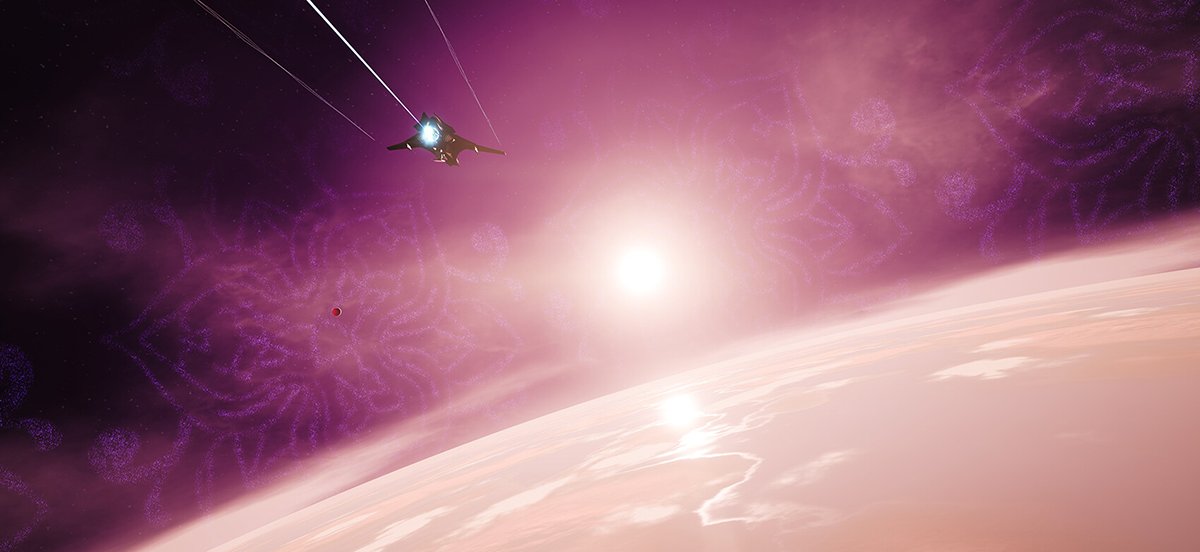
Do the tutorial. Actually do it.
Nobody wants to do the tutorial in a roguelike. The real game is right there.
Do it anyway, and treat it like a checklist instead of a cutscene.
There are five things you want to walk out of there able to do without thinking: hold a stable flight line, fire while you’re turning, boost to reposition instead of to panic, spot which chunks of the environment you can blow up, and notice when enemies are herding you somewhere bad.
Every single one of those things is harder to learn while something is shooting you.
The training arena is the only place in this game where nothing is trying to kill you. Use it.
Start on the easy difficulty and don’t feel weird about it
There are three difficulty options. Recruit is the forgiving one, Cadet is the standard experience, and Ace is where the game stops being polite.
Start one notch below wherever your ego is telling you to start.
The reason isn’t that you can’t handle Cadet. It’s that on higher difficulty you die too fast to learn anything.
Here’s the rule I’d use. You’re allowed to move up a difficulty when you can say out loud, in one sentence, why you died.
“I held boost too long and flew into a gunship” is a reason. “It’s too hard” is not a reason, it’s a mood.
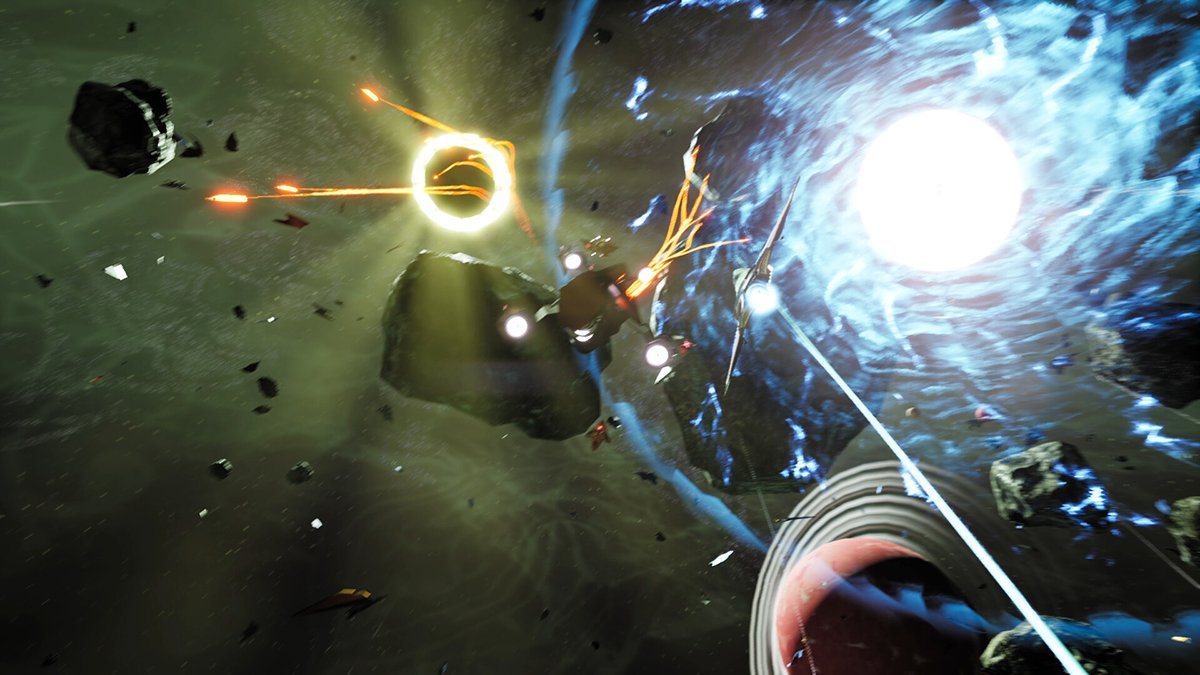
Boost is gas, not a gas pedal
This is the single biggest mistake new players make, and it’s not close.
New pilots hold boost down basically forever. It feels amazing, the speed is the best part of the game, and then a heavy threat shows up and you’ve got nothing left in the tank.
Boost is a resource you spend to change your angle, not a thing you ride constantly.
Tap it. Break the enemy’s lead on you, cross to a different plane, claim a new orbit around the fight, then fly that new line at normal speed.
Three taps worth practicing until they’re muscle memory: peel left, climb, reverse out.
Back to the highway. You use the accelerator to complete a lane change, then you settle. You don’t merge at 140 and hope.
Short bursts beat holding the trigger
Same idea, different button.
When you hold the fire button down, two things happen. Your screen fills with tracers, and your brain quietly stops tracking anything that isn’t directly in front of you.
That’s how people miss hull warnings until they’re already dead.
Short, aimed bursts keep the screen readable and leave you enough attention to notice you’re taking damage.
You want to be counting your hull warnings, not discovering them.
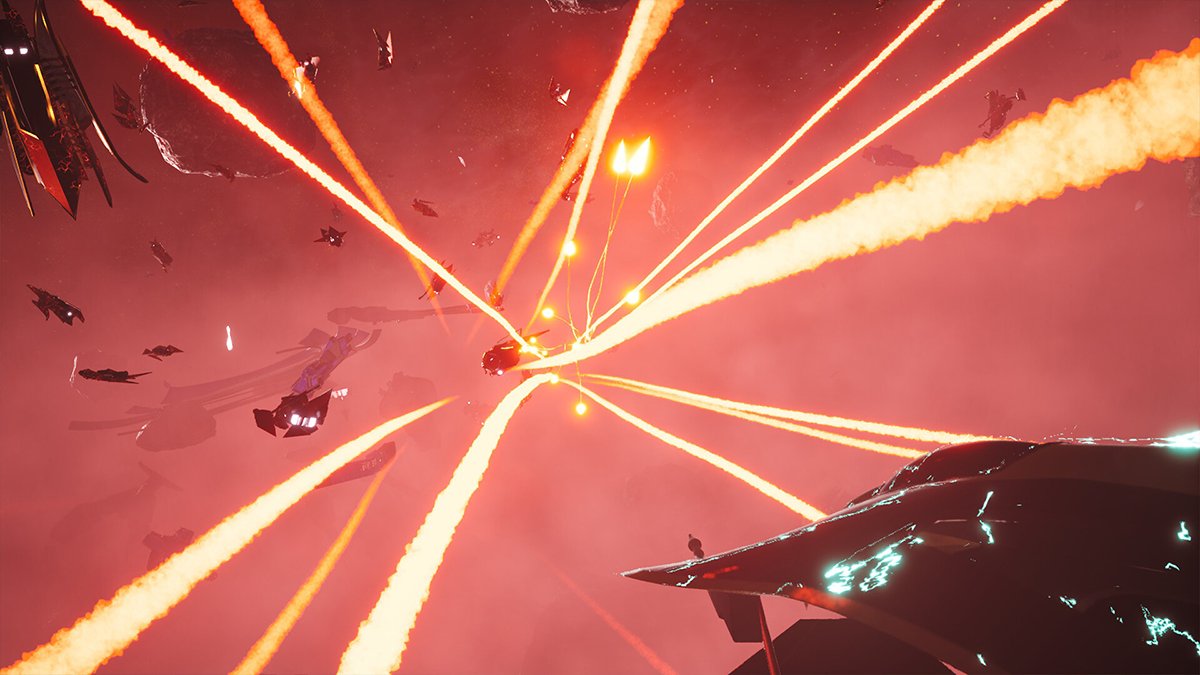
Kill the shepherd, not the sheep
Enemy formations aren’t a pile of identical ships. There’s usually something holding them together.
It might be a dense cluster in the middle, or a gunship trailing behind the pack doing the actual heavy damage while the small stuff distracts you.
Find that thing and kill it first.
What’s left afterward is a bunch of fighters flying much dumber patterns, and you can clean those up at your own pace.
Chasing whatever is closest feels productive. It isn’t. You’re just being led around.
Keep everything on one side of you
Your job in any big fight is to keep the enemies in a cone in front of you or along one flank.
The moment you’re tracking threats on two different planes, you’ve already lost the fight. You just don’t know it yet.
That’s the mirrors part of the highway thing. You’re not trying to watch every direction at once, you’re trying to arrange the traffic so you only have to watch one.
If you’re getting surrounded, that isn’t a shooting problem. It’s a positioning problem, and no amount of aim fixes it.
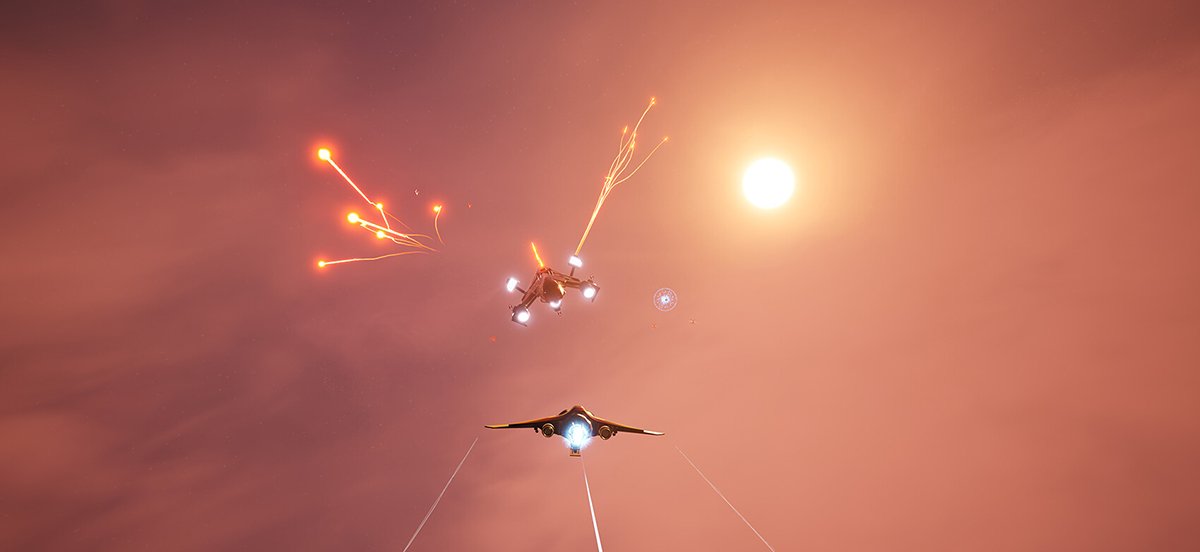
Pick your exit before you need it
Disengaging is a skill in this game, and it’s the one most people never develop.
There are four signs it’s time to leave, and any one of them is enough.
Your hull warnings are stacking faster than you can respond to them. You’re tracking threats on more than one plane. You don’t have enough boost left for a clean break. Or you’ve flown somewhere geometrically confusing and you’re not sure which way is out.
Notice that last one. Getting lost is a legitimate reason to bail.
Every fight should have an exit you already picked, not one you go looking for at 15% hull.
The walls are a weapon
The destructible environments aren’t set dressing, and treating them as scenery is leaving a whole mechanic on the table.
Blow up cover to cut an enemy’s sightline on you. Punch a shortcut through a chunk of debris to escape in a direction nothing is expecting. Open a lane through geometry that’s currently boxing you in.
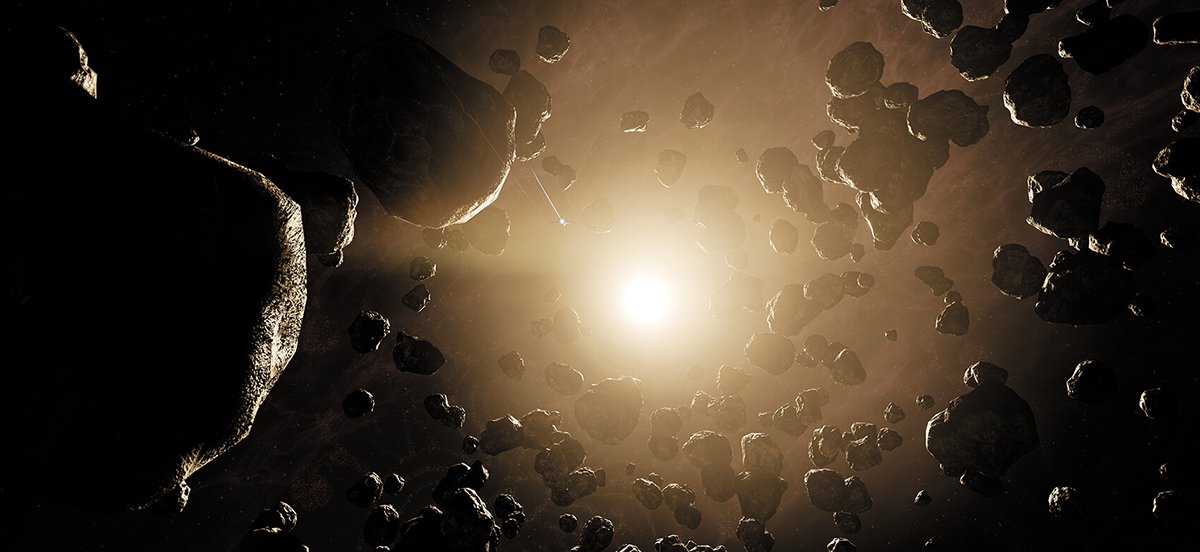
Sector biomes run from asteroid fields to open space, so how much of this you can do changes constantly. Get in the habit of asking what’s breakable before the fight gets bad.

Don’t fly into a behemoth without a way out
The huge ships with explorable interiors are the best thing in the game and also where good runs go to die.
Inside, everything that’s been working for you gets worse. Your boost is dangerous in tight space, your sightlines are terrible, and the exit is somewhere behind you.
Know how you’re getting back out before you commit to going in.
You wouldn’t take an exit off the highway into a neighborhood you’ve never seen with the gas light on. Same energy.
Change one thing per run
Between sectors you’ll pick up upgrades, things like thruster acceleration, extra defense ammo, or straight damage boosts, paid for with currency and rewards you’ve banked from earlier attempts.
The temptation is to overhaul your whole loadout every time you die.
Don’t. Change one power upgrade per run.
If you swap four things at once and the run goes better, you have learned absolutely nothing about which of those four things helped.
One variable at a time is how you actually figure out what your build is doing.
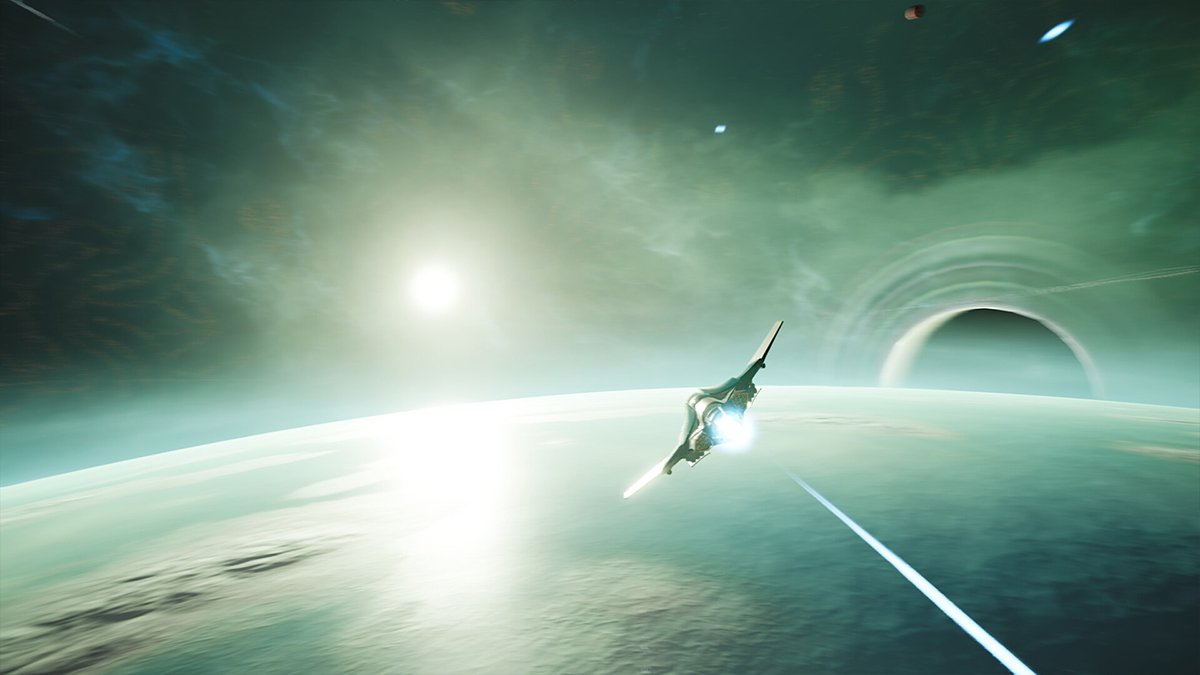
Write down why you died
This sounds like homework. It takes about four seconds and it’s the fastest way to get better at this game.
After every run, write one sentence about what killed you. Not “bad luck.” Something specific like “tunnel vision on one fighter” or “went into the behemoth with no exit plan.”
Do that for a dozen runs and you’ll have a list of maybe three recurring mistakes instead of a vague feeling that the game is unfair.
It also tells you when to stop for the night. If your list starts repeating itself, you’re tilted and you’re not learning anymore.
On Steam Deck, know what you’re signing up for
The game has full controller support and the arcade flight feel translates fine to a handheld, so on paper it’s an ideal Deck game.
There’s one catch that matters a lot, and it’s the thing reviewers keep flagging: there’s no save-and-resume in the middle of a run.
If you start a run and put the Deck down, that run is gone.
That’s fine at a desk. On a handheld, where the whole point is playing in twenty minute chunks on the couch or in bed, it’s a real limitation.
Plan your sessions around it. Start a run when you know you’ve actually got the time to finish it.
On settings, chase stable frame time over anything pretty. Cut shadows and heavy post effects before you drop resolution, because in a swarm fight being able to read enemy silhouettes is worth more than reflections.
What actually makes you better at this game
Rogue Eclipse is fair. It’s just fast, and fast games punish the exact instincts that feel most natural when you’re panicking.
Every tip up there is some version of the same thing: slow your hands down, spend your resources on purpose, and know where you’re going before you go there.
The players who stick with this one aren’t the ones with the best aim. They’re the ones who stopped flying like the boost button owes them something.
–
Images are from the Rogue Eclipse page on Steam and used under Fair Use.