
I am not the person who plays the scary boss game. I am the person who plays the one where you water turnips and name your chickens.
So I want to be honest about how I ended up here. I saw a screenshot of Rubinite, decided the pixel art was too pretty to ignore, and bought it on a whim without really reading what it was.
Then it beat me up for two hours straight.
Here is the good news. Rubinite is not actually asking you to have fast hands. It is asking you to understand one system, and the moment that system clicked for me, the whole game stopped feeling like a wall and started feeling like a puzzle I was allowed to solve slowly.
These are the things I wish somebody had told me before my first hour. If you are anything like me, a few of them will save you a lot of frustration.

What kind of game Rubinite actually is
Rubinite is a pixel art 2D boss rush action game from Cup Dog Games. You play as Ruby, a princess who escaped the Scarlet Kingdom and has come back to take it apart.
Almost the entire game is boss fights. There is no big open map to wander through and no side quests to putter around with between the hard parts.
Instead you get a hub castle that slowly opens up as you win, giving you more story, more NPCs, and more upgrades. Structurally it has much more in common with Cuphead than with a sprawling metroidvania.
I mention this because it changes how you approach it. You cannot go grind somewhere easier for an hour to feel better about yourself.

Your knife is not really the weapon
This is the tip. If you read nothing else, read this one.
Ruby carries a blade, and your instinct will be to use it the way you use a sword in any other action game. That instinct is wrong, and the game lets you stay wrong for a surprisingly long time.
Enemies in Rubinite carry an implanted Pure Blood Crystal, and your ordinary attacks barely scratch it. You can swing all day and watch almost nothing happen.
Real damage comes from the Focus system. You hold the Focus button to observe your target, which narrows your attention onto them and fills an observation gauge.
Your regular attacks still have a job. They are for controlling space and chipping away at the edges, not for winning fights.

Marks, and why you should be a little greedy
When the Focus gauge fills, you place a Mark on the enemy. You can stack up to three Marks at a time.
Marks are the ammunition for your Critical Strike, the big thrust attack that actually hurts. The damage scales with how many Marks you have banked when you fire it off.
So here is the beginner trap. You get one Mark, you feel nervous holding onto it, and you immediately cash it in for a small amount of damage.
Try to hold for two or three Marks before you strike. The only real exception is when a boss is nearly dead and you just want to close it out.
The tension is that getting hit wipes your Marks completely. That is what makes this an actual decision instead of a rule, and it is also why the fights feel so good once you start reading them properly.

Stand closer than feels comfortable
This one felt wrong in my hands for a long time.
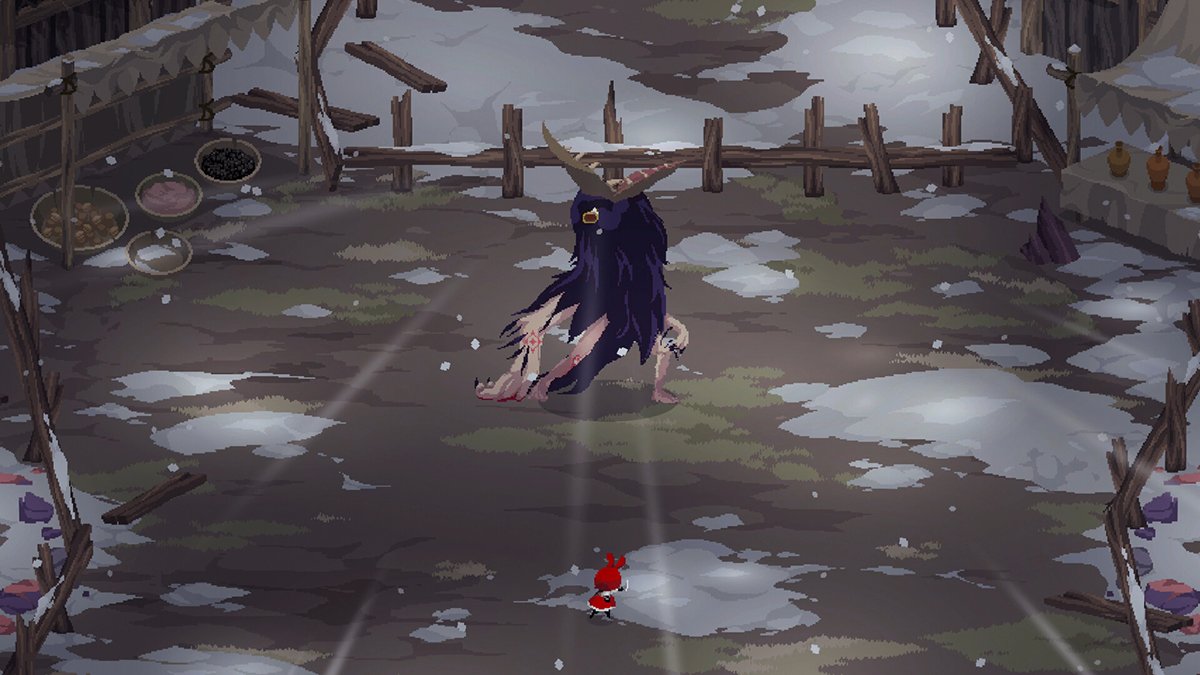
The Focus gauge fills faster the closer you are to your target. Backing off to a safe distance and observing from across the room is the slowest possible way to play.
Every instinct I have from cozy games told me to retreat and take my time. Rubinite wants the opposite, and it rewards you for staying in the boss’s personal space.
Once I started creeping in instead of drifting out, fights that had taken me fifteen attempts started taking three.
Perfect dodges are the real shortcut
Holding Focus takes time, and some bosses do not politely hand you quiet moments to stand around observing them.
That is what the perfect dodge is for. If you dodge at the right moment while focusing, the gauge fills instantly and you bank a Mark for free.
Here is where almost everyone goes wrong at first, myself very much included. You have to dodge on the actual hit, not on the wind-up animation.
Big telegraphed attacks make you want to move the second you see the boss rear back. Wait longer than feels sane, and time it to the moment the attack would land on you.
When it clicks, aggressive bosses stop being a problem and start being a rhythm. You are no longer surviving their combos, you are collecting Marks off them.

Two moves everybody forgets they have
Rubinite hands you a couple of tools early and then never nags you about them again, so it is very easy to forget they exist.
The first is Sunder Slash. Hold the focus button and press regular attack to counter a grab, which turns one of the most annoying ways to lose health into a free opening.
The second is your Darts. These are throwables meant to interrupt the red flash attacks that you cannot simply dodge your way out of.
If a boss has a move that feels genuinely unfair, there is a decent chance you are supposed to be answering it with a dart and have not realized it yet.
Spend your currency every time you get back to the hub
I hoard resources in every game I play. I am the person with 400 unused healing items at the final boss, and Rubinite punished me for it.
You earn Blood Dust and Impure Crystals from fights, and you keep your Blood Dust even when you lose. Dying is not a total waste of a run.
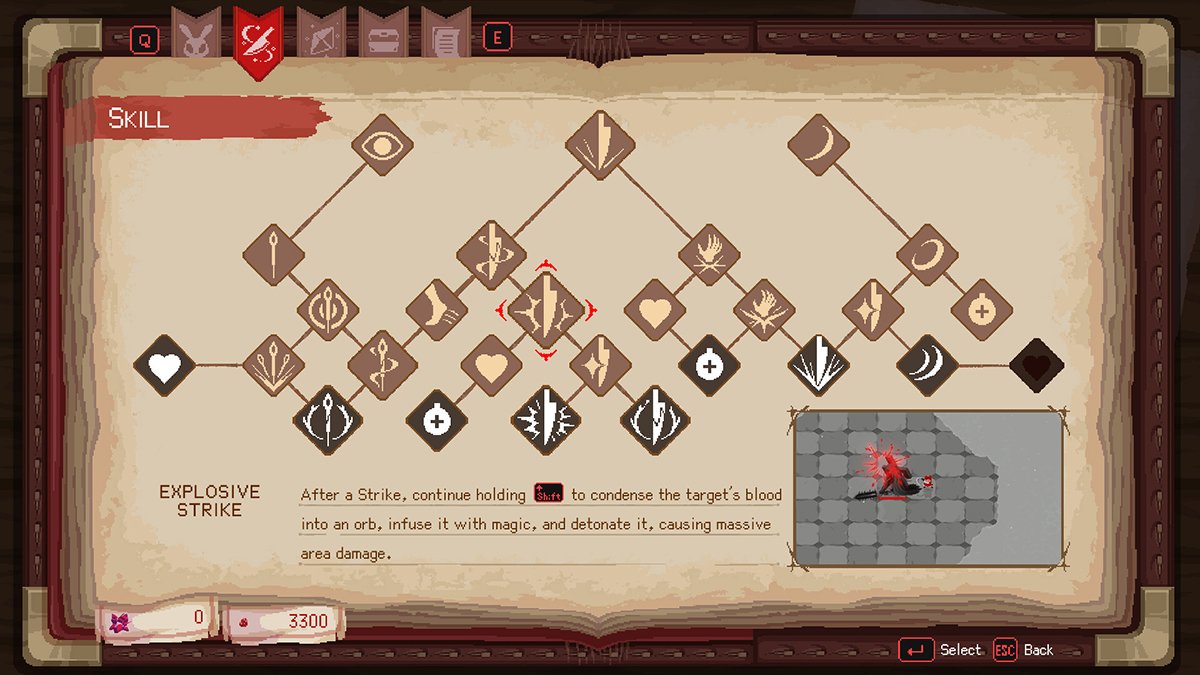
Your talent tree opens up after your first real boss and gives permanent upgrades, including passive buffs and new strikes that follow up on your Focus.
There is also the talisman satchel, which lets you equip crafted talismans. Talismans give you stat benefits with tradeoffs attached, so they are worth actually reading rather than equipping whatever has the biggest number.
Wichiwi runs the shop back at the hub and is where a lot of this gets handled. Stop and see her every time you come back, even if you only have a little to spend.
The most common way beginners make this game harder than it needs to be is by saving up for something perfect instead of getting slightly stronger right now.

Take your time with The Beast before you meet Faye
The Beast is your first real boss, and it is built to teach you. The attack patterns are readable and the punishment for messing up is mild by this game’s standards.
My advice is to treat that fight as your practice room rather than a checkpoint to clear as fast as possible. Spend a session there just holding Focus, stacking Marks, and drilling perfect dodge timing.
Faye the Guardian comes next, and she is much less forgiving of sloppy fundamentals. Everything you skipped learning on The Beast, you will end up learning on her instead, with less patience and more dying.

Replaying old fights is not a waste of time
Roy back at the hub lets you meditate and re-fight bosses you have already beaten.
I ignored this completely for my first several hours because it sounded like grinding, and grinding is not usually my thing.
It is really practice with the pressure taken off. You already know you can win, so you can use the fight to work on one specific skill without worrying about losing progress.
If a mechanic is not clicking, going back to an easier boss to drill it is far kinder to yourself than throwing your body at a new one 30 times.

It is okay to be slow at this
I want to say something to the people who, like me, do not normally play games like this.
My first two hours with Rubinite were rough. I felt clumsy, and I was fully prepared to decide the game was not for me and go back to something gentler.
What changed was not my reflexes. It was understanding that the game wanted me to watch instead of swing.
Once that landed, Rubinite turned into something I looked forward to at the end of the day, which is not a sentence I expected to write about a game where a princess stabs cultists.
Give it longer than feels reasonable. Let yourself be bad at it for an evening. The version of this game that exists on the other side of that evening is really worth meeting.
–
Images are from the Rubinite page on Steam and used under Fair Use.