
I downloaded Dear Magical Girls on a Friday night expecting sparkles and transformation sequences. What I got was a game about being tired at work.
Arin, the girl you play as, has 2,340 emergency calls behind her. She is four years into the job and she is running on fumes.
I did not expect to relate to a magical girl this much. I also did not expect to spend my first hour completely misunderstanding how the game actually works.
So here is everything I wish someone had told me before my first mission. None of it is complicated once it clicks, but the game does not hold your hand about any of it.
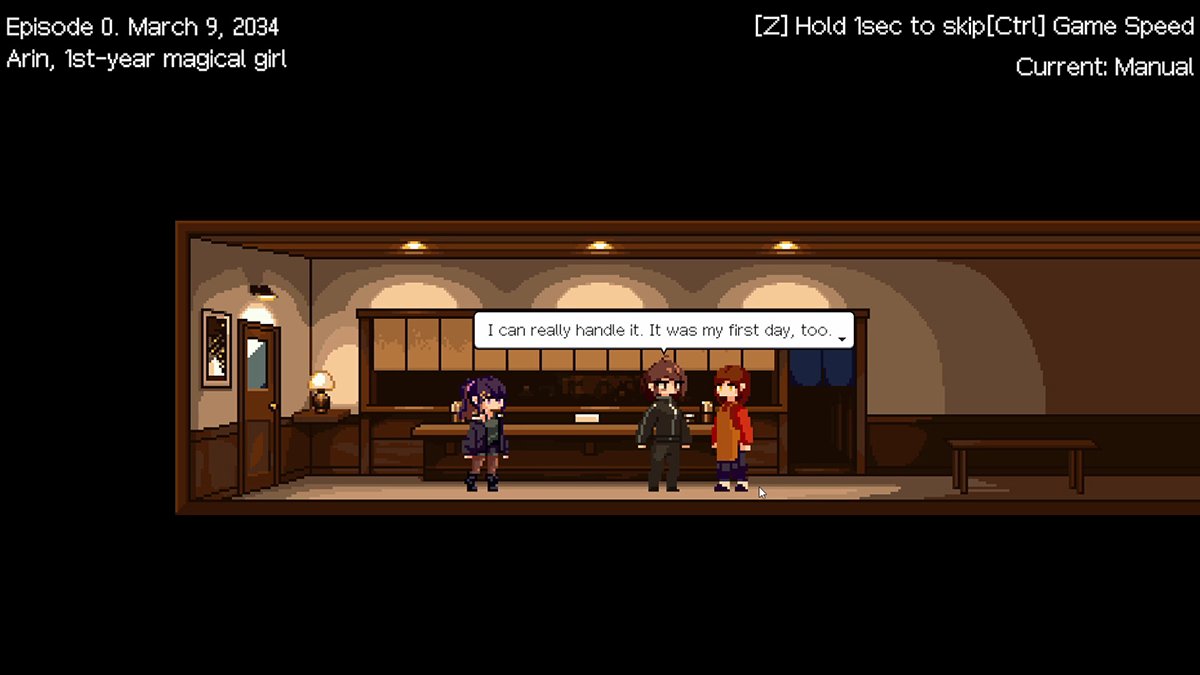
What is Dear Magical Girls?
It is a story-driven tower defense game from GIGABlock Studio, and it came out on Steam on July 31, 2026. It is completely free with no microtransactions, which still feels a little suspicious to me.
The structure alternates between two things. You go out to the Otherworld to defend mana stones from waves of monsters, then you come back to the city for quiet story scenes with Arin’s coworker Charlotte and her younger cousin Lily.
If you have played anything like Citizen Sleeper, the tone will feel familiar. It is a game about endurance rather than triumph, wrapped in a genre that usually promises the opposite.
The whole thing runs about three to six hours for the story, and it will play on a laptop from six years ago.
Your barrier is the whole game, so stop thinking of it as a wall
This was my big mistake. I saw a defensive barrier and assumed my job was to keep things out of it.
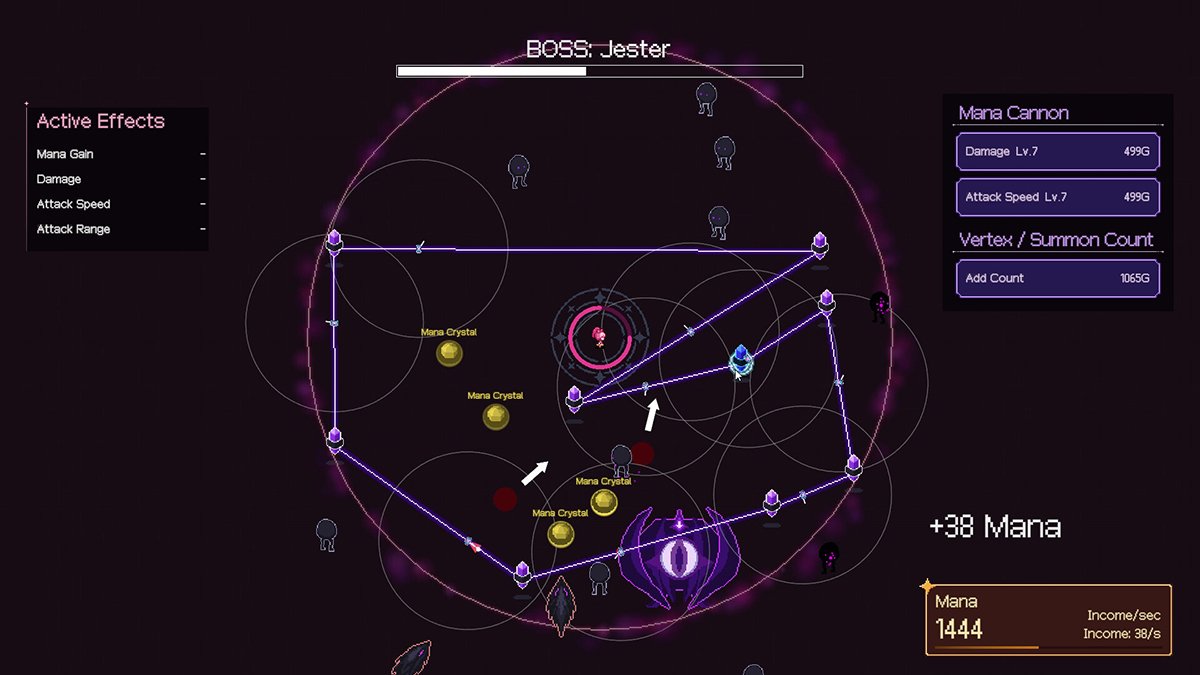
That is not really what is happening. Your barrier is a polygon you reshape by dragging its vertices, and your mana cannons sit along its edges and fire at whatever crosses them.
So the shape is not protection. The shape is your weapon, your economy, and your positioning all at once.
A big sprawling barrier sweeps in more mana and covers more useful ground, but your cannons get spread thin across all those edges. A tight little barrier concentrates everything into a small killzone but starves you of resources.
Once you start thinking of the barrier as a tool you are constantly resizing instead of a fence you are defending, the whole game opens up.
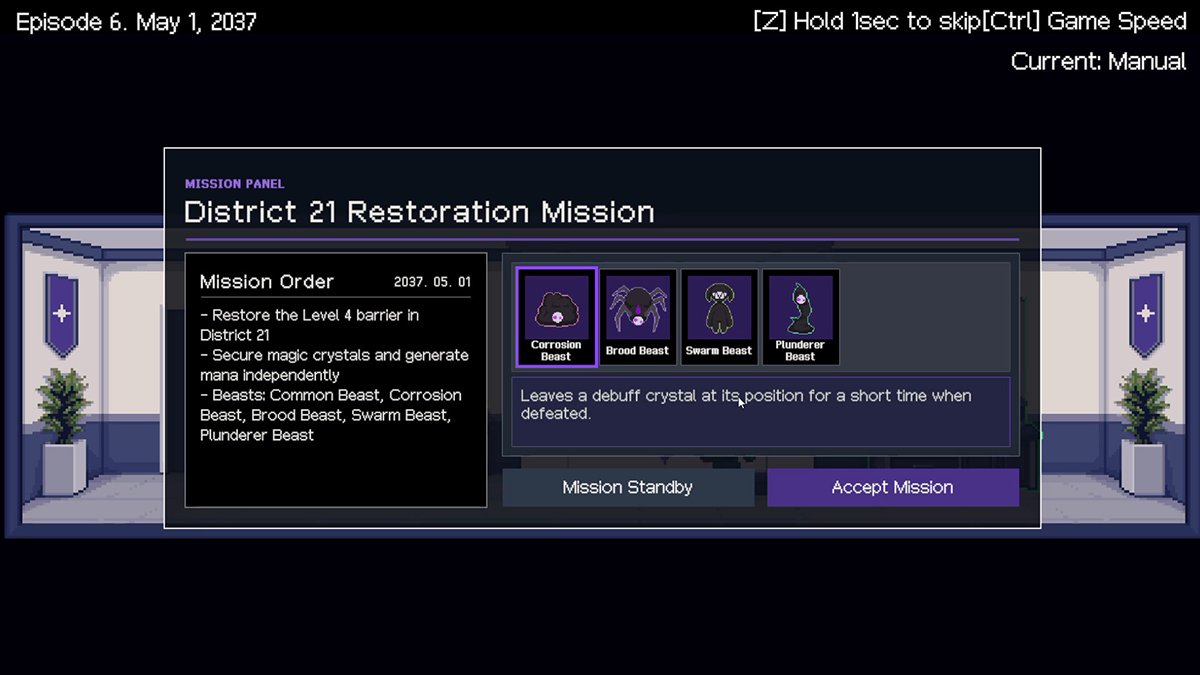
Expand when it’s quiet, contract when the wave hits
This rhythm is the single most useful thing I figured out. The game gives you gaps between waves for a reason.
During those quiet stretches, push your vertices outward. Grab territory, sweep in mana, and pull any green buff zones inside your borders.
Then before a heavy wave arrives, pull the shape back in. Your cannons bunch up, your damage stacks in one place, and the enemies walk into a much nastier wall than they would have a minute earlier.
If you try to hold one comfortable medium size the whole mission, you will be mediocre at both jobs. The game really wants you to breathe in and out.
Push the red zones outside your barrier
Green zones give you buffs. Red zones give you debuffs, and they only affect you if they are inside your barrier.
So when you see one, do not just expand over it and hope for the best. Reshape around it instead, even if it means giving up a chunk of territory you wanted.
I lost a mission because I greedily grabbed a big patch of ground with a red zone sitting in the middle of it. The mana was not worth what it did to my cannons.
Use time stop before you need it, not after
You can pause time to reposition your vertices, and it runs on a cooldown. I saved mine like a health potion for the first few missions.
Do not do that. The best moment to use it is during a wave transition, when you have a second to look at what is coming and calmly reshape for it.
Using it as an emergency button means you are always reacting to a problem that already happened. Using it proactively means the problem never lands.
Also worth knowing: on easy mode the time stop is unlimited. If the real-time pressure is the part stressing you out, that setting basically turns this into a puzzle game you can think through.
More vertices means more edges, and more edges means more cannons
You spend mana to add vertices to your barrier, and the first time I did it I could not tell what changed.
Here is why it matters. More vertices gives you more edges, more edges gives you more cannon placement, and it also gives you far more control over the shape.
With four vertices you can make a box. With eight you can make a funnel with a hook in it that dodges a debuff zone and still reaches a resource node.
Buy them earlier than feels comfortable. It is an investment that pays off across the rest of the mission, and hoarding mana does nothing for you.
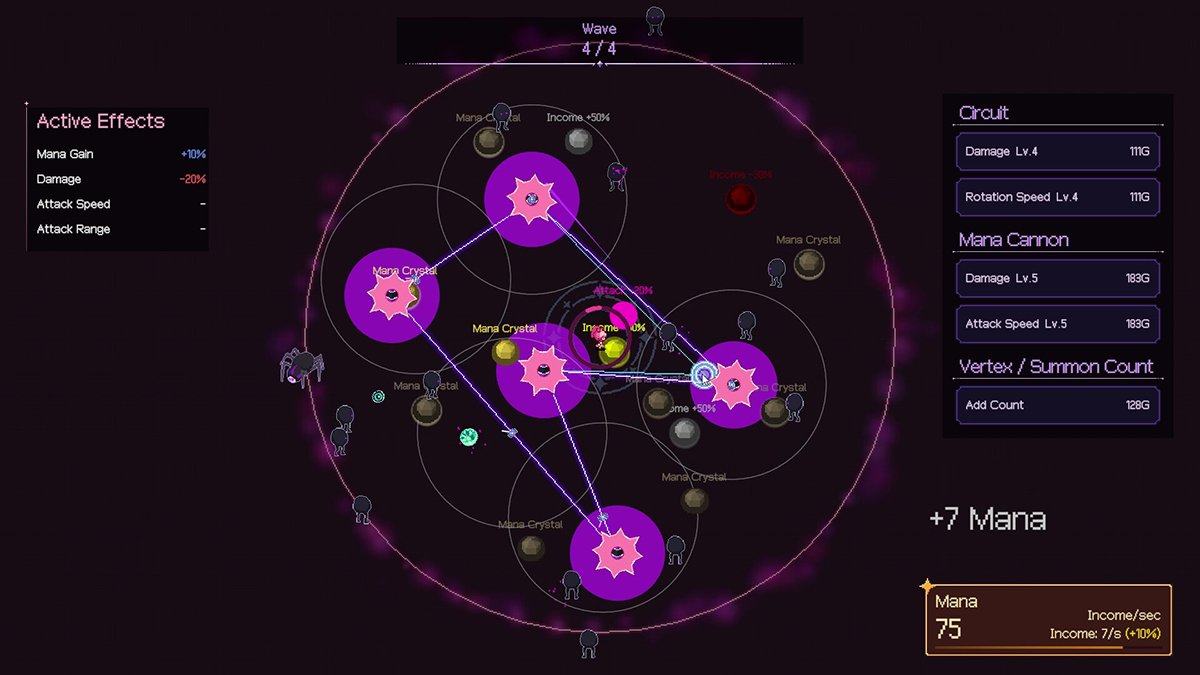
Shape your barrier around what’s actually coming at you
The enemy roster is more varied than it first looks. You will run into basic melee units, fast chargers, fliers, shielded enemies, swarms of small things, big slow brutes, and enemies that split into smaller ones when killed.
Each of those wants a different shape from you. A single armored brute walking at you is best handled with a funnel that forces it past as many cannon edges as possible.
A swarm wants the opposite. You need wide coverage so nothing slips through a gap while your guns are busy elsewhere.
Splitters are the mean ones. Kill them near the edge of your barrier and the pieces scatter inward, so try to bring them deep before they pop.
Match your modules to the wave, not to what sounds cool
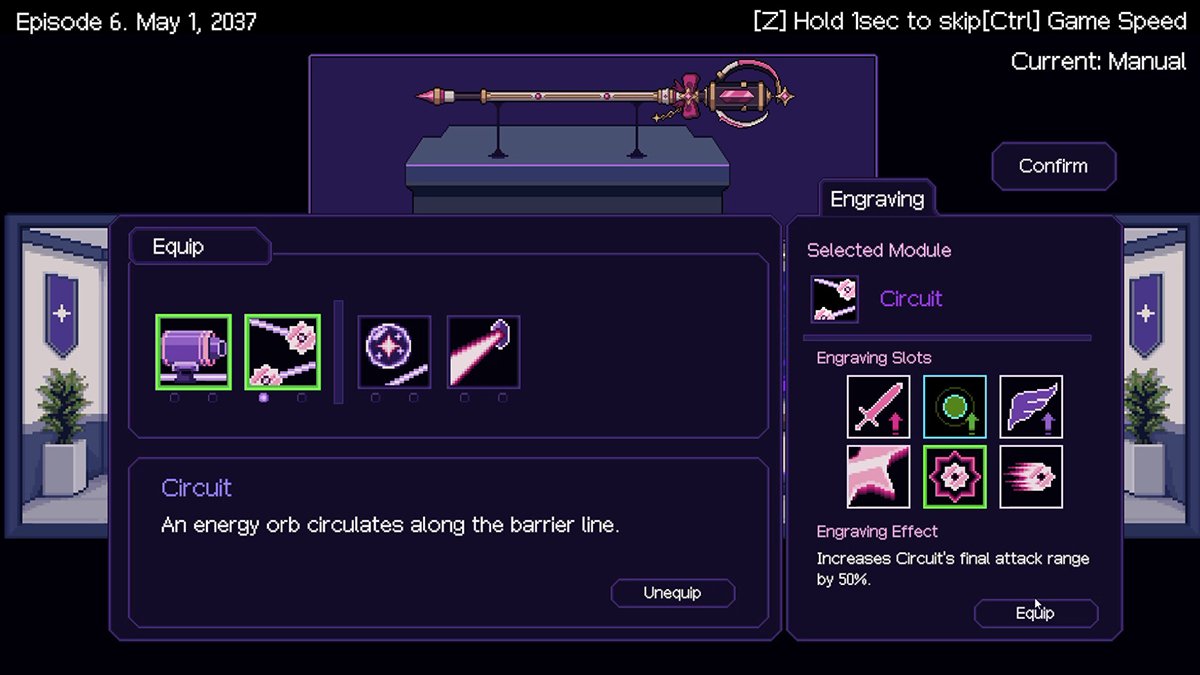
As the story goes on you unlock modules in three flavors. Attack modules change how your cannons behave with things like spread shots and piercing beams, defense modules add healing or slow auras, and utility modules boost your mana generation and cooldowns.
On top of those you get enchants, which tweak individual modules with stat boosts like extra range or damage.
I fell in love with the homing missiles and ran them constantly, which was a waste. Piercing plus range is what you actually want against shielded lines, and spread shot plus fire rate is what shreds a swarm.
The game is stingy with options on purpose. You will usually have exactly what you need and nothing spare, so pick for the wave in front of you.
Turn the difficulty down and don’t feel bad about it
You can adjust enemy health, enemy damage, and how often waves arrive, all separately.
I nudged the wave frequency down about halfway through and enjoyed the game considerably more. The tactical part is clever, but the story is the reason to play, and I did not want to keep replaying missions and losing my momentum with it.
A game about burnout that burns you out is not doing you any favors.
Let the story scenes breathe
It is tempting to click through the city segments to get back to the fun geometry. Try not to.
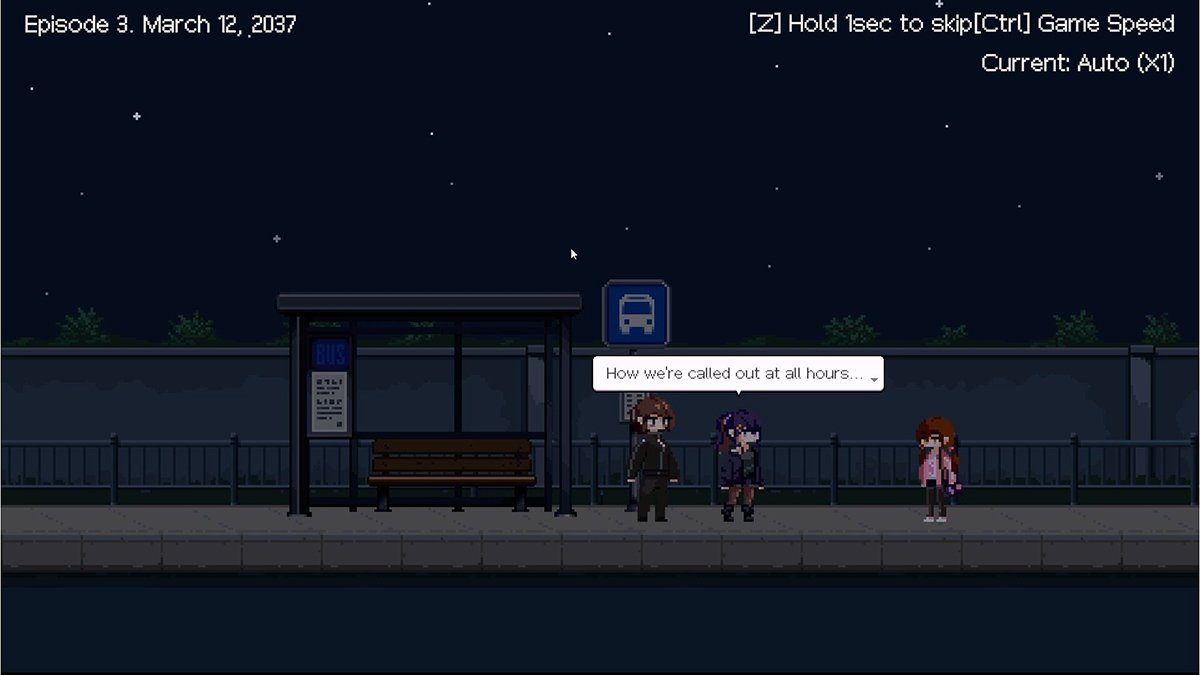
The conversations with Charlotte and Lily are where the actual game lives. They are also where the plot about the disappearances and the uncomfortable questions about where mana comes from slowly unfolds.
One warning: text speed is currently tied to automatic progression, so cranking the speed up also makes lines advance faster than you might want. Players have flagged it and the devs are aware, but for now leave the text speed lower than you normally would.
The mistakes I made so you don’t have to
I sat on my mana instead of spending it on vertices, which left me stuck with a clumsy shape I could not adjust.
I treated time stop as a panic button rather than a planning tool.
I kept my barrier at one safe medium size all mission instead of expanding and contracting with the rhythm of the waves.
And I picked modules because they looked fun rather than because they matched what was walking toward me.
Fix those four things and the difficulty curve stops feeling unfair almost immediately.
What stuck with me about this one is not really the strategy. It is that I finished a mission scrappy and messy, with my barrier a lopsided mess and my mana at zero, and the game let that be enough.
Arin is tired and she keeps showing up anyway. Playing a hero who is allowed to be worn out felt kinder than I expected from a free game about magical girls, and I have been thinking about it for days.
–
Screeshots are from the Dear Magical Girls page on Steam and used under Fair Use.