
Realm of Ink is a fast action roguelite wrapped in a Chinese ink-wash art style, and it plays a lot like Hades. You clear rooms, grab upgrades, fight a boss, then start over a little stronger.
The catch is that the game throws a pile of named systems at you, and the tutorial barely explains most of them.
Ink gems, curios, forms, and a pet that can carry whole rooms all sound great until you actually have to choose between them.
You play as Red, a swordswoman who discovers she is a fictional character inside a book. Here are ten tips to push your early runs further.
Get comfortable with the combat buttons first
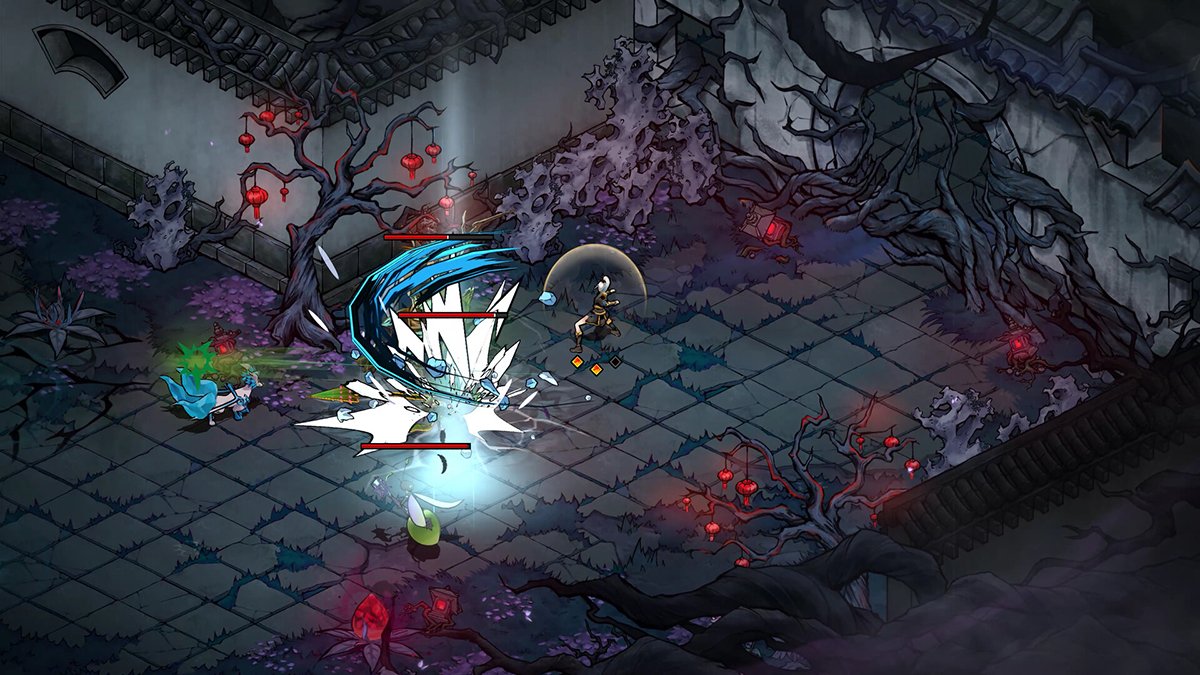
Realm of Ink runs on roughly six buttons, so the controls are quick to learn and harder to use well. You have a light attack, a heavy attack, a dash, and your ink skills.
The piece most new players miss is the quick heavy attack. Throw out a light attack and immediately follow it with a heavy, and Red performs a faster version of the heavy swing.
You can also hold the heavy button for a charged heavy attack that hits much harder.
Knowing when to chain quick heavies and when to wind up a charged hit is most of your early damage.
Break one habit right away: do not fire off every ink skill the second it comes off cooldown.
Save them for clustered enemies or for punishing a boss right after you dodge a big attack.
Dodge first, then attack
The fastest way to lose a run is to get greedy.
Enemies arrive in swarms, and standing still to squeeze in one more hit is how you eat damage from something off-screen.
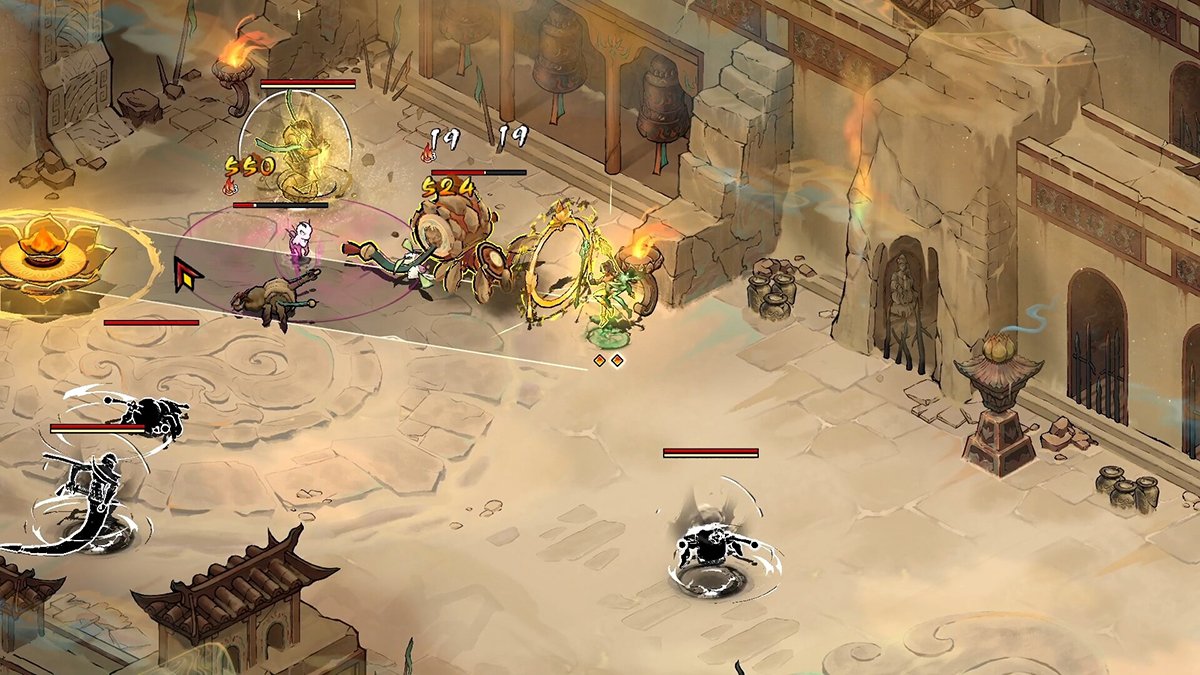
Keep moving and use your dash to pass through attacks rather than running away from them.
The dash has invincibility frames, so dashing into a telegraphed hit is usually safer than backing up.
Against bosses, treat their attack windows as your cue to strike and their wind-ups as your cue to wait. Land a couple of hits, dash out, and reset.
This patient style feels slow at first, but it is the same discipline that carries you through any tough action game.
If you have played something like Minishoot Adventures, the dash-and-reset rhythm will feel familiar.
Pick one damage path and build toward it
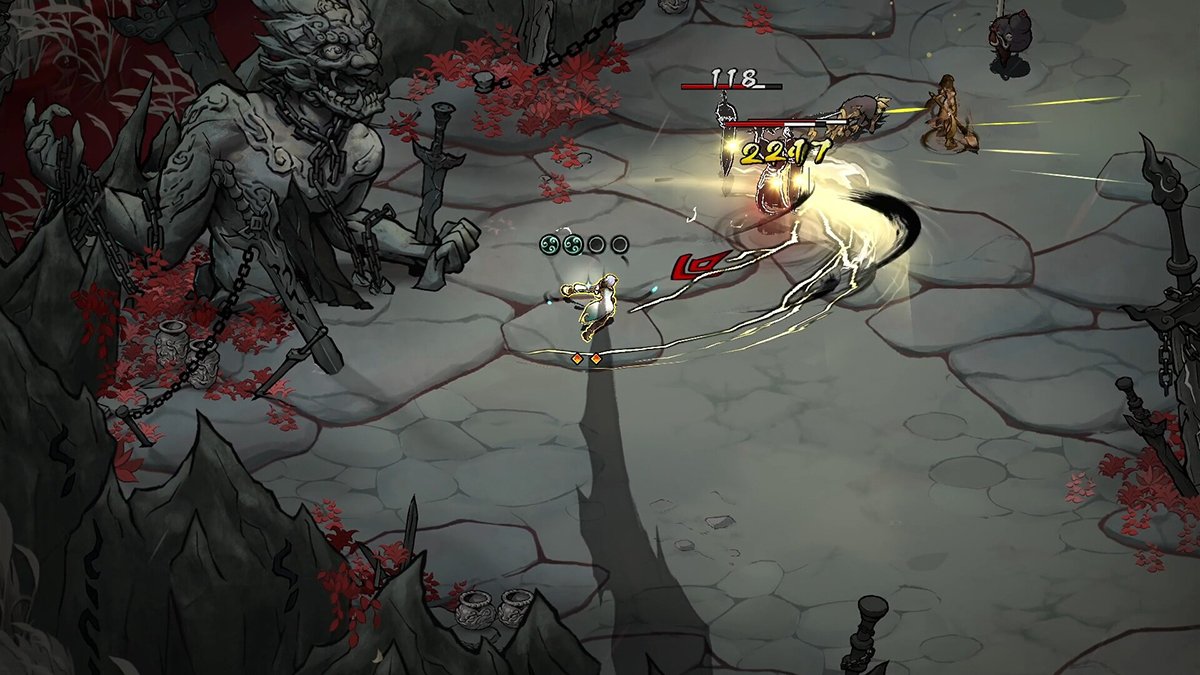
Realm of Ink wants you to specialize. There are four broad damage paths: critical hits, damage over time, ink skills, and your ink pet.
Trying to upgrade a bit of everything leaves you with a run that does nothing well.
Pick a direction in the first few rooms and steer every choice toward it.
A crit build leans on raising your critical rate and damage. A damage-over-time build stacks poison, bleed, and burn so enemies wither while you focus on dodging.
An ink skill build pumps your cooldowns and skill damage, while a pet build makes your companion the main attacker. Commit to one or two of these and your numbers climb fast.
A focused build with real synergy beats a pile of unrelated upgrades.
Understand ink gems (you only carry two)
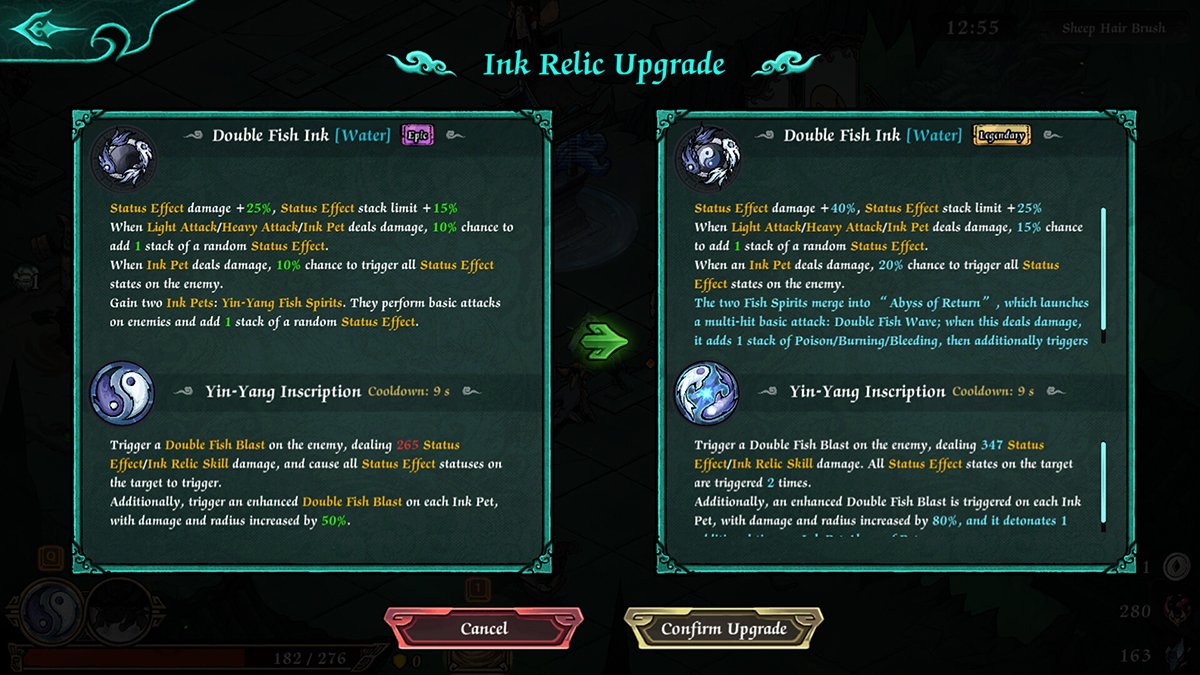
Ink gems are your core build pieces, and you only get two slots. That limit is the whole point, so treat every gem as a commitment rather than a pickup.
There are more than twenty gems, like Tiger Ink for crit, Venom Ink for poison, and Ivy Ink for bleed. The good pairs reinforce each other, so slot gems that push the same damage path.
When you find a duplicate of a gem you already own, salvage it for upgrade material.
You pour that material into your equipped gems at the vendor before each boss.
Do not dump everything into the first common gem you grab. Hold your upgrade material for a gem that fits your form and your chosen build, then raise its rarity.
The gems also tie into a five-element system drawn from Chinese philosophy rather than the usual four-element setup.
You do not need to master the chart early, but matching elements is how the stronger synergies come together later.
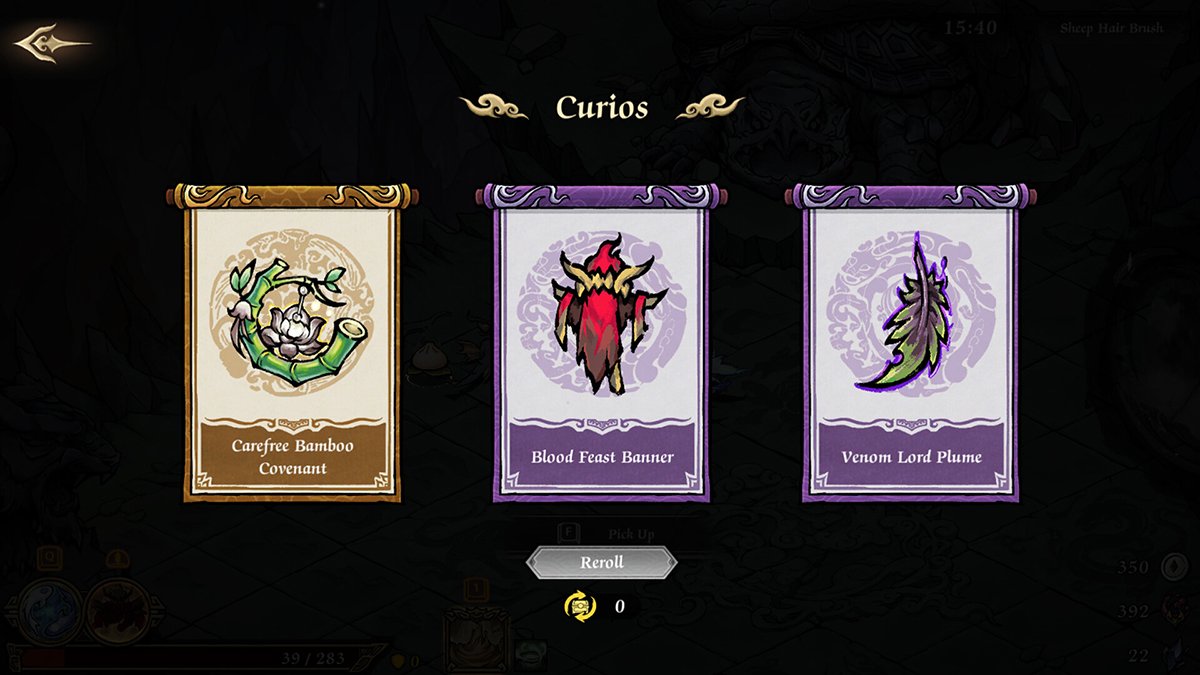
Choose curios without overthinking
Curios are the bonuses you pick from reward rooms, and older guides still call them perks. They adjust your stats, boost specific damage types, and reinforce your ink skills.
The rule matches everything else here: grab the curios that feed your build.
A crit run wants crit curios, and a poison run wants anything that extends or stacks damage over time.
A dull upgrade that fits your build beats an exciting one that pulls you in a second direction.
You will also find artefacts scattered through runs, and there are well over a hundred of them. The same logic applies, so let your build decide what is worth taking.

Make Momo do the heavy lifting
Momo is your ink pet, and plenty of beginners ignore it. That is a mistake, because a well-built Momo can clear standard rooms nearly on its own.
Your pet evolves based on the elements of the gems you have equipped, so its strength is tied to your gem choices. Feeding it the right inks shapes what it becomes.
The big payoff is its special ability.
If both equipped gems sit at an average rarity of epic, Momo unlocks a special skill that hits hard enough to solo most regular encounters.
That makes the pet a strong safety net even on builds that are not focused on it.
If you want to go all in, the Dr. Suen form turns Momo into your main source of damage.

Spend wisely at the pre-boss vendors
Before each boss you get three vendors: a cook who heals you, a seller who offers curios, and a vendor who upgrades your ink gems. You spend silver across all three.
There is no single correct split, so read your run.
If you are low on health and the next boss looks rough, the cook is worth the silver.
If your build already feels strong, hang onto your silver and put it toward gem upgrades instead.
Healing you do not need is silver wasted.
Check the gem upgrader every time even if you do not buy. Knowing the cost helps you decide whether to salvage a duplicate.
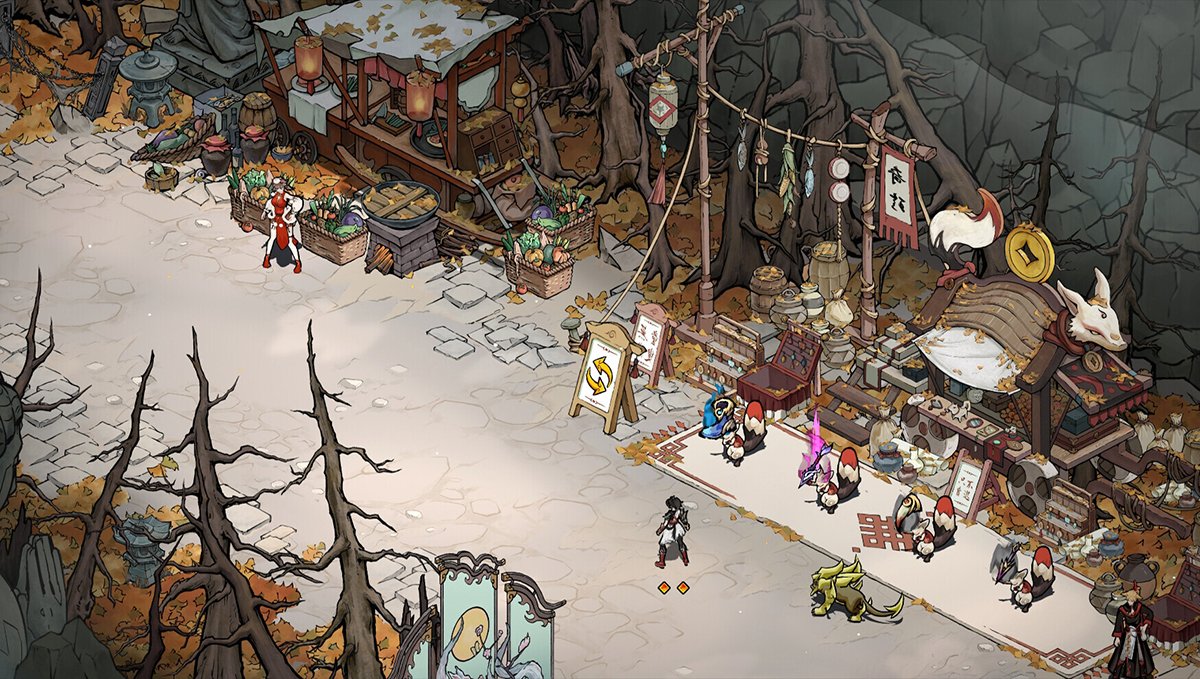
Push your meta progression at the Inn
Realm of Ink hands you permanent upgrades between runs, and they matter more than any single lucky run.
The hub, the Inn, is where you cash in what you earned.
Foxblood is your main meta currency, and it drops as you clear rooms based on how many enemies you beat. Spend it at the Talent Stele for permanent talents that carry into every future run.
Use Jade Ink to unlock new forms from Violetta on the upper floor. You can also upgrade Momo and pick up new skins as more of the Inn opens up.
Do not hoard your currencies waiting for one giant shopping trip. Small, steady upgrades make you stronger, which lets you farm faster, which gets you to the next upgrade sooner.
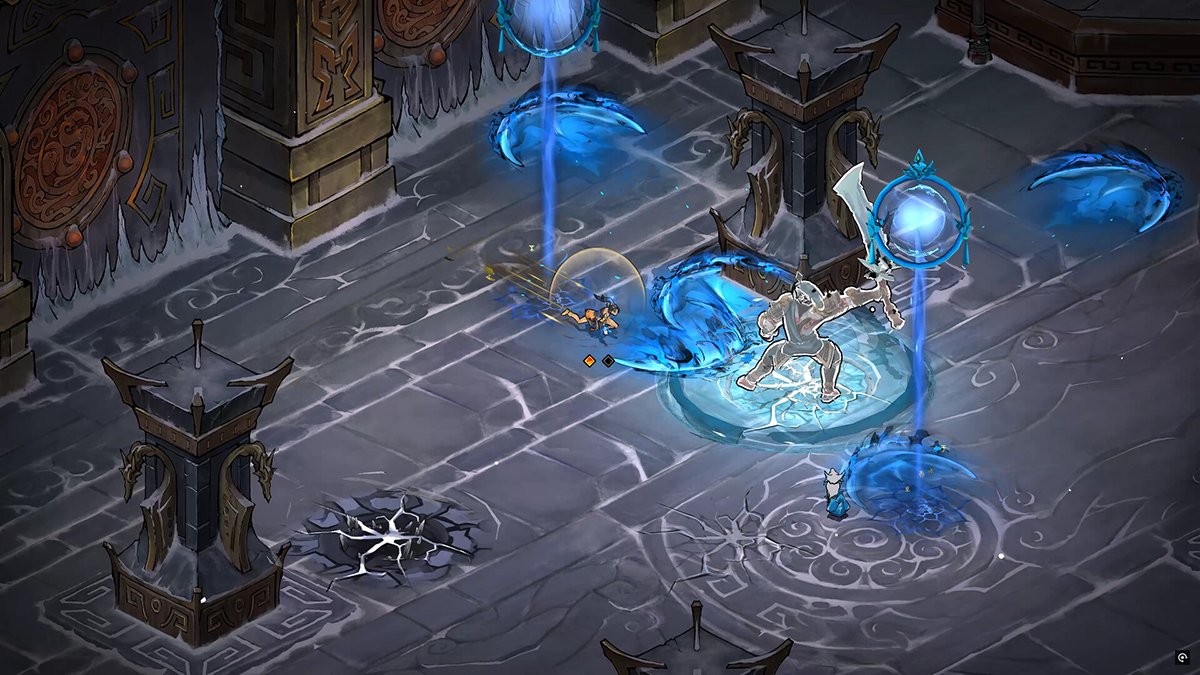
Experiment with different forms
You always play as Red, but she can take on the essence of other characters to become a different form. Each form is its own weapon, moveset, and set of passives.
Red herself is balanced and the friendliest place to start.
Violetta is built around speed and spinning blades for players who like to stay in constant motion.
Six leans into luck, with a higher critical rate and a better chance to trigger effects, which suits crit and status builds. Grace is built for ink skills and trims your cooldowns, while Dr. Suen is the pet specialist.
Learn one form well before you unlock the next. If you enjoy games that hand you several distinct classes to master, like Kingdom of Night, the form system scratches the same itch.
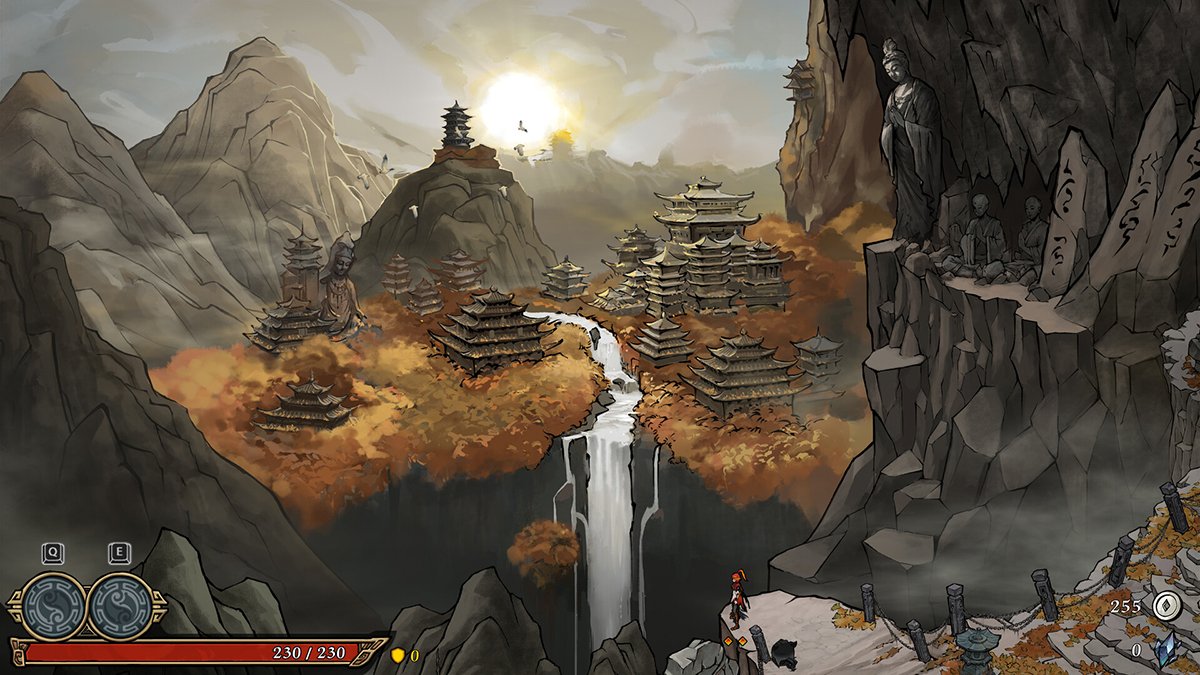
Set the difficulty to match your goals
Realm of Ink has six difficulty tiers, and you can raise or lower the challenge to suit what you want from a run. Higher tiers hand out better rewards but punish mistakes harder.
Start low while you are still learning enemy patterns and figuring out builds.
There is no prize for grinding through a tier you are not ready for.
Once your meta upgrades stack up and a build clicks, bump the difficulty for the better loot.
The early bosses to aim for are the Book Spirit and, eventually, the Ink God.
Clear the Book Spirit and you start opening the path to the true ending.
After that, Endless mode and the tougher Rupture content are waiting whenever you want a real test.
Give yourself a few runs to let the systems sink in before you judge any build.
Realm of Ink rewards players who pick a lane and lean into it, so settle on a plan and let your gems, curios, and Momo carry the rest.
–
Images in this article are from the Realm of Ink page on Steam and used under Fair Use.